Life Beyond the Screen: How Future Technology Will Redefine Human Reality
For decades, humanity has measured technological progress by the devices it held in its hands. Every new generation of smartphones became thinner, faster, brighter, and more powerful than the one before it. Screens gradually evolved from simple displays into the center of work, communication, entertainment, education, shopping, and even healthcare. It became almost impossible to imagine a normal day without looking at a glowing rectangle dozens, or even hundreds, of times.
Yet history has an interesting habit of making today's greatest inventions tomorrow's ordinary memories. Few people once believed that bulky desktop computers would become slim laptops. Fewer imagined that paper maps would disappear into a pocket-sized phone. Even fewer expected physical keyboards to give way to touchscreens that now feel completely natural. Every technological revolution has quietly replaced something that once seemed irreplaceable.
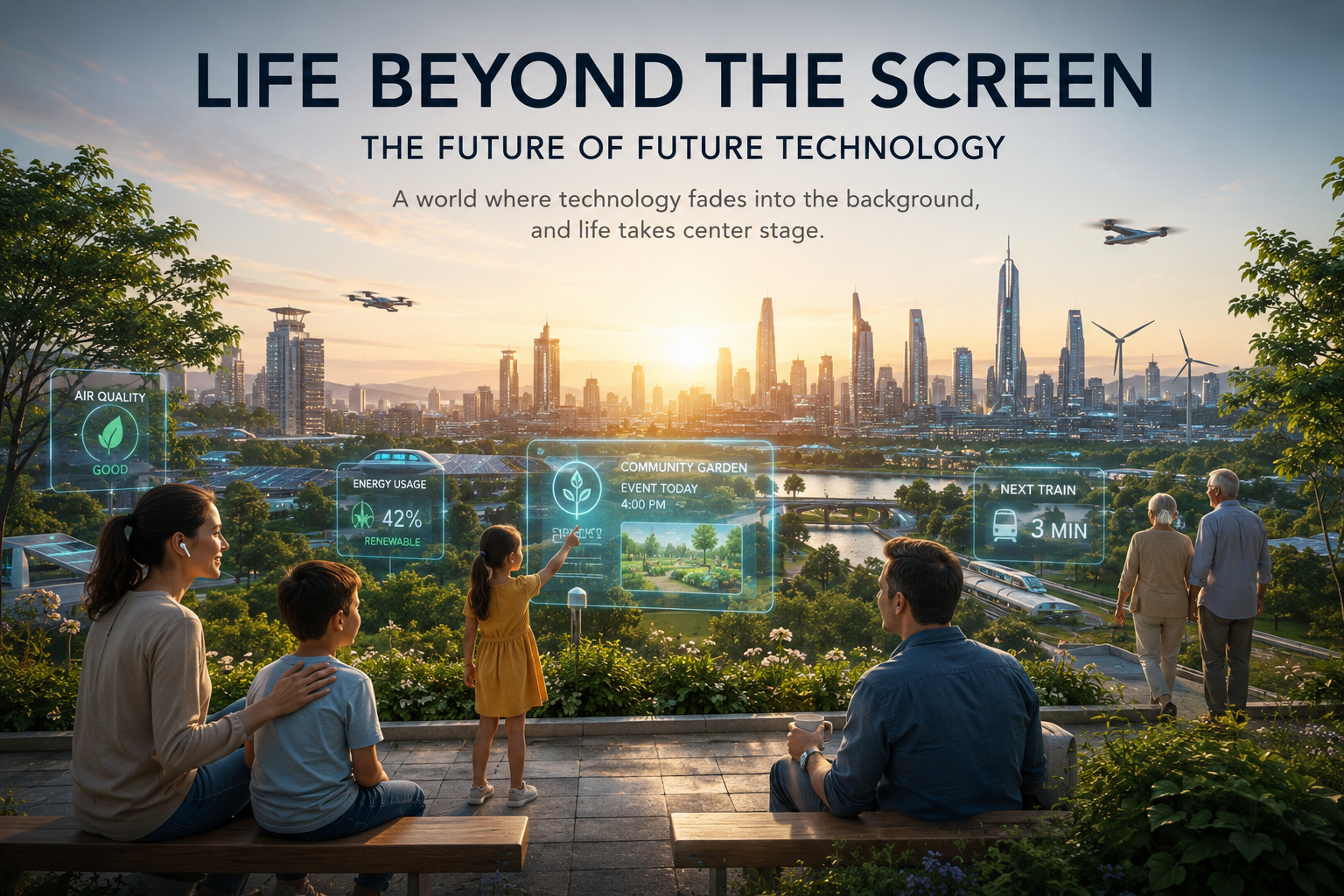
Life Beyond the Screen is more than a technological prediction. It represents a new vision of how people may interact with the digital world in the coming decades. The next transformation may be even more profound because it is not about creating a better screen. It is about creating a world that no longer depends on screens at all. Instead of asking people to constantly shift their attention toward devices, Future Technology is steadily moving toward an environment where technology fades into the background while life returns to the foreground.
Imagine receiving important information without unlocking a phone. Picture navigating unfamiliar streets without repeatedly checking a map. Envision attending meetings where digital content appears naturally within your surroundings instead of being confined to a laptop display. These ideas may sound futuristic today, yet many of the technologies required to make them possible already exist in different stages of development.
This future is not about replacing one gadget with another. It represents a fundamental shift in the relationship between humans and technology. Instead of forcing people to adapt to machines, the next generation of innovation is being designed to adapt to people, making digital experiences feel less like operating devices and more like interacting with the world itself.
As this transition unfolds over the coming decades, one question becomes increasingly important. If technology is no longer something we look at, but something that quietly works around us, how will it reshape the way we live, work, learn, communicate, and experience reality itself?
What Does Life Beyond the Screen Really Mean?
Understanding Life Beyond the Screen begins with recognizing that the future is not about eliminating technology but about making it more natural and human-centered. When people hear the phrase Life Beyond the Screen, they often imagine a future where every smartphone, tablet, television, and computer suddenly disappears. In reality, the concept is far more sophisticated. It does not suggest eliminating screens overnight; instead, it describes a gradual evolution in which screens become less central because information begins to exist naturally within our environment.
Today's digital world depends on deliberate interaction. We unlock a phone to check directions, open a laptop to answer emails, or glance at a smartwatch to read a notification. Every digital task begins with the same action-looking at a device. Future Technology aims to remove that extra step by allowing technology to understand context, anticipate needs, and deliver information only when it is genuinely useful.
Consider how navigation works today. Driving through an unfamiliar city usually involves repeatedly checking a dashboard display or listening to spoken directions. In a screenless future, lightweight augmented reality glasses could project navigation arrows directly onto the road ahead, allowing drivers or pedestrians to keep their eyes focused on their surroundings instead of shifting attention between reality and a digital screen. The technology does not replace the road; it enhances the experience of moving through it.
The same principle applies inside homes and workplaces. Rather than searching through multiple apps to adjust lighting, schedule meetings, or control household appliances, intelligent environments may quietly recognize routines and respond automatically. Lights could adjust according to natural daylight, room temperatures might adapt to personal preferences, and digital assistants could organize schedules without requiring constant manual input. Technology becomes less visible, yet its usefulness becomes significantly greater.
This shift is possible because several innovations are advancing simultaneously. Artificial intelligence is becoming more capable of understanding language and context. Spatial computing is blending digital objects with physical environments. Wearable devices continue shrinking while collecting increasingly meaningful health and environmental data. Ambient intelligence allows connected systems to cooperate seamlessly, making technology feel less like individual products and more like an invisible ecosystem.
Perhaps the most remarkable aspect of Life Beyond the Screen is that success will not be measured by how much technology people notice. Instead, it will be measured by how effortlessly technology supports everyday life without demanding constant attention. The greatest innovation may not be another revolutionary device but the quiet disappearance of unnecessary interactions that currently consume countless moments every day.
This transformation will not happen overnight, nor will it arrive in exactly the same way across every country or industry. Like every technological revolution before it, adoption will be gradual, shaped by affordability, infrastructure, public trust, and changing social habits. Nevertheless, the direction is becoming increasingly clear. The future is moving away from a world filled with screens and toward experiences where technology integrates so naturally into daily life that people begin paying less attention to devices and more attention to the people and places around them.
A Day in 2038: Living Beyond Screens
The easiest way to understand the future is not by reading technical specifications or scientific reports. It is by imagining an ordinary day in the life of an ordinary person. The year is 2038. Nothing feels dramatically different at first glance. Cities are still busy, people still go to work, children still attend school, and families still gather for dinner. Yet almost every interaction with technology has quietly changed.
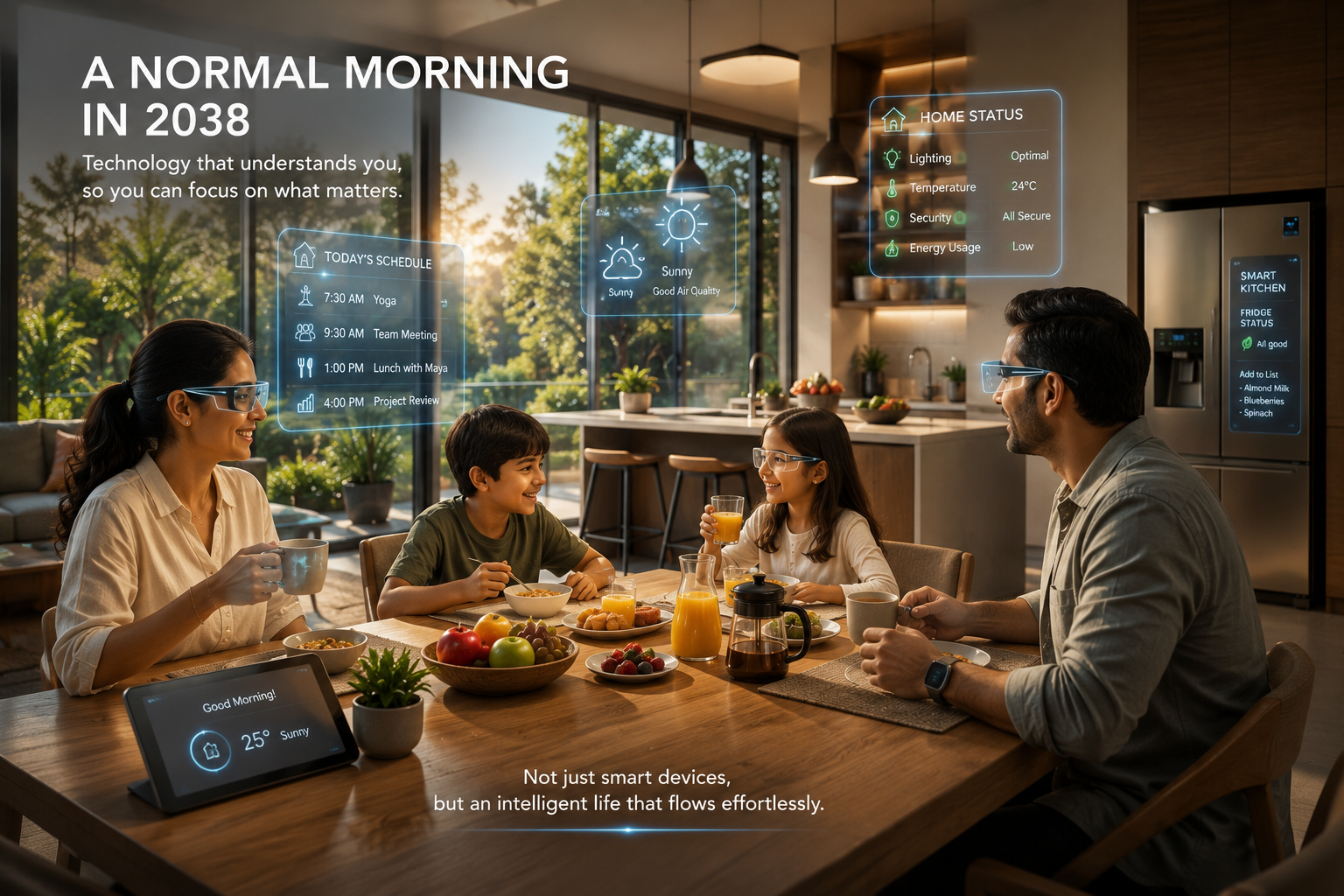
The morning begins without the familiar sound of a smartphone alarm. Instead, a wearable health device notices that the body has completed a healthy sleep cycle and gently adjusts the bedroom lighting to imitate a natural sunrise. Curtains open automatically, the room temperature adapts to personal comfort, and a calm voice summarizes the day's schedule while breakfast is being prepared. There is no need to unlock a phone because information appears only when it is needed, not every few seconds.
As breakfast begins, the kitchen becomes an intelligent assistant rather than a collection of disconnected appliances. The refrigerator recognizes that fresh vegetables are running low and quietly adds them to the family's weekly shopping list. A nutrition assistant suggests a balanced meal based on everyone's health data and activity plans. None of these recommendations interrupt conversations around the table because technology works silently in the background instead of demanding constant attention.
The journey to work feels equally different. Rather than staring at a navigation screen mounted inside a car, lightweight augmented reality glasses project subtle directional guidance directly onto the road ahead. Traffic conditions, weather updates, and safety alerts appear only when necessary, allowing the driver to remain focused on the surroundings instead of repeatedly glancing at a dashboard display. Public transport users experience similar convenience as arrival times and platform information blend naturally into their field of vision.
The workplace has evolved as well. Conference rooms no longer revolve around televisions or projectors. Colleagues sitting around the same table can view shared three-dimensional models, design prototypes, and live data through spatial computing devices that anchor digital objects within the physical room. Team members interact with these virtual elements using natural gestures and voice commands, making collaboration feel less like operating software and more like working with tangible objects.
Education has undergone one of the most remarkable transformations. Instead of reading about ancient civilizations from printed textbooks, students can explore realistic virtual reconstructions of historical cities while teachers guide discussions in real time. A lesson about the solar system becomes an interactive journey through space, where planets appear life-sized within the classroom. Learning shifts from passive observation to immersive exploration, allowing curiosity to drive understanding.
Healthcare has also become more preventive than reactive. Tiny wearable sensors continuously monitor vital signs, sleep quality, hydration, stress levels, and early indicators of illness. If unusual patterns emerge, both the individual and healthcare professionals receive timely alerts long before symptoms become serious. Medical appointments focus less on diagnosing advanced diseases and more on preventing them from developing in the first place.
Even shopping becomes almost effortless. Walking into a store no longer requires comparing products on multiple screens or searching online reviews. Intelligent systems identify preferences, dietary restrictions, previous purchases, and sustainability choices to present personalized recommendations within the shopping environment itself. Payment happens securely in the background, allowing customers to leave without waiting in checkout lines.
Returning home no longer means escaping technology. Ironically, it means noticing technology even less. Entertainment systems understand who is present and recommend content suitable for the entire family. Smart lighting adjusts according to the time of day, while environmental controls reduce unnecessary energy consumption without manual intervention. Instead of everyone sitting together while individually looking at separate screens, technology quietly supports shared experiences without becoming the center of attention.
Perhaps the most meaningful change is not technological at all. Parents spend more time making eye contact with their children instead of checking notifications. Friends enjoy conversations without the constant vibration of phones on the table. Professionals focus on creative work instead of endlessly switching between applications. Technology finally begins serving human attention rather than competing for it.
This vision may sound ambitious, yet every element already exists in some form today. Artificial intelligence, augmented reality, wearable health devices, smart homes, and spatial computing are evolving independently. The future described here emerges when these innovations mature together and begin functioning as one connected ecosystem rather than isolated inventions.
The world of 2038 may therefore feel surprisingly familiar. The buildings, roads, schools, and workplaces may still exist, but the way people interact with information will have fundamentally changed. Instead of living through screens, humanity may finally begin living through experiences once again.
Will Screens Become the New Typewriter?
Every generation believes that the technologies surrounding it are permanent. History tells a different story. Devices that once defined entire eras often disappear so gradually that people barely notice their absence until years later. Future Technology is likely to follow the same pattern, raising an intriguing possibility: could smartphones eventually become what typewriters are today-important milestones that quietly gave way to something better?
The typewriter offers one of history's clearest examples of technological evolution. For decades, it represented productivity, communication, and professional work. Offices could not function without it, authors wrote bestselling books on it, and businesses depended on it for nearly every document they produced. Yet when personal computers arrived, the typewriter did not vanish overnight. It slowly became unnecessary because the new technology could accomplish everything the old one did while offering far greater flexibility.
A similar transition occurred with paper maps. Travelers once unfolded large printed maps before every journey, carefully tracing routes with their fingers. Today, most people rarely think about carrying one because digital navigation has become faster, easier, and constantly updated. The change happened so naturally that younger generations often view paper maps as interesting historical objects rather than essential travel tools.
Compact cameras experienced a comparable fate. Millions of people once carried dedicated cameras everywhere they went. As smartphone photography improved, the convenience of carrying one multifunctional device outweighed the benefits of owning a separate camera for everyday use. Although professional cameras continue to serve photographers, the average person's relationship with photography changed forever.
These examples reveal an important lesson. Technologies rarely disappear because they stop working. They disappear because something more convenient reshapes human behavior. Convenience, not novelty, has always been the strongest force behind technological adoption.
Smartphones may eventually reach the same crossroads. They have already absorbed the functions of calculators, music players, alarm clocks, calendars, flashlights, GPS devices, notebooks, newspapers, and even wallets. Ironically, their greatest strength has also become their greatest limitation. Almost every digital activity still requires people to stop what they are doing, reach for a device, unlock it, open an application, and focus their attention on a screen.
Future Technology seeks to remove these unnecessary steps. If navigation appears naturally in front of the eyes, voice assistants understand complex conversations, wearable devices continuously monitor health, and intelligent environments anticipate routine needs, many interactions currently performed through smartphones simply become invisible. The device itself becomes less important than the experience it enables.
This does not mean smartphones will disappear completely. Just as laptops remain valuable despite the rise of tablets and cloud computing, smartphones are likely to continue serving specialized purposes for many years. They may become personal computing hubs that operate quietly behind the scenes while lightweight wearables, spatial interfaces, and ambient intelligence handle most everyday interactions.
The First Generation That May Never Know Screens
Every generation grows up believing that the world around it is normal. Children born in the era of television never questioned why families gathered around a single screen every evening. Those raised alongside the internet accepted email, websites, and search engines as ordinary parts of life. Likewise, today's children instinctively understand touchscreens, video calls, and voice assistants because these technologies have always existed within their world.
The next generation, however, may experience something entirely different. Instead of learning to interact with technology by tapping icons on glass displays, they may grow up communicating with intelligent environments that respond naturally to speech, gestures, eye movements, and even context. For them, digital technology may feel less like using a device and more like interacting with the world itself.
This shift could fundamentally reshape childhood. A child born in the late 2030s may never remember carrying a smartphone to school because learning resources will no longer be confined to handheld screens. Lessons could unfold within immersive environments where history, science, mathematics, and geography become experiences rather than subjects confined to textbooks. Imagine students exploring the Great Wall of China during a history lesson, observing volcanic eruptions from a safe virtual distance during science class, or walking through the human circulatory system while learning biology. Knowledge becomes something they experience instead of something they merely read.
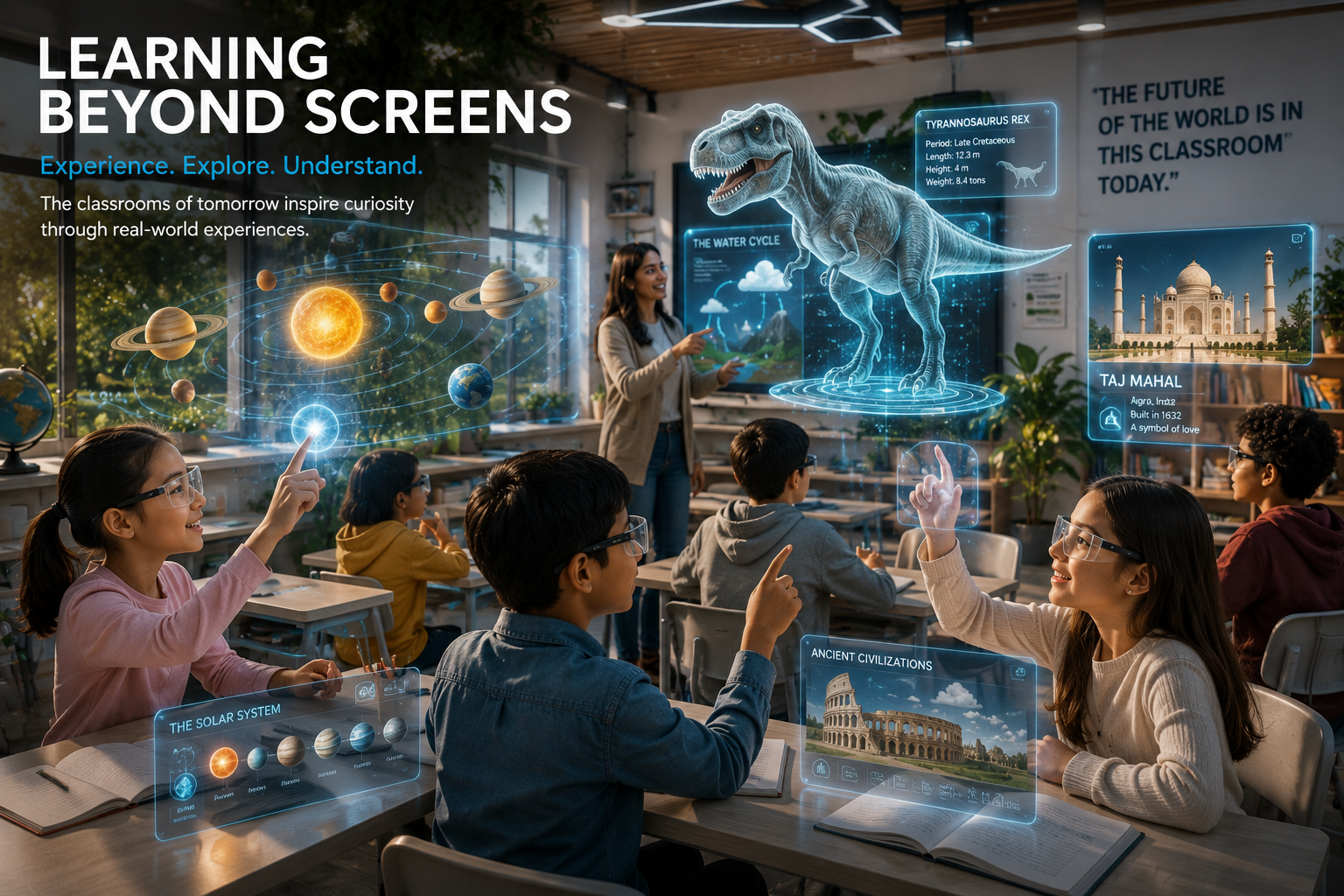
Such immersive learning has the potential to improve not only understanding but also curiosity. Children naturally learn through exploration, experimentation, and observation. Traditional education often requires them to imagine concepts from static diagrams, whereas future learning environments could place those concepts directly in front of them. Abstract ideas become visible, interactive, and memorable, helping students connect theory with experience more effectively.
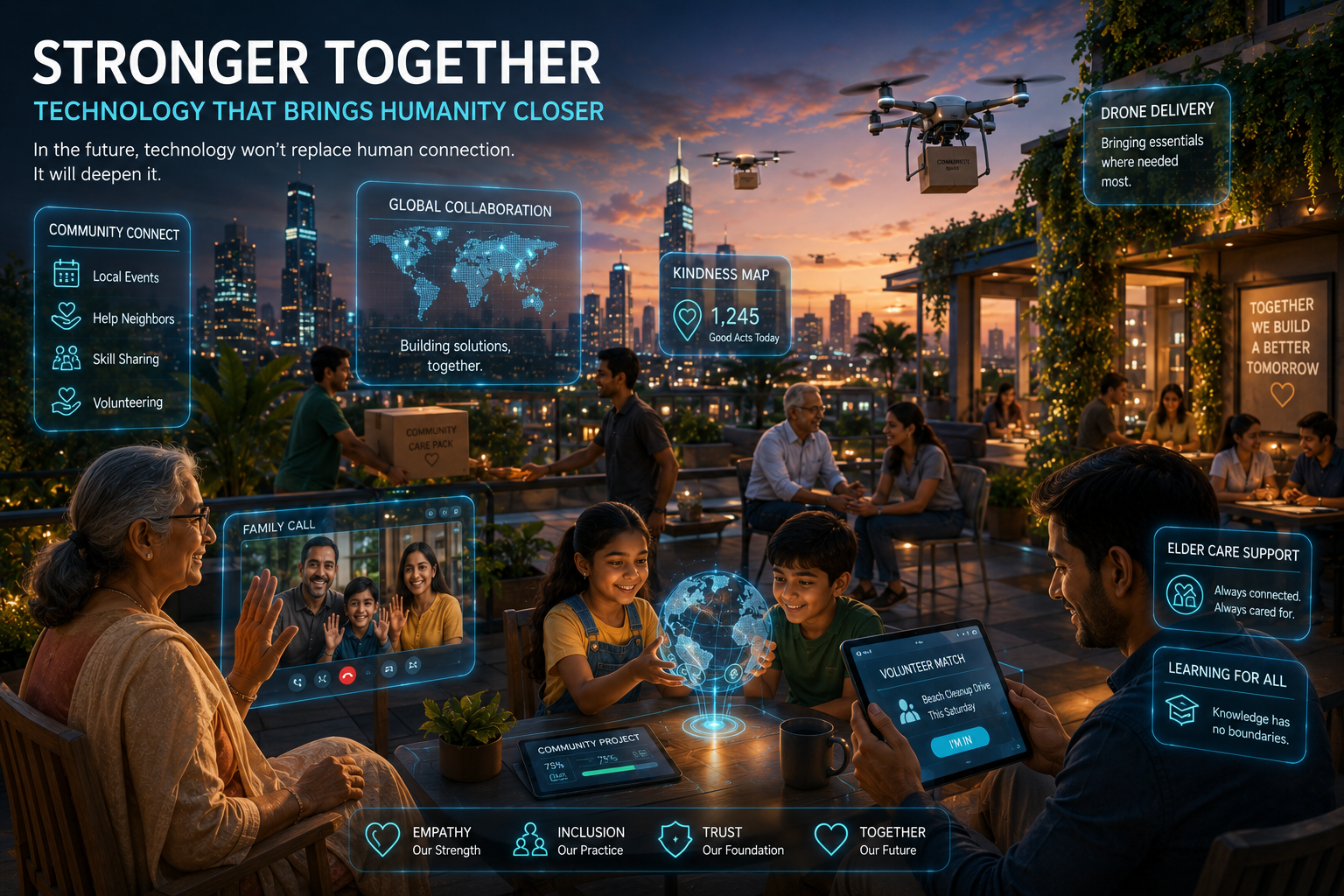
Communication may also become more intuitive. Instead of typing lengthy messages or switching between multiple applications, future generations could interact with digital assistants as naturally as they speak with family members. Language barriers may gradually diminish as real-time translation becomes seamless, allowing children from different cultures to collaborate without worrying about vocabulary or pronunciation. Technology, in this sense, becomes a bridge between people rather than another obstacle to overcome.
Healthcare during childhood could undergo an equally meaningful transformation. Wearable sensors may quietly monitor growth, sleep quality, nutrition, physical activity, and emotional well-being without disrupting everyday life. Rather than waiting for illnesses to become visible, intelligent healthcare systems could identify subtle warning signs early enough for parents and doctors to intervene before serious problems develop. Preventive care would become an everyday companion instead of an occasional hospital visit.
Accessibility represents another area where this generation could benefit enormously. Children with visual, hearing, or physical disabilities may find themselves participating more fully in education and society because intelligent technologies adapt to individual needs automatically. Real-time captions, voice-controlled interfaces, object recognition, spatial audio, and personalized learning assistance could reduce barriers that once limited opportunities. Future Technology, when designed inclusively, has the power to create a more equitable learning environment for everyone.
The Technologies Making Screens Disappear
The vision of a screenless future is not built upon a single revolutionary invention. Instead, it is emerging from the convergence of multiple technologies that are advancing at the same time. Each innovation solves a different problem, but together they create an ecosystem where digital experiences become more natural, more intuitive, and significantly less dependent on traditional displays.
Artificial Intelligence forms the foundation of this transformation. Modern AI systems are evolving beyond simple question-and-answer tools into intelligent assistants capable of understanding context, recognizing patterns, and anticipating user needs. Instead of waiting for commands, future AI may proactively organize schedules, summarize important information, recommend healthier choices, and automate repetitive tasks. As these capabilities mature, people will spend less time searching for information because relevant insights will arrive precisely when they are needed.
Augmented Reality represents another essential piece of the puzzle. Unlike virtual reality, which creates entirely digital environments, augmented reality enhances the physical world by placing useful digital information directly within a person's surroundings. Navigation instructions, translations, maintenance guides, educational content, and workplace collaboration tools can appear exactly where they are needed, reducing the need to repeatedly check a separate device. The physical world remains the primary focus while digital content quietly supports it.
Spatial computing extends this idea even further by allowing digital objects to behave as though they genuinely exist within physical space. Architects may examine life-sized building models before construction begins. Engineers could manipulate complex machinery without touching physical prototypes. Doctors might visualize three-dimensional medical scans during surgery, improving precision while keeping their attention focused on patients rather than monitors. The boundary between digital and physical environments gradually becomes less noticeable.
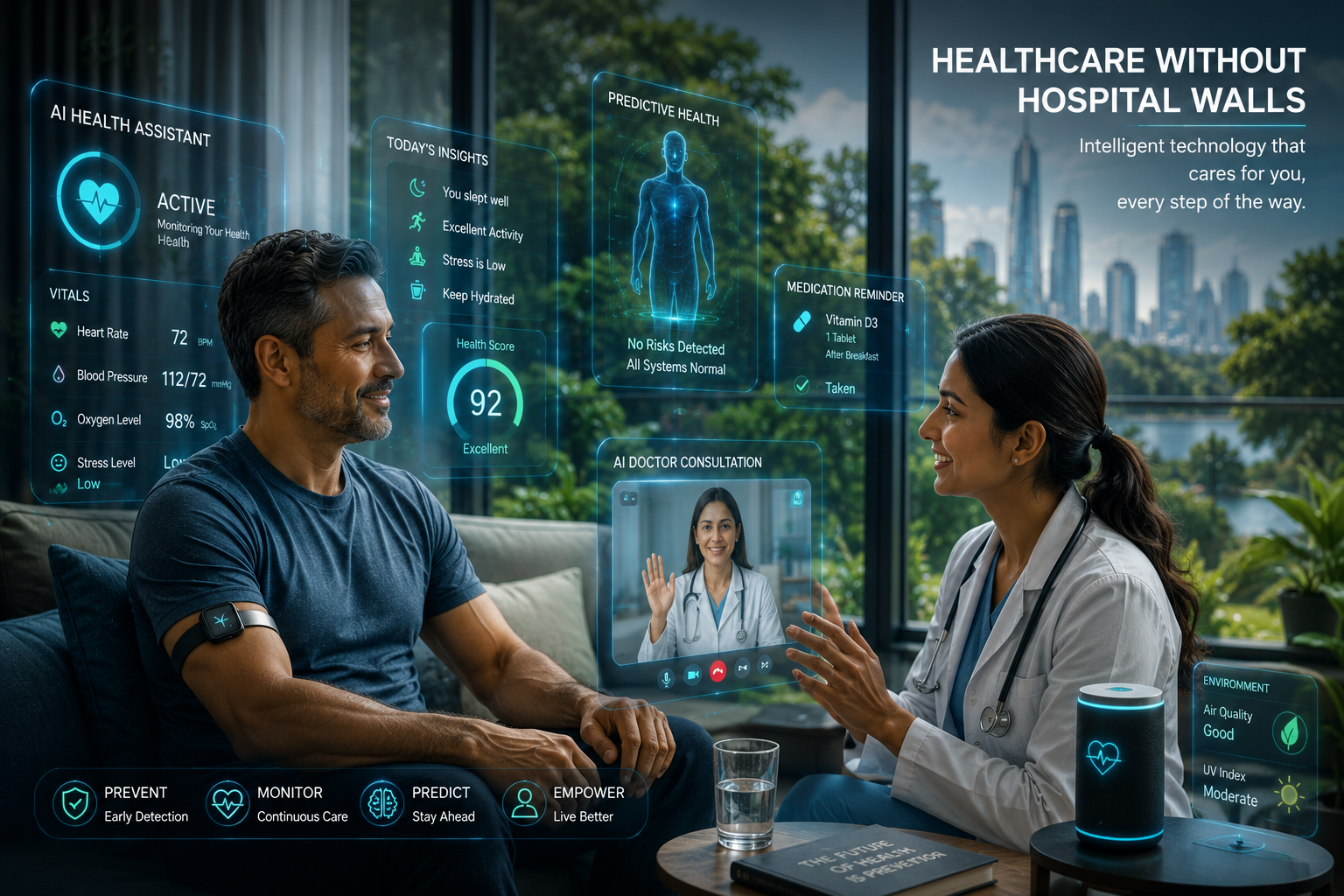
Wearable technology is equally important because it changes where computing happens. Instead of relying exclusively on handheld devices, lightweight smart glasses, intelligent earbuds, advanced health sensors, and other wearable systems distribute technology across everyday life. These devices continuously collect relevant information, monitor health, and deliver assistance without requiring constant manual interaction. As hardware becomes smaller, lighter, and more energy efficient, wearables may eventually become as common and unobtrusive as wristwatches.
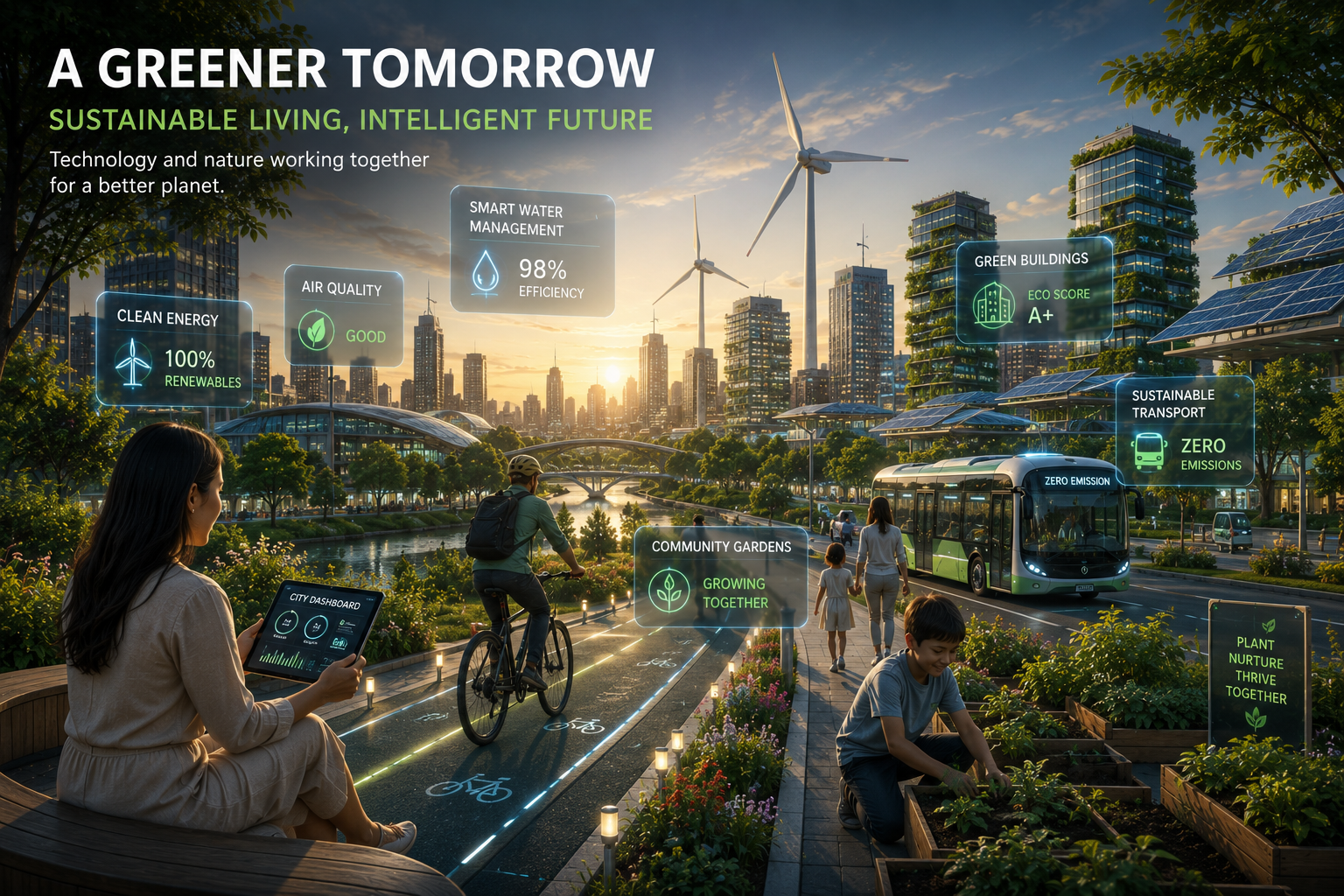
Ambient intelligence connects all these innovations into a unified ecosystem. Rather than functioning as isolated gadgets, homes, workplaces, vehicles, and public spaces communicate seamlessly with one another. Lighting adjusts according to natural daylight, transportation systems optimize travel routes automatically, offices prepare meeting spaces before employees arrive, and healthcare systems monitor well-being continuously without disrupting daily routines. Technology fades into the environment instead of demanding constant attention.
How Future Technology Will Transform Everyday Life
Technology is often measured by the speed of processors, the power of artificial intelligence, or the sophistication of new devices. Yet the true impact of innovation has never been determined by technical specifications alone. It is measured by how deeply it improves everyday life.
Future Technology is following the same path. Its greatest contribution will not be creating more impressive gadgets. Instead, it will quietly reshape the ordinary moments that define human life, making everyday experiences simpler, safer, healthier, and more meaningful.
Education will likely experience one of the most significant transformations. Today's classrooms still rely heavily on textbooks, presentations, and two-dimensional explanations to teach three-dimensional concepts. Future learning environments may replace passive observation with active participation. Students could walk through ancient civilizations instead of merely reading about them, observe chemical reactions safely within immersive simulations, or explore the structure of the human body from the inside using spatial computing. Lessons become experiences that stimulate curiosity, making knowledge easier to understand and remember.
Healthcare is expected to shift from treatment toward prevention. For centuries, medicine has largely responded after symptoms appeared. Future Technology has the potential to change that relationship completely. Wearable sensors, intelligent diagnostics, and predictive artificial intelligence may continuously monitor health indicators, identifying subtle warning signs long before serious illnesses develop. Early intervention not only improves outcomes but also reduces emotional stress, healthcare costs, and unnecessary hospital visits.
Workplaces are also evolving beyond traditional offices filled with monitors and conference room displays. Teams spread across different countries may collaborate inside shared spatial workspaces where digital models appear as though they exist physically within the room. Architects can examine buildings before construction begins, engineers can solve design challenges collaboratively, and surgeons may receive critical visual guidance without looking away from patients.
When Technology Becomes Invisible
Throughout history, every successful technology has followed a remarkably similar journey. In its early years, it captures attention because it is new, unfamiliar, and exciting. Over time, however, the technology itself fades into the background while the benefits become part of everyday life. People rarely think about electricity each time they switch on a light, nor do they admire the complexity of the internet whenever they send a message. The technology disappears from conscious thought because it simply works.
Future Technology appears to be moving toward the same destination. The next major innovation may not be another revolutionary device that people proudly display. Instead, it may be an ecosystem so seamless that people barely notice it exists. Technology will remain incredibly powerful, but it will stop demanding constant attention.
Imagine walking into your home after a long day. Without pressing a single button, the lights adjust to a comfortable brightness, the indoor temperature matches your preference, calming music begins playing softly, and your schedule for the next morning has already been organized based on traffic forecasts and calendar priorities. None of these actions feel extraordinary because they happen naturally, quietly supporting your routine instead of interrupting it.
Achieving this balance will require more than engineering excellence. It will depend on trust. People will only embrace invisible technology if they believe it protects their privacy, respects their choices, and operates transparently. Artificial intelligence must remain understandable, personal data must remain secure, and users must always retain meaningful control over how technology influences their lives. Without these principles, convenience quickly becomes surveillance, and assistance begins to feel like intrusion.
The Opportunities and Challenges of an Immersive Future
Every technological revolution has followed a familiar pattern. It opens doors that previous generations could scarcely imagine while simultaneously presenting questions that no society has faced before. The printing press expanded access to knowledge but transformed political systems. The Industrial Revolution increased productivity while reshaping labor and urban life. The internet connected billions of people yet introduced concerns about privacy, misinformation, and digital dependence. Future Technology will almost certainly continue this tradition by offering extraordinary opportunities alongside equally significant responsibilities.
The opportunities are remarkable because they extend far beyond convenience. Technology is gradually moving from being a collection of useful tools to becoming an intelligent partner capable of improving education, healthcare, communication, environmental sustainability, and economic productivity. If developed responsibly, these innovations have the potential to solve challenges that have limited human progress for generations.
Despite these promising possibilities, technological progress is never free from difficult questions. The more deeply intelligent systems integrate into daily life, the more society must address concerns about privacy, security, transparency, and fairness. Invisible technology may simplify daily routines, but it also depends on collecting and processing significant amounts of personal information. Without clear safeguards, convenience can gradually erode individual privacy in ways that are not immediately obvious.
Living in a Reality Shaped by Technology
Every era is remembered for the innovation that transformed the way people lived. The steam engine accelerated industry, electricity extended human productivity beyond daylight, aviation connected continents, and the internet redefined communication across the globe. Each breakthrough changed daily life so profoundly that future generations eventually struggled to imagine a world without it.
Future Technology appears poised to become the defining transformation of the twenty-first century. Its influence, however, may not be remembered because it introduced the most advanced artificial intelligence or the most sophisticated wearable devices. It may be remembered because it quietly changed humanity's relationship with technology itself.
The next chapter of innovation offers a different possibility. Rather than encouraging people to spend more time interacting with machines, Future Technology seeks to reduce unnecessary interaction altogether. Intelligent systems may quietly manage routine tasks, organize information, and provide assistance only when genuinely needed. The objective is not to make technology more noticeable but to make it more natural.
One day, children may look at an old smartphone with the same curiosity that many young people today reserve for rotary telephones, floppy disks, or paper road maps. They may find it difficult to imagine why previous generations needed to unlock a handheld device dozens of times each day simply to communicate, learn, navigate, or organize their lives. To them, technology will not be something that constantly demands attention. It will simply exist, quietly supporting life in the background. Ultimately, Life Beyond the Screen is not about replacing devices. It is about creating a future where technology quietly empowers humanity instead of constantly demanding attention.
Key Takeaways
- Future Technology is evolving beyond screens, creating experiences where digital assistance blends naturally into everyday life instead of demanding constant attention.
- Artificial intelligence, augmented reality, spatial computing, wearable devices, and ambient intelligence will work together to create intelligent environments rather than isolated gadgets.
- Education will become increasingly immersive and personalized, allowing students to experience knowledge instead of simply reading about it.
- Healthcare will gradually shift from reactive treatment to preventive care, using continuous monitoring and intelligent diagnostics to detect health concerns earlier.
- Future workplaces will emphasize collaboration and creativity, with intelligent systems handling routine tasks while people focus on innovation and problem-solving.
- Smart cities and connected infrastructure will improve transportation, sustainability, public services, and resource management.
- Privacy, transparency, cybersecurity, and ethical artificial intelligence will become just as important as technological innovation itself.
Future Technology refers to emerging innovations that are expected to reshape the way people live, work, communicate, and solve problems over the coming decades. Rather than focusing only on faster devices, it combines artificial intelligence, spatial computing, augmented reality, wearable technology, robotics, and intelligent infrastructure to create more seamless, personalized, and human-centered experiences.
Life Beyond the Screen describes a future where people no longer depend on smartphones, computers, or traditional displays for every digital interaction. Instead, technology becomes integrated into everyday environments through voice interaction, wearable devices, augmented reality, and ambient intelligence, allowing digital information to appear naturally when it is needed.
Probably not. Like desktop computers and laptops, smartphones are more likely to evolve than disappear. They may gradually become background computing devices while smart glasses, wearable technologies, voice interfaces, and spatial computing handle many everyday interactions more naturally.
Several technologies are developing simultaneously and are expected to work together rather than independently. Artificial intelligence will provide intelligent decision-making, augmented reality will enhance the physical world with digital information, wearable devices will deliver continuous connectivity, spatial computing will create immersive digital environments, and ambient intelligence will allow connected systems to cooperate seamlessly.
Education is expected to become more interactive, personalized, and experience-driven. Students may explore historical events, scientific concepts, and complex subjects through immersive environments instead of relying only on textbooks and static presentations.