How Technology Is Quietly Redefining What It Means to Be Human
Technology and Human Identity have become deeply interconnected in today's digital world. Every major technological breakthrough influences not only the way people live and work but also how they think, communicate, build relationships, and understand themselves. Technology has always reflected human ambition, helping people solve problems, overcome limitations, and expand human potential. Today, however, its influence extends far beyond improving everyday life. It is quietly reshaping the way people experience the world, relate to one another, and ultimately what it means to be human.
This transformation rarely announces itself with dramatic moments. Instead, it unfolds through countless ordinary decisions made every day. People wake up to smartphone alarms, ask digital assistants about the weather, navigate unfamiliar roads with GPS, communicate through messaging apps, and rely on artificial intelligence to search for information, organize schedules, or even generate creative ideas. These conveniences feel so natural that most people hardly notice how deeply technology has woven itself into the fabric of everyday life. What once existed as a collection of useful tools has gradually become an extension of human thinking, memory, communication, and creativity.
As this relationship grows stronger, the definition of human identity begins to evolve. Earlier generations formed their sense of self primarily through family, local communities, education, and personal experiences. Today's generation still depends on those influences, but it also lives within an interconnected digital environment where online interactions, virtual communities, and intelligent technologies shape opinions, relationships, habits, and aspirations. A person's digital presence can now influence careers, friendships, opportunities, and even self-confidence as much as their physical presence.
This quiet transformation raises an important question that extends far beyond technology itself. If digital tools increasingly influence how people remember, communicate, create, and build relationships, what does it truly mean to be human in an age where technology participates in nearly every aspect of life? The answer cannot be found by rejecting innovation or embracing it without reflection. Instead, it lies in understanding how technological progress changes human identity while preserving the qualities that have always defined humanity curiosity, empathy, imagination, ethical judgment, meaningful relationships, and the ability to create purpose beyond efficiency.
Technology will undoubtedly continue to evolve at an extraordinary pace. Yet the future of humanity will depend not only on what technology becomes, but also on how people choose to use it. Understanding this balance is essential because the most significant technological revolution may not be happening inside computers or laboratories. It may be happening quietly within human lives, one everyday decision at a time.
Technology and Human Identity: A New Digital Reality
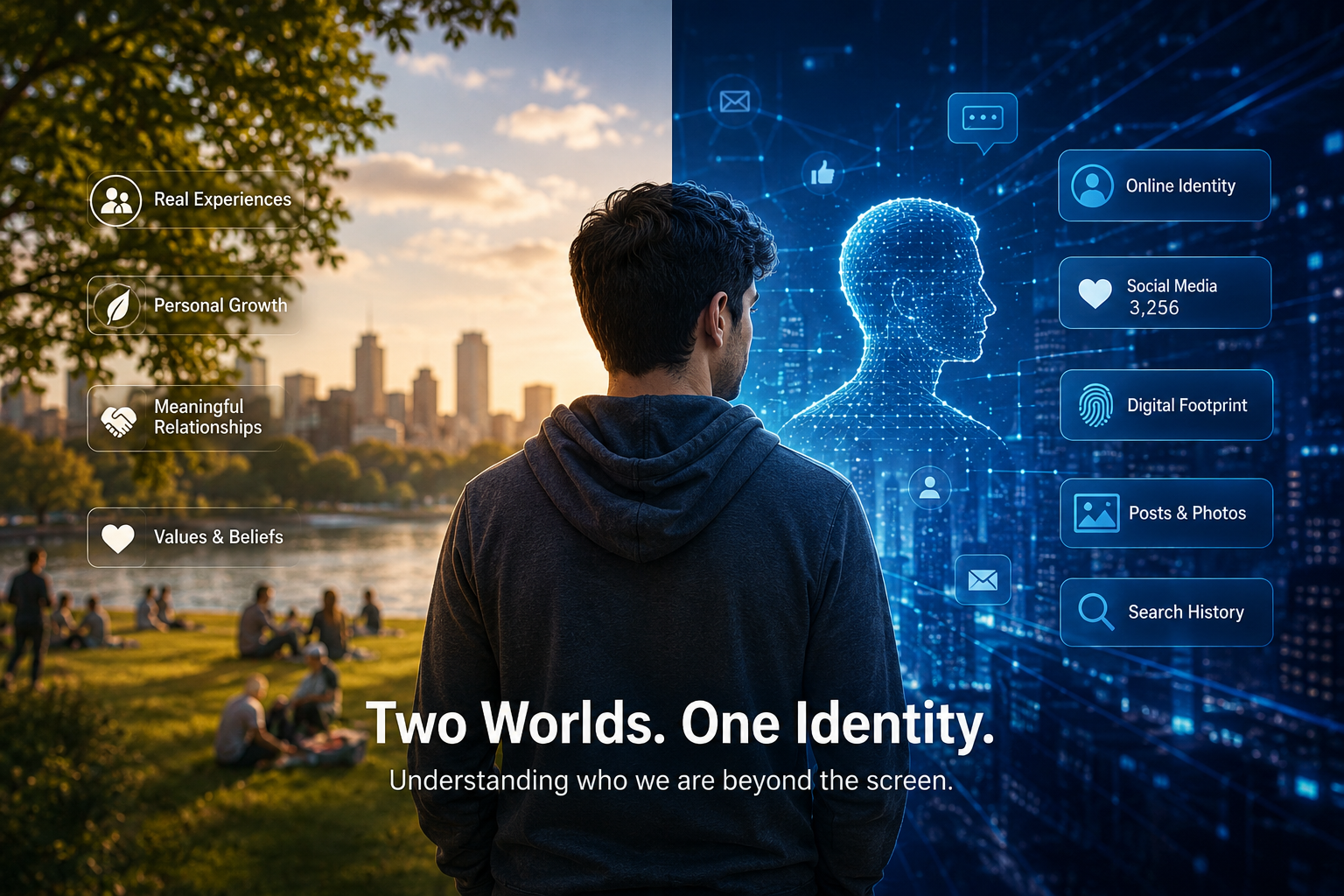
For most of history, human identity developed through direct experiences with the physical world. People discovered who they were through conversations, education, family traditions, friendships, cultural values, and the challenges they encountered throughout life. Identity was shaped gradually through real-world interactions that unfolded over years. While those influences remain important today, technology has introduced an entirely new dimension that previous generations never experienced a digital layer of identity that exists alongside everyday life.
Modern technology accompanies people almost everywhere. Smartphones rarely leave their owners' hands, wearable devices monitor health throughout the day, cloud services preserve memories, and social media platforms document milestones almost instantly. Every search query, photograph, message, purchase, and online interaction contributes to a growing digital footprint. Although much of this information appears insignificant on its own, together it creates an increasingly detailed picture of personal interests, routines, beliefs, and behaviors. In many ways, technology has become a silent observer that learns alongside its users.
This digital identity offers remarkable opportunities. Professionals can build careers beyond geographical boundaries, artists can share their work with global audiences, entrepreneurs can create businesses from home, and individuals can connect with communities that share their interests regardless of location. Technology has democratized access to knowledge, creativity, and collaboration in ways that were unimaginable only a few decades ago. It allows people to express themselves, learn continuously, and participate in conversations that span continents.
At the same time, living simultaneously in physical and digital worlds introduces new challenges. Online identities often encourage people to present carefully selected versions of themselves rather than complete realities. Successes are shared more frequently than failures, confidence appears stronger than uncertainty, and moments of happiness often receive greater attention than ordinary experiences. Over time, maintaining this digital image can subtly influence how individuals perceive themselves, sometimes creating pressure to meet expectations that exist primarily on screens rather than in everyday life.
Technology itself is neither responsible for strengthening nor weakening human identity. Instead, it acts as a powerful amplifier. It expands opportunities for learning, creativity, communication, and connection, while also magnifying the importance of self-awareness and intentional choices. As digital life becomes increasingly integrated with everyday existence, understanding who we are beyond our devices may become just as important as understanding how to use the devices themselves.
Digital Relationships: Are We More Connected or More Distant?
Technology has transformed human communication more rapidly than perhaps any other aspect of modern life. Only a few decades ago, maintaining long-distance relationships required handwritten letters, expensive international phone calls, or waiting weeks for a reply. Today, a message can travel across continents in seconds, video calls bring families together despite physical distance, and friendships often begin in online communities before becoming real-world connections. By removing geographical barriers, technology has made the world feel smaller and more accessible than ever before.
This unprecedented level of connectivity has created remarkable opportunities. Families separated by work or education can remain closely involved in each other's lives through regular video conversations. Professionals collaborate with colleagues from different countries without leaving their homes. Students learn from teachers across the globe, while people with rare interests or unique challenges find supportive communities they might never have discovered locally. For millions, technology has expanded the meaning of community beyond neighborhoods and national borders.
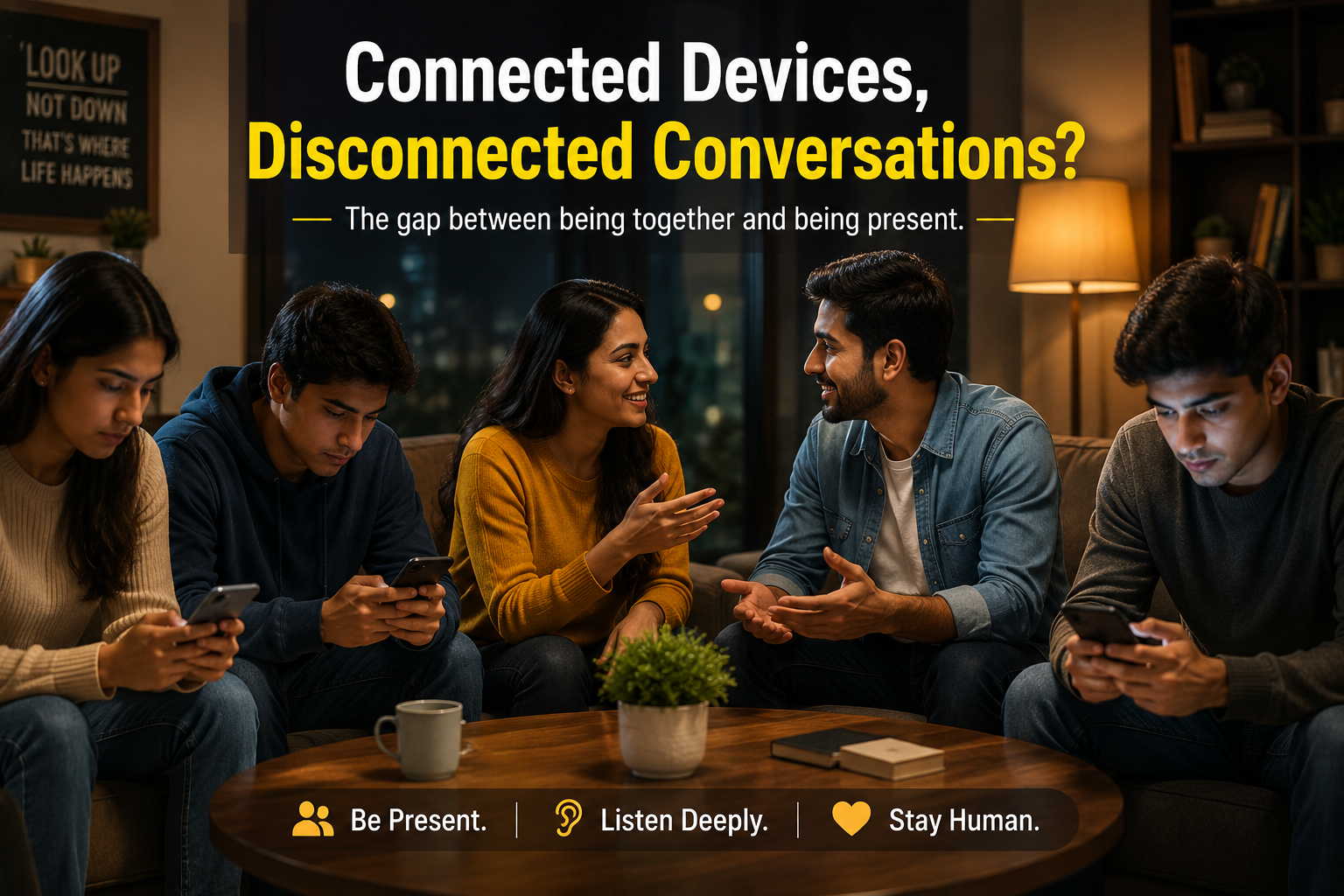
However, greater connectivity does not always guarantee deeper relationships. Digital conversations are often faster but shorter, more frequent but less meaningful. A quick reaction emoji or a brief text message can replace conversations that once involved tone, facial expressions, patience, and genuine attention. While technology allows people to stay constantly in touch, it sometimes reduces the quality of the interactions that build trust and emotional understanding over time.
Social media has further changed how relationships are formed and maintained. It allows people to celebrate achievements, share experiences, and remain informed about friends' lives with remarkable ease. At the same time, these platforms encourage carefully curated versions of reality. Most people naturally share memorable vacations, professional successes, celebrations, and milestones, while everyday struggles remain largely invisible. As a result, viewers may compare their complete lives with carefully selected moments from others, creating unnecessary feelings of inadequacy or loneliness despite being surrounded by constant digital interaction.
Another quiet shift involves the way attention is shared. Friends may sit together while individually scrolling through their phones. Families can gather around the same dining table while conversations compete with notifications. In such moments, physical presence no longer guarantees emotional presence. Technology itself is not the cause of weaker relationships; rather, it challenges individuals to use digital tools intentionally instead of allowing them to replace genuine human connection.
The healthiest relationships in the digital age are those that combine the strengths of both worlds. Technology can strengthen communication, maintain long-distance bonds, and create new opportunities for collaboration, but meaningful relationships continue to depend on empathy, active listening, trust, and shared experiences that no application or algorithm can fully replicate. The most valuable role of technology is not to replace human connection but to support it.
Creativity in the Age of Intelligent Technology
For centuries, creativity was considered one of humanity's most distinctive qualities. Artists transformed blank canvases into masterpieces, writers filled empty pages with ideas, musicians composed melodies from imagination, and inventors solved problems through original thinking. Creativity was never simply about producing something new; it reflected human curiosity, emotion, experience, and the ability to connect seemingly unrelated ideas. Today, intelligent technologies are beginning to participate in this creative process, raising important questions about the future of human originality.
Artificial intelligence can now generate illustrations, compose music, write computer code, summarize research, suggest business ideas, and assist with countless creative tasks in a matter of seconds. These capabilities have understandably sparked debate about whether machines will eventually replace human creativity. Yet a closer look reveals that technology functions differently from human imagination. AI generates content by recognizing patterns from existing information, while people create meaning through lived experiences, emotions, personal values, and cultural understanding. The two processes may appear similar on the surface, but their foundations are fundamentally different.
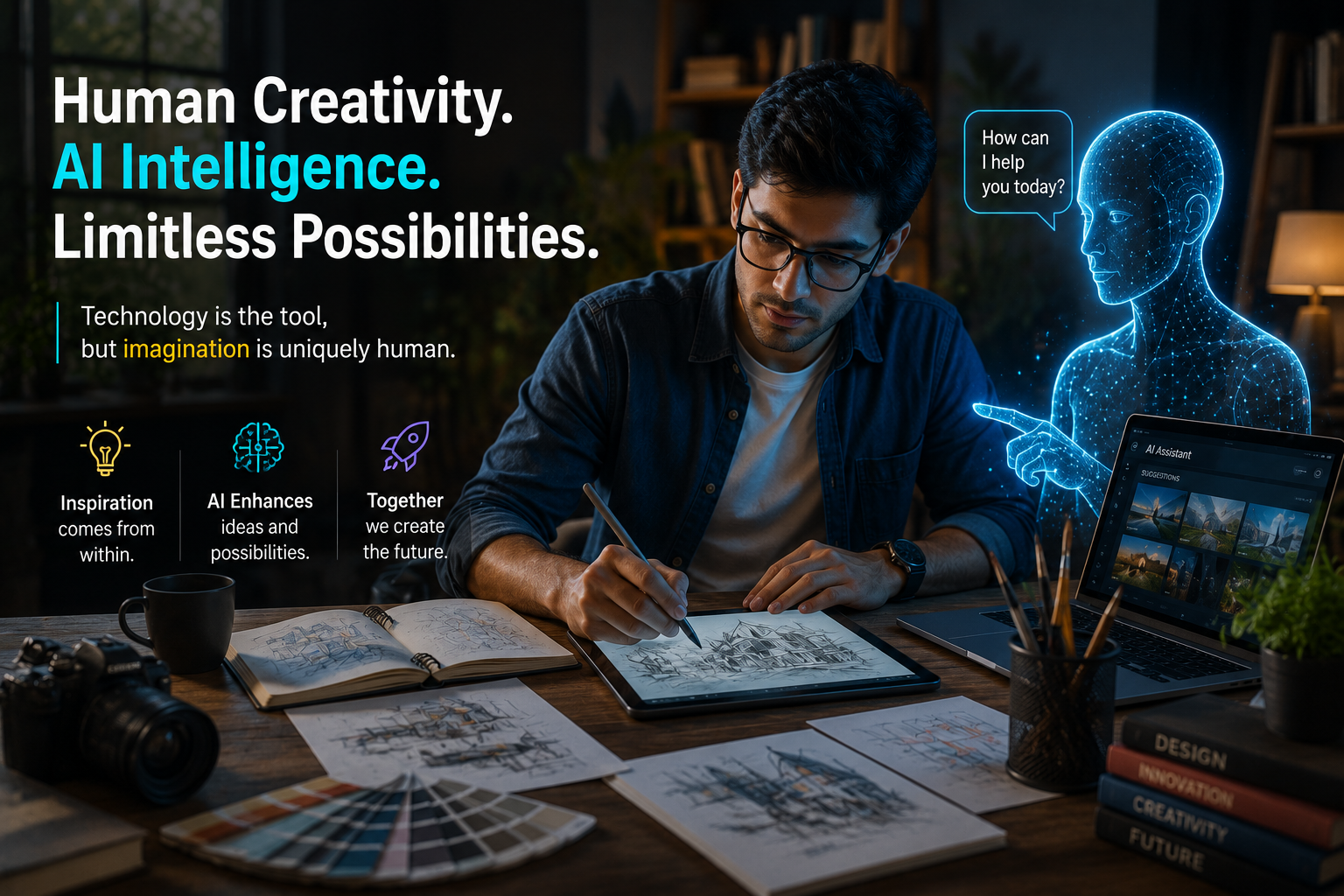
Rather than diminishing creativity, technology has the potential to expand it when used thoughtfully. Designers can visualize concepts more quickly, filmmakers can simplify complex editing tasks, writers can organize research efficiently, and entrepreneurs can explore multiple ideas before selecting the most promising direction. By reducing repetitive work, technology allows creative professionals to spend more time refining ideas, solving problems, and expressing original perspectives. In this sense, intelligent tools become collaborators that enhance productivity without replacing human insight.
The greatest risk arises when convenience replaces curiosity. If individuals begin accepting automatically generated answers without questioning, experimenting, or developing their own perspectives, creativity may gradually become more passive. True innovation has always emerged from asking difficult questions, making unexpected connections, learning from failure, and exploring possibilities beyond obvious solutions. These qualities remain deeply human and cannot simply be automated.
As technology continues to evolve, the future of creativity is unlikely to become a competition between humans and intelligent systems. Instead, it will depend on how effectively people combine technological capabilities with imagination, empathy, critical thinking, and purpose. The creators who thrive in the coming decades will not necessarily be those who avoid technology, but those who use it as a powerful tool while ensuring that every meaningful idea still begins with a genuinely human perspective.
Practical Ways to Stay Authentically Human in a Digital World
As technology becomes more deeply integrated into daily life, the goal should not be to resist innovation but to develop a healthier relationship with it. Digital tools have become essential for education, healthcare, business, creativity, and communication, making it unrealistic-and unnecessary to disconnect completely. The real challenge is learning how to ensure that technology serves human needs rather than quietly controlling habits, attention, and decisions. Maintaining this balance requires awareness rather than perfection.
One of the simplest ways to preserve human identity is to create intentional moments without digital distractions. Whether sharing a meal with family, spending time in nature, reading a book, or having an uninterrupted conversation with a friend, these experiences strengthen qualities that technology cannot replicate. Genuine presence encourages empathy, patience, observation, and emotional understanding. These moments may seem ordinary, yet they often become the foundation of meaningful relationships and lasting memories.
Developing critical thinking is equally important in an age of unlimited information. Algorithms are designed to deliver content that aligns with existing interests, making it easy to remain inside digital echo chambers. Reading diverse perspectives, verifying information before sharing it, and questioning emotionally charged content help individuals remain independent thinkers rather than passive consumers. Technology provides access to knowledge on an unprecedented scale, but wisdom still depends on thoughtful evaluation and informed judgment.
Creativity also deserves deliberate attention. Instead of allowing intelligent tools to produce every answer, people can use them to support exploration while continuing to generate original ideas of their own. Writing personal reflections, learning a musical instrument, sketching, solving complex problems, or experimenting with new skills strengthens imagination in ways that automated systems cannot replace. Technology becomes most valuable when it expands human creativity instead of replacing the creative process itself.
Protecting privacy and maintaining healthy digital boundaries are becoming essential life skills. Every application, online account, and connected device collects some form of personal information. Understanding privacy settings, limiting unnecessary data sharing, creating strong security habits, and taking regular breaks from digital platforms help individuals retain greater control over their digital lives. Small, consistent decisions often have a greater long-term impact than occasional attempts to disconnect completely.
Perhaps the most important habit is remembering that technology is a tool, not a measure of personal worth. Social media followers, online popularity, productivity applications, or artificial intelligence cannot define a person's character, values, or purpose. Those qualities continue to grow through real experiences, meaningful relationships, lifelong learning, acts of kindness, and the ability to adapt with integrity. Technology may reshape how people live, but it should never replace the human qualities that give life its depth and meaning.
Final Thought
The story of technology has never been solely about machines, software, or scientific breakthroughs. At its heart, it is a story about people striving to solve problems, explore possibilities, and build a better future. Every generation inherits new tools, but each generation must also decide how those tools will influence the way people think, communicate, create, and connect with one another. That responsibility has never been more significant than it is today.
Technology will continue to evolve faster than anyone can predict. Artificial intelligence will become more capable, digital experiences will grow more immersive, and innovations that seem extraordinary today will eventually become part of everyday life. Yet no matter how advanced these technologies become, they will remain products of human imagination. They can process information, recognize patterns, and perform complex tasks, but they cannot replace empathy, moral judgment, genuine curiosity, or the ability to assign meaning to life's experiences.
Perhaps the most important question is not whether technology is changing humanity-it clearly is. The deeper question is whether humanity will continue to shape technology according to its highest values. Innovation becomes truly meaningful when it strengthens education instead of misinformation, builds relationships instead of isolation, encourages creativity instead of dependence, and supports well-being rather than distraction.
Being human has never been defined by the tools people use. It has always been defined by how they choose to use those tools. As technology quietly redefines many aspects of modern life, the future will belong not to those who reject innovation or surrender to it completely, but to those who combine technological progress with wisdom, compassion, creativity, and responsibility. In that balance lies the true meaning of being human in the digital age.
Key Takeaways
- Technology and human identity are becoming increasingly interconnected, influencing how people think, communicate, learn, and express themselves.
- Digital tools have expanded opportunities for education, creativity, business, and global collaboration, but they also require thoughtful and responsible use.
- Strong human relationships continue to depend on empathy, trust, active listening, and meaningful shared experiences that technology cannot replace.
- Artificial intelligence can enhance creativity and productivity, yet originality, imagination, and purpose remain uniquely human strengths.
- Maintaining digital well-being involves balancing online convenience with offline experiences, critical thinking, and healthy boundaries.
- The future of technology should be measured not only by innovation but also by its ability to improve human lives while preserving essential human values.
- The most meaningful progress will come from using technology as a tool that empowers people rather than allowing it to define their identity.
Technology is influencing human identity by shaping communication, learning, relationships, work, creativity, and the way people present themselves online. Digital experiences now play a significant role alongside traditional influences such as family, education, and culture.
Not necessarily. Technology can strengthen relationships by connecting people across distances and enabling instant communication. However, meaningful relationships still require genuine conversations, empathy, trust, and quality time beyond digital interactions.
Artificial intelligence can assist with creative tasks and improve productivity, but it does not replace human imagination, emotions, personal experiences, or the ability to create original meaning. The strongest creative outcomes often come from collaboration between human insight and intelligent technology.
Creating screen-free moments, protecting digital privacy, practicing critical thinking, engaging in real-world relationships, and using technology intentionally rather than habitually are effective ways to maintain a healthy balance.
The future will likely involve even deeper integration between people and technology. Success will depend on ensuring that innovation continues to support human well-being, ethical decision-making, creativity, and meaningful social connections instead of replacing them.