Legal Mistakes That Can Cost You More Than Money: 10 Facts Everyone Should Know
Most people believe legal problems happen only to criminals, large businesses, or individuals involved in complicated court cases. The reality is far different. Every day, ordinary people make small decisions that carry legal consequences without even realizing it. Signing a document in a hurry, lending money to a relative without written proof, purchasing property based on verbal promises, or sharing personal information online may seem harmless in the moment. Yet these everyday actions can quietly develop into disputes that affect finances, relationships, careers, and peace of mind.
The unfortunate truth is that legal problems rarely appear overnight. They usually begin as simple oversights that go unnoticed until circumstances change. A trusted friend may fail to repay a loan, a property seller may hide important documents, or a social media post made in frustration may unexpectedly damage someone's reputation or career. By the time these issues become visible, resolving them often requires significant time, emotional energy, and financial resources.
The encouraging news is that many of these situations are entirely preventable. You do not need a law degree to protect yourself from common legal mistakes. A basic understanding of your rights, responsibilities, and the importance of proper documentation can help you make better decisions long before problems arise. Legal awareness is not about living in fear of the law; it is about developing the confidence to handle everyday situations responsibly and reducing the likelihood of avoidable disputes.
Whether you are a student, employee, entrepreneur, homeowner, freelancer, or retiree, understanding these common legal mistakes can save you from unnecessary stress in the future. The following ten facts highlight practical situations that many people encounter during their daily lives and explain how a few thoughtful precautions can make a significant difference.

Why Legal Awareness Matters More Than Ever
Modern life is more connected and legally complex than ever before. Digital banking, online shopping, electronic contracts, social media, mobile applications, and instant communication have made everyday tasks easier, but they have also introduced new responsibilities. Every online purchase, digital signature, employment agreement, financial transaction, or property-related decision creates legal obligations that many people overlook simply because they appear routine.
Legal awareness is no longer limited to business owners or legal professionals. Every individual regularly enters agreements, shares personal information, uses digital platforms, and makes financial decisions that are governed by laws and regulations. Understanding these responsibilities does not require memorizing legal provisions. Instead, it involves developing the habit of asking simple but important questions before making significant decisions. What exactly am I agreeing to? Do I have written proof? Have I verified the information? Could this decision create future complications if something goes wrong?
People often assume that trust alone is enough to prevent disputes. Trust is certainly valuable in personal and professional relationships, but legal protection depends on clarity and evidence rather than assumptions. Proper documentation, careful verification, and informed decision-making help prevent misunderstandings before they develop into larger conflicts. In many cases, a few extra minutes spent reviewing documents or confirming facts can save months of unnecessary legal complications later.
Perhaps the greatest benefit of legal awareness is the confidence it provides. When people understand their rights and responsibilities, they are less likely to make impulsive decisions or become victims of avoidable mistakes. Rather than viewing the law as something to fear, it becomes a practical tool that supports fairness, accountability, and informed decision-making in everyday life.
The Hidden Cost of Everyday Legal Mistakes
When people think about the cost of legal problems, they usually imagine lawyer's fees, court expenses, or financial penalties. While these costs can certainly be significant, they represent only one part of the overall impact. Many legal mistakes also lead to emotional stress, damaged relationships, lost opportunities, reduced professional credibility, and months or even years-spent resolving disputes that could have been avoided through better preparation.
Consider a situation where someone purchases a property without carefully verifying ownership documents. At first, everything may appear perfectly normal. However, if hidden ownership disputes or incomplete documentation surface later, the buyer may face lengthy legal proceedings that delay possession, increase expenses, and create uncertainty for the entire family. Similar situations arise when individuals rely solely on verbal promises for financial transactions or fail to preserve written records of important agreements.
Digital life has introduced another layer of legal responsibility. Social media posts, online purchases, electronic contracts, and digital identity verification all create records that can influence personal and professional life. A careless online statement, sharing confidential information, or accepting digital terms without reading them may produce consequences that extend well beyond the internet. In today's interconnected world, legal awareness includes understanding both traditional legal responsibilities and the responsibilities that accompany digital interactions.
The purpose of this article is not to create fear or encourage unnecessary caution. Instead, it is to demonstrate that informed decisions provide the strongest protection against common legal mistakes. By recognizing everyday risks before they become serious problems, individuals can safeguard not only their finances but also their reputation, relationships, and future opportunities.
Legal Mistake #1 – Signing Documents Without Reading Them
Imagine receiving a call that changes your career. After months of searching, a young software engineer finally lands a position at his dream company. During the joining process, the HR department hands him a thick employment agreement containing dozens of pages. Excited about beginning a new chapter of his life, he signs every page without reading the finer details. At that moment, the contract feels like nothing more than routine paperwork standing between him and his first day at work.
Eight months later, another organization offers him a better salary, greater responsibilities, and stronger career growth. Confident that he can simply submit his resignation, he informs his employer about his decision. Instead of receiving a farewell message, he is reminded about a two-year service bond hidden inside the agreement he signed months earlier. Leaving the company before completing the bond would require paying a substantial financial penalty. What seemed like a simple signature has now become a difficult legal and financial decision.
Situations like this are more common than many people realize. Employment contracts, rental agreements, insurance policies, education loans, subscription services, and business contracts often contain important clauses related to penalties, notice periods, automatic renewals, confidentiality obligations, or dispute resolution. These terms are legally enforceable once accepted, regardless of whether the person actually read them. The law generally assumes that signing a document indicates acceptance of its contents.
The lesson is not to become suspicious of every contract but to become more responsible before signing one. Reading important clauses, asking questions when something is unclear, requesting sufficient time to review the document, and preserving a signed copy are simple habits that can prevent future disputes. A few extra minutes spent understanding an agreement can protect years of professional growth and financial stability.
Never allow excitement or urgency to pressure you into signing an important document without reading it carefully. If a contract involves employment, property, business, or significant financial commitments, understanding every important clause is just as important as signing it.
Legal Mistake #2 – Trusting Verbal Agreements Over Written Proof

Two brothers inherit a small piece of family land after their parents' retirement. Since they have always trusted each other, they decide to manage everything informally. One brother spends a considerable amount renovating the property with the understanding that the investment will be adjusted when the land is eventually sold. No agreement is written, no receipts are organized, and no one feels documentation is necessary because they are family.
Several years later, the property's value increases significantly, and the brothers decide to sell it. When the proceeds are divided, disagreement begins almost immediately. One brother believes his renovation expenses should be deducted before sharing the remaining amount equally, while the other remembers the arrangement very differently. Conversations that once reflected mutual trust gradually turn into arguments filled with conflicting memories. What started as a simple family understanding eventually damages a relationship that had remained strong for decades.
This situation illustrates why written documentation protects relationships rather than weakening them. Memories change, circumstances evolve, and verbal conversations are often interpreted differently over time. Whether the matter involves lending money, sharing property expenses, investing in a family business, or providing professional services, relying solely on verbal promises creates unnecessary uncertainty when disagreements arise.
Creating a written record does not require complicated legal language. A simple document explaining the purpose of the transaction, the financial amount involved, the responsibilities of each party, repayment terms if applicable, and the signatures of everyone concerned is often enough to establish clarity. Supporting records such as bank transfers, invoices, emails, or digital payment receipts provide additional confidence if questions arise later. Clear documentation protects both the relationship and the people involved because expectations are established from the very beginning.
Whenever money, property, or shared financial responsibilities are involved, document the arrangement while everyone agrees on the terms. It is far easier to create clarity today than to reconstruct forgotten conversations years later.
Legal Mistake #3 – Ignoring Government or Legal Notices
Receiving an official notice from a government department, financial institution, employer, consumer forum, or other authority often creates anxiety. Some people postpone opening the envelope because they fear bad news, while others assume the matter is too minor to require immediate attention. Unfortunately, ignoring legal or official notices rarely causes problems to disappear. In many cases, delaying a response actually limits the options available for resolving the issue and allows the situation to become more complicated over time.
Government communications frequently contain important deadlines that require action within a specified period. These notices may relate to taxation, property records, banking matters, consumer complaints, employment issues, utility services, or identity verification. Missing a deadline can result in additional penalties, delays, or the loss of certain legal rights that might otherwise have been protected through a timely response. Even when a notice appears to be incorrect, responding appropriately is usually far more effective than remaining silent.
Imagine receiving a notice regarding incorrect property records or a banking discrepancy. If the issue is addressed promptly, supporting documents can often clarify the misunderstanding before it grows into a larger dispute. However, if the communication is ignored for weeks or months, additional legal procedures may begin, increasing both the complexity and the cost of resolving the matter. Acting early not only demonstrates responsibility but also provides greater flexibility when discussing the issue with the concerned authority.
Another common mistake is assuming that only court notices deserve immediate attention. In reality, communications from government departments, regulatory authorities, employers, banks, insurance companies, or consumer organizations can be equally important. Reading every official notice carefully, preserving copies, and responding within the prescribed time frame are simple habits that help protect your legal interests. When the contents of a notice are unclear, consulting a qualified legal professional can provide valuable guidance before taking any further action.
Never ignore an official notice simply because you believe it was sent by mistake. Read it carefully, preserve a copy for your records, verify the facts, and respond within the specified timeline whenever action is required.
| Good Legal Habit | Risky Legal Habit |
|---|---|
| Reading contracts completely before signing | Signing documents without reviewing the terms |
| Creating written agreements for financial transactions | Relying only on verbal promises |
| Responding promptly to official notices | Ignoring letters from government or financial institutions |
| Preserving important documents safely | Losing or discarding legal paperwork |
| Asking questions before accepting legal obligations | Assuming everything is "standard" without verification |
Legal Mistake #4 – Sharing Personal Information Carelessly
The digital world has made everyday life faster and more convenient than ever before. From online banking and shopping to digital payments, government services, and social media, people regularly share personal information without giving it much thought. Mobile numbers, Aadhaar details, PAN information, bank account numbers, OTPs, identity documents, and even photographs are exchanged daily through websites, applications, emails, and messaging platforms. While most of these transactions are legitimate, the growing dependence on digital services has also created new opportunities for fraudsters and cybercriminals.
One of the biggest legal mistakes people make is assuming that every message, phone call, or website requesting personal information is genuine. Fraudsters have become increasingly sophisticated in creating fake banking websites, impersonating government officials, sending fraudulent emails, or pretending to represent trusted organizations. A single careless decision-such as sharing an OTP or clicking an unknown verification link can expose sensitive information that may later be used for financial fraud or identity theft. Recovering from such incidents often requires reporting the matter to multiple authorities, replacing documents, and proving that fraudulent transactions were unauthorized.
Another common issue involves oversharing personal information on social media. Many individuals unknowingly reveal birthdays, addresses, travel plans, family details, workplace information, or photographs of important documents. While these posts may appear harmless, they can provide valuable information for criminals attempting identity fraud, phishing attacks, or social engineering scams. Protecting personal information is no longer just a matter of privacy-it has become an essential part of personal and legal security.
The safest approach is to treat personal information as valuable property. Share sensitive details only when absolutely necessary and only through trusted, verified platforms. Before uploading identity documents or completing online verification, confirm that the website belongs to a legitimate organization and uses secure encryption. Small precautions taken today can prevent legal, financial, and emotional difficulties in the future.
Never share OTPs, passwords, banking credentials, or copies of identity documents through unsolicited phone calls, emails, or messaging applications. Genuine organizations rarely request such confidential information through informal communication channels.
Legal Mistake #5 – Lending Money Without Proper Documentation

Helping friends or relatives during financial emergencies is a natural part of human relationships. Many people willingly lend money based on trust, believing that written agreements are unnecessary between people who know each other well. Unfortunately, financial disputes often arise not because either party intended to act dishonestly, but because expectations were never documented clearly. What begins as a simple act of goodwill can eventually damage relationships that took years to build.
One person may believe the amount was a loan that would be repaid within six months, while the other may remember it as financial assistance without any specific repayment schedule. As time passes, memories fade, circumstances change, and conversations are interpreted differently. Without written evidence, proving the original understanding becomes extremely difficult. In many cases, the disagreement extends beyond money and permanently affects family relationships or friendships.
Modern technology makes documenting financial transactions easier than ever before. A signed agreement, bank transfer records, email confirmations, digital payment receipts, or written acknowledgements can all serve as valuable evidence if disputes arise. The purpose of documentation is not to create mistrust; it is to ensure that everyone shares the same understanding from the beginning. Clear records reduce confusion and protect both the lender and the borrower from unnecessary misunderstandings.
Another important consideration is preserving proof of repayment. Even after money has been returned, receipts or written acknowledgements should be retained for future reference. Maintaining complete records from the beginning to the end of a financial transaction demonstrates responsibility and significantly reduces the likelihood of future legal disagreements.
Whenever you lend or borrow a significant amount of money, document the transaction in writing and retain all supporting payment records. Clear documentation protects relationships as much as it protects finances.
Legal Mistake #6 – Buying Property Without Proper Verification

For many families, buying a home is more than just a financial transaction it is the realization of years of hard work, careful savings, and future dreams. Imagine a young couple purchasing their first apartment after spending nearly a decade building their careers. They find a property in a desirable location at an attractive price. The seller appears trustworthy, the broker assures them that "all documents are clear," and several other buyers are reportedly interested. Worried that they might lose the opportunity, the couple quickly pays a substantial advance without independently verifying the property's legal documents.
A few months later, the excitement begins to fade. During the registration process, they discover that the property is already subject to an unresolved ownership dispute. Additional questions arise regarding pending dues and incomplete approvals. What they believed was a straightforward purchase suddenly turns into a stressful legal challenge involving repeated visits to government offices, unexpected expenses, and uncertainty about whether they will ever receive clear ownership. The financial loss is significant, but the emotional impact of seeing years of savings tied up in a disputed transaction is even greater.
Situations like this are not always the result of fraud. In many cases, buyers simply rely too heavily on verbal assurances instead of conducting proper legal verification. Property transactions involve far more than agreeing on a price. Ownership records, registration details, approvals, tax records, and existing financial or legal obligations all play an important role in determining whether a property can be transferred without future complications. Even genuine sellers may be unaware of issues that affect the property's legal status, making independent verification an essential step rather than an optional precaution.
Buying property should never be rushed because of pressure from brokers, sellers, or market rumours. Taking the time to review important documents, verify official records, preserve every payment receipt, and seek professional legal guidance when necessary provides far greater protection than trying to resolve disputes after the purchase has already been completed. A property may represent one of the largest investments a family ever makes, and protecting that investment begins long before the registration process.
Never rely solely on verbal assurances when purchasing property. Verify important documents independently, maintain complete payment records, and seek qualified legal guidance whenever any aspect of the transaction appears unclear.
Property Purchase Checklist
Before purchasing any property, make sure you have:
- Verified the seller's ownership documents.
- Confirmed that the property details match official government records.
- Checked whether the property has any existing loans, legal disputes, encumbrances, or pending claims.
- Reviewed all agreements, payment terms, and registration details carefully before making financial commitments.
- Preserved copies of every agreement, receipt, payment confirmation, and communication related to the transaction.
- Consulted a qualified legal professional whenever any document or transaction appears unclear.
Property laws, required documents, registration procedures, and verification requirements can vary depending on the Indian state, union territory, property type, and the nature of the transaction. This checklist is intended for general legal awareness and educational purposes only. It should not be considered legal advice. Before purchasing or selling any property, consult a qualified legal professional or property law expert to verify the documents, approvals, and legal requirements applicable to your specific case.
Legal Mistake #7 - Posting Recklessly on Social Media
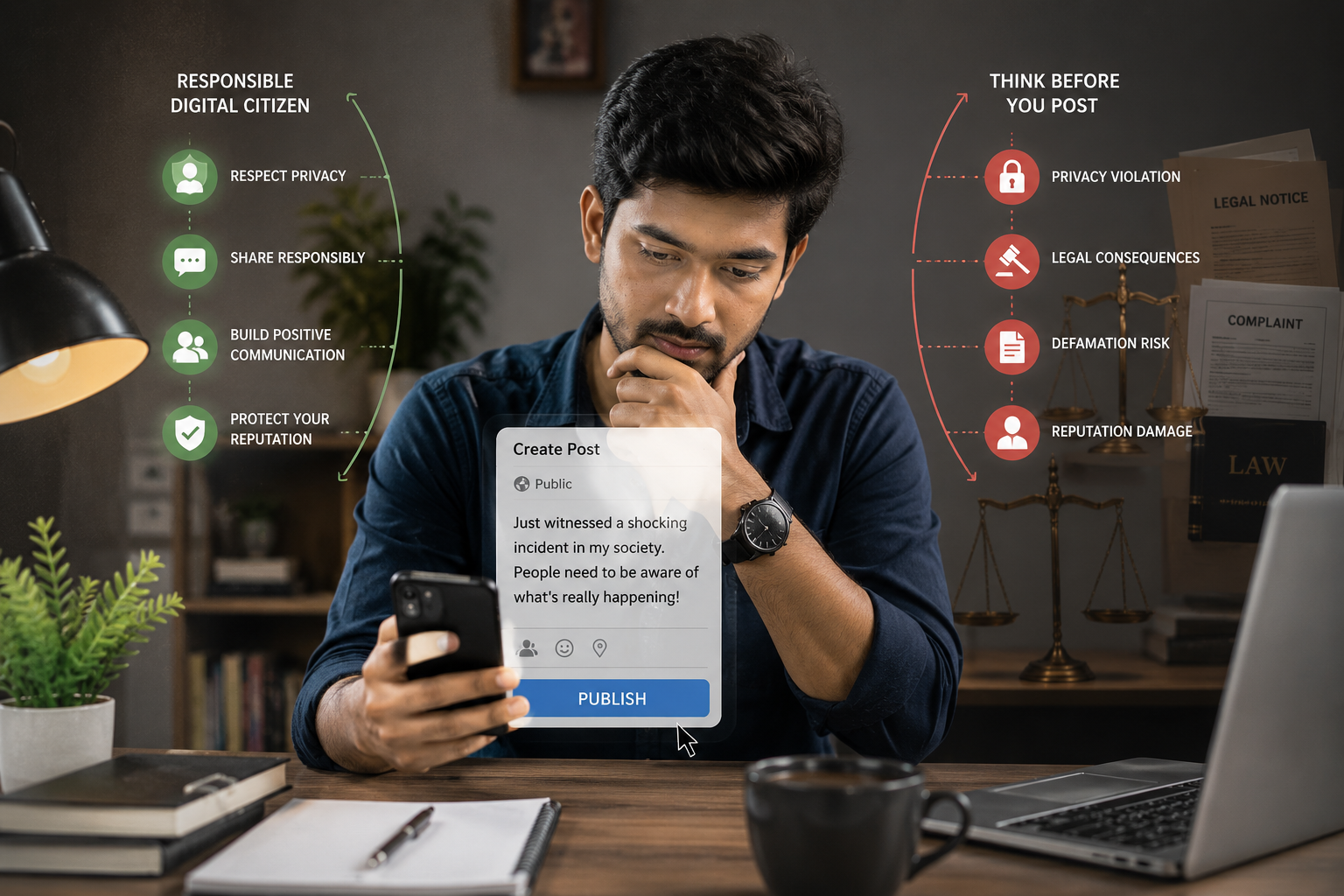
Social media has become an inseparable part of modern life. People share opinions, celebrate achievements, upload photographs, review businesses, discuss current events, and interact with thousands of people every day. While these platforms encourage freedom of expression, they also create permanent digital records that can carry legal consequences. Many users mistakenly believe that deleting a post or restricting its visibility removes all responsibility. In reality, screenshots, archived content, and digital records often remain available long after the original content disappears.
One of the most common legal mistakes is posting emotional content without considering its long-term impact. During moments of anger or frustration, individuals sometimes publish false allegations, offensive comments, confidential workplace information, or private conversations without the consent of others. Although such posts may receive immediate attention online, they can later become evidence in legal disputes involving defamation, privacy violations, workplace misconduct, or breach of contractual obligations. What begins as a few seconds of emotional expression may result in months of personal or professional difficulties.
Another frequently overlooked issue is sharing photographs or videos of other individuals without permission. Posting images of children, employees, customers, or private events may unintentionally violate privacy rights or create conflicts that could have been avoided through simple communication. Businesses, in particular, should exercise caution before publishing customer information, testimonials, or workplace photographs without obtaining proper consent.
The safest approach is to pause before posting. Ask yourself whether the information is accurate, respectful, necessary, and appropriate for a public audience. If there is any doubt about the consequences, delaying the post is usually the wiser decision. Responsible use of social media protects not only your reputation but also your legal interests and professional credibility.
Never assume that deleting a social media post completely removes it from the internet. If you would not be comfortable presenting the content before your employer, family, or a legal authority, think carefully before publishing it.
Legal Mistake #8 - Delaying Legal Action
Many people hope that legal problems will resolve themselves with time. Whether it involves unpaid money, a property disagreement, consumer complaints, employment issues, or contract disputes, individuals often postpone taking action because they wish to avoid confrontation or believe the other party will eventually fulfill their obligations. While patience can be valuable in many situations, unnecessary delays frequently make legal problems more difficult to resolve.
As time passes, important documents may be misplaced, electronic records may become unavailable, witnesses may forget crucial details, and communication between the parties may gradually disappear. In some situations, legal rights are also subject to statutory time limits, meaning that waiting too long could reduce or even eliminate certain legal remedies. Acting promptly does not necessarily mean filing a lawsuit immediately; it means preserving evidence, documenting communications, and seeking appropriate guidance before the situation becomes more complicated.
Delays also increase emotional stress. Living with unresolved disputes often affects personal relationships, work performance, and overall peace of mind. Addressing issues early provides greater flexibility for negotiation, mediation, or settlement before positions become firmly opposed. Many disagreements can be resolved efficiently when both parties communicate openly at an early stage.
The key lesson is simple: legal awareness includes timely action. Ignoring problems rarely causes them to disappear. Instead, taking informed and responsible steps as soon as concerns arise usually provides the best opportunity for achieving a fair and practical resolution.
Whenever a legal dispute arises, preserve all relevant documents, emails, messages, receipts, and payment records. Accurate documentation combined with timely action often becomes your strongest protection.
Legal Mistake #9 – Believing Online Legal Information Without Verification
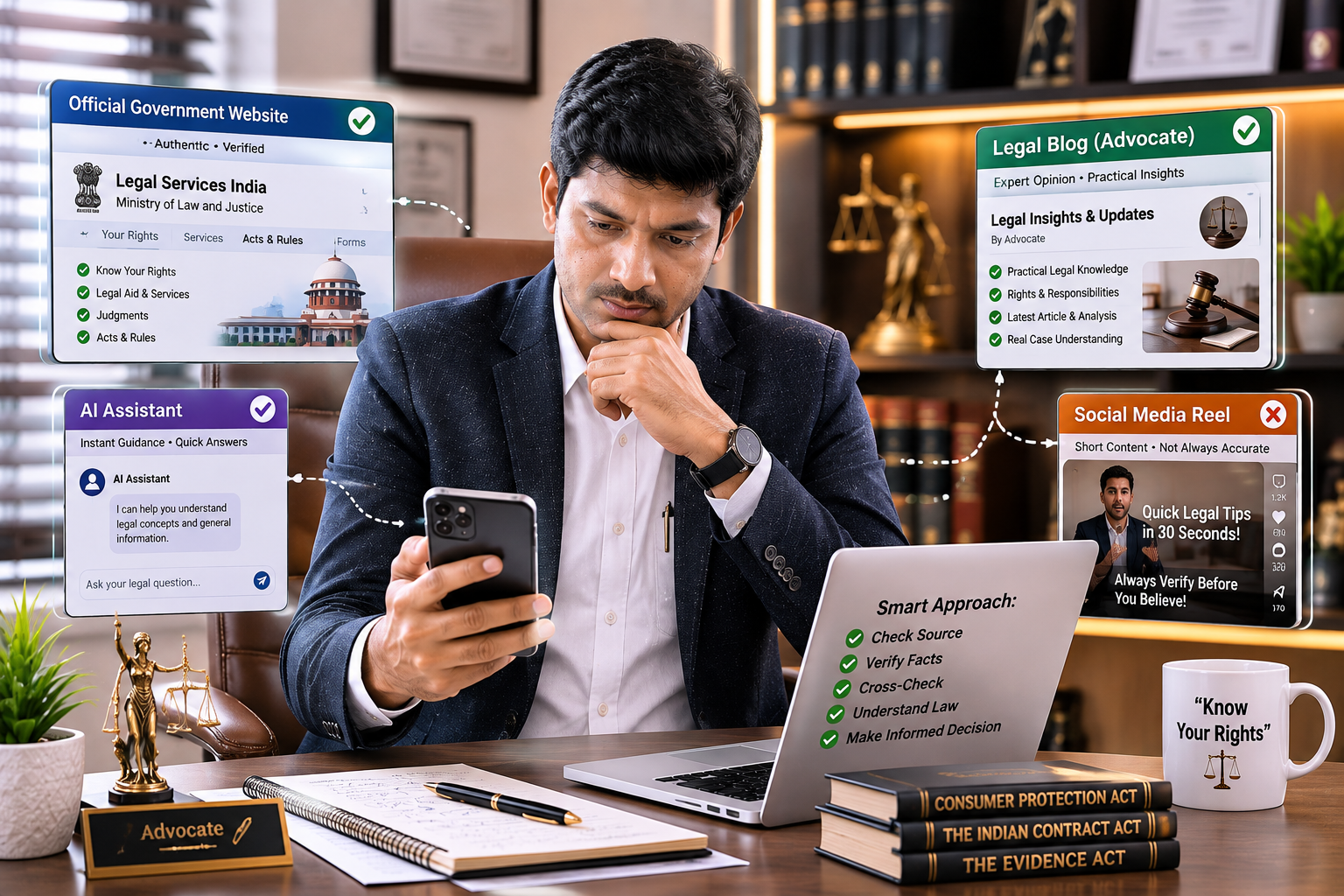
A small business owner receives a legal notice from a customer regarding a payment dispute. Unsure about what to do next, he immediately searches the internet for answers. Within seconds, hundreds of results appear blogs, YouTube videos, social media reels, discussion forums, and AI-powered tools all offering different opinions. One video confidently claims that such notices can simply be ignored. Another insists that immediate legal action is the only option. An online discussion forum suggests a completely different approach, while an AI chatbot provides a general explanation based on the information entered. Confused by the conflicting advice, the business owner chooses the quickest solution without verifying whether it actually applies to his situation.
A few weeks later, he discovers that the advice he followed was incomplete. The legal notice required a timely response, and delaying action has complicated the dispute. What appeared to be a simple internet search has now resulted in additional stress, unnecessary expenses, and the realization that not all online information carries the same level of reliability. The problem was not using the internet-it was assuming that every source was equally trustworthy.
This situation has become increasingly common because legal information is now more accessible than ever before. Official government websites, educational articles written by qualified advocates, AI-powered assistants, discussion forums, and short-form social media videos all provide information, but they serve very different purposes. Understanding this difference is an important part of legal awareness. Reliable decision-making depends not only on finding information but also on evaluating where that information comes from before acting upon it.
The internet is an excellent place to begin learning about legal concepts, terminology, and general procedures. However, legal rights and responsibilities often depend on the specific facts of a case, applicable laws, local regulations, and recent legal developments. Advice that is accurate for one individual may be completely inappropriate for another. Before making decisions involving property, employment, business, taxation, consumer rights, or financial obligations, always verify important information through reliable official sources or seek guidance from a qualified legal professional. A few extra minutes spent confirming the facts today can prevent months of unnecessary legal complications tomorrow.
| Source | Reliability | Best Used For | Should You Rely on It Alone? |
|---|---|---|---|
| Official Government Websites | High | Laws, official notifications, public services, legal procedures, citizen rights | Yes, for official information. Always ensure the website belongs to the appropriate government authority. |
| Qualified Advocate or Law Firm Blogs | High | Learning legal concepts, understanding procedures, and general awareness | Use for education, but verify official requirements and seek professional advice for your specific case. |
| AI Chatbots | Moderate | Explaining terminology, summarizing concepts, creating awareness | No. AI may not always reflect the latest legal developments or the unique facts of your situation. Always verify before consulting a professional. |
| Social Media Reels, Shorts, or Viral Posts | Low | Discovering topics and raising general awareness | No. Never make important legal decisions based solely on short-form content without independent verification. |
Each of these sources has value when used appropriately. Official government websites generally provide the most reliable information because they publish laws, notifications, and public procedures directly from the relevant authorities. Educational articles written by qualified advocates can simplify complex legal concepts and help readers understand how legal principles work in practice. AI chatbots can explain terminology, summarize information, and help users identify useful questions to ask a professional, but they should never be treated as a substitute for legal advice. Social media videos and online discussions can raise awareness about legal issues, yet their limited format often leaves out important context that may significantly affect a real legal situation.
The safest approach is to compare information from multiple reliable sources before taking action. When a legal matter involves your finances, employment, property, business, or personal rights, verify the latest information through the relevant government authority and consult a qualified legal professional whenever necessary. Responsible verification is not about distrust-it is about making informed decisions with confidence.
Before acting on any legal information you find online, ask yourself three simple questions:
• Who published this information?
• Is it supported by an official or authoritative source?
• Does it apply to my specific situation?
If the answer to any of these questions is uncertain, verify the information before making an important legal decision.
This article is intended for general legal awareness and educational purposes only. Laws, government procedures, and legal interpretations may change over time and can vary depending on the facts of each case and the applicable jurisdiction. Before making important legal decisions, verify the latest information through the relevant government authority or consult a qualified legal professional for advice specific to your circumstances.
In today's digital world, finding legal information is easy but identifying reliable legal information is the real skill. The people who protect themselves most effectively are not those who search the fastest; they are the ones who verify before they act. Developing this habit strengthens legal awareness, reduces avoidable mistakes, and helps ensure that important decisions are based on accurate and trustworthy information rather than assumptions or incomplete advice.
Legal Mistake #10 – Depending Only on Informal Legal Advice
Family members, friends, neighbours, and colleagues often offer legal opinions with good intentions. Someone may confidently say, "This is how the law works," simply because they experienced a similar situation years ago or heard advice from another person. While such conversations may provide useful perspectives, treating informal advice as a substitute for professional guidance can become a costly mistake.
Every legal situation is unique. Two disputes that appear similar on the surface may involve completely different legal rights, documents, timelines, or responsibilities. Advice that was appropriate under one set of circumstances may be unsuitable in another. Acting solely on informal opinions may lead to incorrect decisions, missed opportunities, or avoidable legal complications that become much harder to correct later.
Seeking professional legal guidance does not always mean preparing for court proceedings. In many cases, a brief consultation helps clarify rights, explain available options, identify potential risks, and prevent misunderstandings before they develop into disputes. Early advice often saves considerable time, expense, and emotional stress because problems are addressed before they become more complicated.
Listening to experienced friends and family can certainly be valuable, but important legal decisions deserve careful evaluation based on accurate information rather than assumptions. Combining practical experience with qualified legal guidance allows individuals to make informed decisions with greater confidence and security.
Use informal advice to broaden your perspective, but make important legal decisions only after verifying the facts through reliable official sources or a qualified legal professional.
Practical Guidance: Simple Habits That Protect You from Legal Problems
Legal awareness does not require extensive legal knowledge or years of professional experience. Most everyday legal problems can be avoided by developing a few consistent habits that encourage careful decision-making. Small actions performed regularly often provide stronger protection than complicated legal strategies introduced after a dispute has already begun.
Before signing any agreement, take the time to understand every important clause instead of relying on assumptions. Preserve copies of contracts, receipts, invoices, payment confirmations, and important communications in an organized manner so they remain available whenever needed. Treat personal information as confidential, verify the authenticity of websites before sharing sensitive details, and think carefully before posting content on social media that could affect your reputation or someone else's privacy.
Equally important is the habit of seeking clarification whenever uncertainty exists. Asking questions before making significant financial or legal decisions demonstrates responsibility, not weakness. Whether purchasing property, lending money, accepting employment, or resolving a dispute, informed decisions provide the strongest protection against avoidable legal mistakes. Legal awareness is ultimately about preventing problems rather than solving them after they become serious.
Common Legal Myths vs Reality
Many legal problems begin with assumptions rather than facts. People often rely on advice they have heard from friends, relatives, social media, or popular misconceptions without verifying whether it is legally accurate. These misunderstandings may seem harmless, but they can influence important decisions involving money, property, employment, and personal rights. Recognizing the difference between myths and reality is one of the simplest ways to reduce unnecessary legal risks and make more informed choices in everyday life.
| Common Myth | Reality |
|---|---|
| "A verbal promise is enough if I trust the person." | Trust is valuable, but written records provide clarity and protect everyone if misunderstandings arise. |
| "I don't need to read standard contracts." | Standard contracts often contain important terms regarding payments, responsibilities, penalties, and dispute resolution. |
| "Deleting a social media post removes all evidence." | Screenshots, backups, and digital records may continue to exist even after the original content is deleted. |
| "Legal notices can be ignored if they seem unimportant." | Ignoring official communications may increase complications or reduce available legal options. |
| "Online legal advice always applies to my situation." | Every legal matter depends on its own facts and circumstances. Reliable verification is essential before making decisions. |
Understanding these misconceptions encourages more responsible decision-making. Rather than acting on assumptions, taking a few moments to verify information, preserve documentation, and seek clarification when needed can prevent many avoidable legal disputes. Legal awareness is not about memorizing complicated laws it is about replacing common myths with practical habits that protect your interests throughout everyday life.
Final Thought
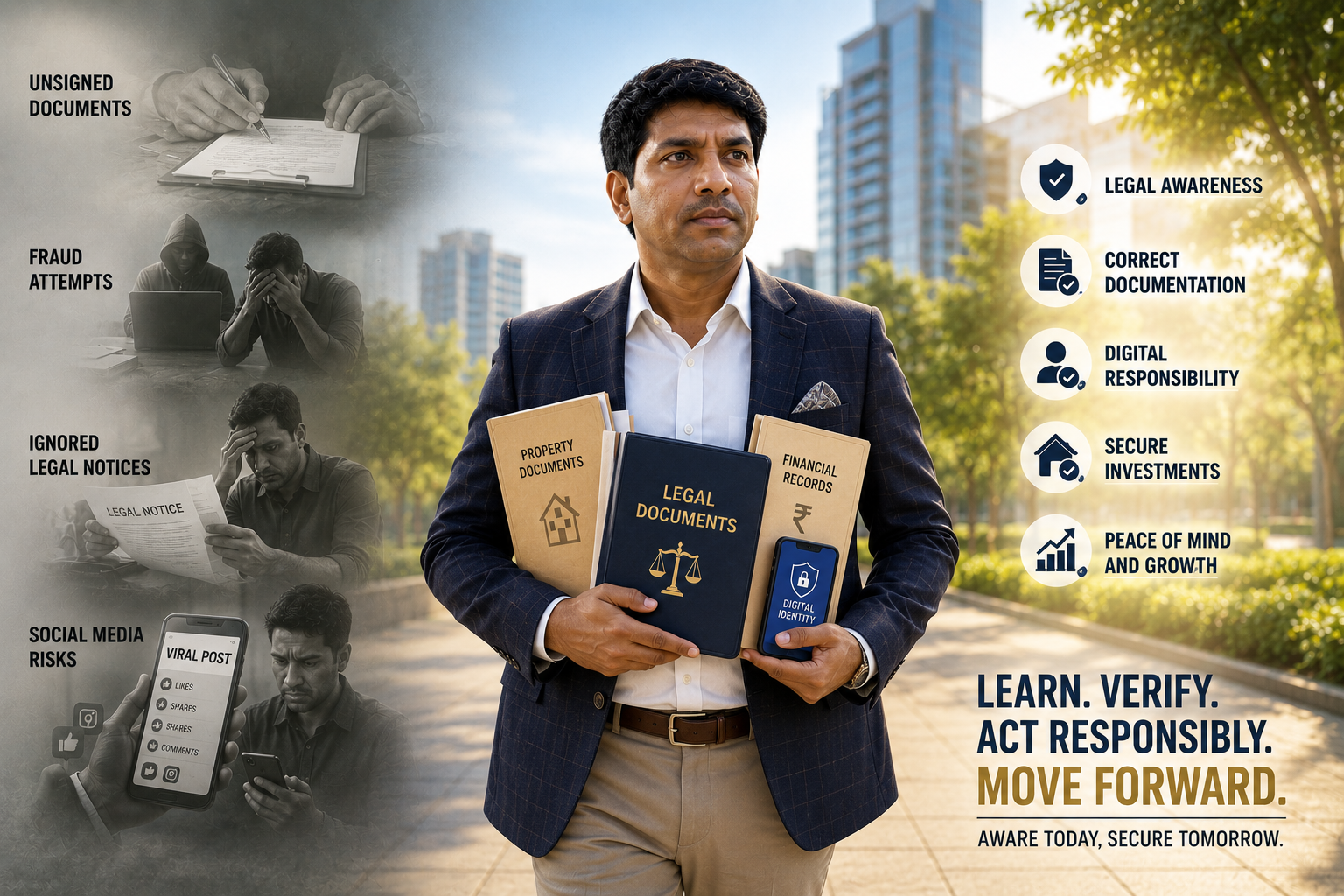
Legal awareness is often misunderstood as something relevant only to lawyers, judges, or people involved in court proceedings. In reality, it is a practical life skill that influences decisions almost every day. From signing employment contracts and purchasing property to using social media and sharing personal information online, ordinary choices carry legal responsibilities that many people overlook until a problem arises. Developing the habit of thinking carefully before acting is often the first and most effective step toward protecting yourself.
Most legal disputes do not begin with deliberate wrongdoing. They usually develop from small oversights, assumptions, or informal arrangements that seemed harmless at the time. A document signed without reading, an undocumented financial transaction, or a delayed response to an official notice can gradually create situations that require significant time, emotional energy, and financial resources to resolve. The encouraging reality is that many of these problems are entirely preventable through informed decision-making, proper documentation, and timely action.
Legal awareness should never create fear or discourage people from making important decisions. Instead, it should inspire confidence. Understanding your rights and responsibilities allows you to navigate everyday situations with greater clarity, ask the right questions before making commitments, and recognize potential risks before they become serious problems. Prevention is almost always simpler, less expensive, and less stressful than resolving a legal dispute after it has already developed.
As society becomes increasingly connected through technology, digital services, and online communication, legal responsibility continues to evolve alongside everyday life. The people who remain informed, organized, and proactive will be better prepared to protect not only their finances but also their reputation, relationships, and future opportunities.
The law rarely changes your life in a single dramatic moment. More often, it quietly reflects the choices you make every day. The documents you read, the promises you record, the information you verify, and the decisions you make today may become the strongest protection for your tomorrow.
Key Takeaways
- Everyday legal mistakes often begin with simple oversights rather than intentional wrongdoing.
- Reading contracts carefully before signing helps prevent unexpected legal and financial obligations.
- Written documentation protects both personal relationships and business transactions by reducing misunderstandings.
- Personal information should always be shared responsibly to reduce the risk of identity theft and digital fraud.
- Property purchases require thorough legal verification before any financial commitment is made.
- Responsible social media use protects personal reputation and reduces unnecessary legal risks.
- Prompt action and proper documentation significantly improve the chances of resolving disputes effectively.
- Legal awareness empowers individuals to make informed decisions that safeguard their rights, finances, and future.
Legal awareness helps individuals understand their rights and responsibilities before problems arise. It encourages informed decision-making, reduces avoidable disputes, and promotes confidence when dealing with contracts, financial matters, digital services, or property-related transactions.
Yes. Written agreements are not a sign of mistrust; they provide clarity and reduce the possibility of misunderstandings. Even simple documentation can help preserve relationships by ensuring that everyone shares the same understanding from the beginning.
They can. Posts containing false information, confidential material, offensive comments, or privacy violations may result in personal, professional, or legal consequences. Responsible online communication is an important aspect of legal awareness.
Read every section carefully, ask questions about anything you do not understand, verify all important terms, preserve a signed copy, and seek professional guidance if the agreement involves significant financial or legal responsibilities.
Develop simple habits such as maintaining written records, verifying information before acting, responding promptly to official communications, protecting personal information, and seeking reliable guidance whenever uncertainty exists. Preventive awareness is often the most effective legal protection.
Divyal Vision Reflection – Continue Your Personal Growth Journey
Legal awareness is closely connected with informed decision-making, critical thinking, personal responsibility, and digital awareness. If you enjoyed this article, continue exploring these insightful guides from DivyalVision to strengthen your knowledge and make wiser everyday decisions: