Legal Awareness for Every Family: Simple Steps That Prevent Future Disputes
Every family preserves something valuable for the next generation. Sometimes it is a home built through years of hard work. Sometimes it is a small business, a piece of agricultural land, carefully saved investments, cherished family photographs, or simply the values that hold everyone together. Yet alongside these visible assets are equally important documents that quietly protect a family's future. Identity records, property papers, nominations, insurance policies, wills, and financial documents rarely receive daily attention, but they often become indispensable when life takes an unexpected turn.
Many families believe documentation is something to think about later. Daily responsibilities, careers, education, children's needs, and financial commitments naturally take priority. As months turn into years, important papers are stored in different cupboards, nomination details remain outdated, property records are never reviewed, and no one is completely certain where essential documents are kept. Everything appears perfectly normal until a medical emergency, property transaction, retirement, or another major life event suddenly makes those documents urgently important.
This situation does not arise because families are careless. It happens because legal preparedness is rarely discussed as an everyday habit. Most people understand the importance of saving money, purchasing insurance, or maintaining good health. Far fewer recognise that organised records and family legal awareness deserve the same level of attention. A few hours spent organising important documents today may save weeks of confusion and unnecessary stress in the future.
This article explores how family legal awareness helps households organise important records, maintain essential documentation, understand the importance of nominations and wills, and create simple habits that protect future generations. The goal is not to encourage unnecessary paperwork but to show how thoughtful preparation brings clarity, confidence, and peace of mind to every family.
Legal Awareness for Every Family Begins with Simple Habits
The Patil family had always believed they were well organised. Important documents were safely stored, household expenses were managed responsibly, and everyone focused on building a secure future. Whenever new papers arrived, someone would say, "We'll keep this safely," before placing them inside different drawers, cupboards, office bags, or old files. Since nothing urgent ever happened, no one questioned whether the documents could actually be found quickly when they were needed.
Several years later, an unexpected medical emergency required immediate access to insurance records, identity documents, bank details, and previous medical papers. Instead of concentrating entirely on supporting their loved one, family members spent valuable time searching through multiple files, calling relatives, checking old cupboards, and trying to remember where important documents had been placed. Eventually everything was located, but the experience revealed that the family had mistaken storage for organisation. The documents existed—they simply were not organised in a way that supported the family during a stressful situation.
Experiences like this are surprisingly common. Most families do not face difficulties because documents are missing altogether. They struggle because records are scattered across different locations, digital copies are incomplete, nomination details have not been reviewed for years, or no one knows who is responsible for maintaining important paperwork. These situations rarely begin as legal problems. They begin as organisational challenges that gradually become more complicated when urgent decisions must be made.
Developing family legal awareness means creating practical habits long before those moments arrive. Organised documentation reduces confusion, improves communication among family members, and allows everyone to focus on what truly matters during important life events. Good preparation is not about expecting problems—it is about caring enough to ensure that ordinary administrative tasks never become extraordinary sources of stress.
Every organised family develops routines that protect its future. Some schedule annual health check-ups, others review financial goals, and many plan for children's education. Organising important family documents deserves the same attention because it quietly supports every one of those priorities. When records are accurate, accessible, and understood by the appropriate family members, decisions become easier, responsibilities become clearer, and unexpected situations become far less overwhelming. Legal preparedness is therefore not a separate activity—it is simply another form of responsible family planning.

Building a Strong Foundation with Identity Documents
Every important family record is connected in some way to identity. Whether opening a bank account, purchasing property, applying for education, receiving healthcare benefits, obtaining insurance, or completing official formalities, identity documents serve as the foundation upon which many other records depend. Because these documents are used so frequently, families often assume they will always be available whenever needed. Surprisingly, this confidence sometimes leads to poor organisation.
Imagine a young couple preparing to apply for a home loan. As the application process begins, they realise that one identity document still carries an old residential address, another contains a spelling variation in the surname, and several supporting documents are stored separately between two different cities because of previous employment transfers. None of these issues appear serious individually, yet together they create avoidable delays that increase stress during an already important financial decision. The challenge was never the absence of documentation—it was the absence of organised preparation.
Strong family legal awareness begins with maintaining complete, accurate, and well-organised identity records for every member of the household. Adults should know where important documents are stored, while younger family members should gradually learn why these records matter and how they should be protected. Keeping secure digital copies alongside carefully preserved physical originals can also improve accessibility, provided appropriate privacy and security practices are followed.
Identity documents deserve periodic review rather than permanent storage. Names, addresses, contact information, marital status, and other important details may change over time. Reviewing these records annually helps families identify inconsistencies early, making future administrative processes smoother and reducing unnecessary complications when important opportunities or emergencies arise.
Organising Property Papers Before They Are Needed
For many families, property represents far more than financial value. It reflects years of dedication, careful planning, personal sacrifice, and dreams passed from one generation to the next. Whether it is an apartment in a city, a family home in a village, agricultural land, or a small commercial space, property often becomes one of a family's most significant assets. Surprisingly, however, families sometimes invest great effort in acquiring property while giving far less attention to organising the documents connected with it.

Consider the Deshmukh family, who purchased a residential plot several years ago. The registration process was completed successfully, and everyone believed the paperwork had been safely preserved. Over time, some documents remained in the lawyer's file, a few receipts were stored in an office drawer, tax payment records were placed in another folder, and digital copies were never created. Years later, when the family decided to begin construction, locating every important document became unexpectedly time-consuming. Nothing had been lost permanently, but valuable time and unnecessary anxiety could have been avoided through better organisation.
This situation is more common than many people realise. Property-related confusion often develops gradually because different documents are stored separately over many years. Sale deeds, tax receipts, mutation records, approved plans, utility records, loan-related papers, and correspondence may all exist, yet they are scattered across multiple locations. During routine life this may not seem important, but when property is sold, renovated, transferred, refinanced, or reviewed, organised documentation becomes extremely valuable.
Strong family legal awareness encourages families to treat property records as living documents rather than files that remain untouched for decades. Reviewing important records periodically, preserving both physical and secure digital copies, and ensuring that responsible family members know where documents are stored helps create confidence rather than confusion. Good organisation protects not only paperwork but also the time, effort, and emotional investment that families have made over many years.
Property Documents Every Family Should Organise
The exact documents required may differ depending on the type of property, state regulations, ownership structure, and the purpose of the transaction. However, maintaining an organised record of important property-related documents makes future administrative processes significantly easier.
| Document Category | Why It Matters |
|---|---|
| Ownership documents | Help establish the property's ownership history. |
| Property tax records | Confirm that tax-related obligations have been maintained. |
| Utility connection records | Support ownership and occupancy history where relevant. |
| Loan or mortgage papers | Preserve financial records connected with the property. |
| Building approvals and plans | Help maintain organised construction-related documentation. |
| Society or association records | Record important communication relating to residential properties. |
| Repair and maintenance records | Provide useful historical information about the property. |
This checklist is intended as general guidance rather than a complete legal requirement. Property documentation requirements vary depending on the state, local regulations, ownership structure, and the nature of the transaction. Families should seek qualified professional guidance whenever property-related legal advice is required.
Families often spend months researching the right property before making a purchase, yet they rarely dedicate even a single afternoon each year to reviewing the documents connected with it. Establishing an annual "family document review day" can become one of the simplest and most valuable household habits. During this review, important papers can be checked for completeness, digital backups updated, outdated information identified, and missing records located before they become urgent. Small annual reviews usually prevent much larger administrative challenges in the future.
Why Nominations Matter More Than Most Families Realise
Many people hear the word "nomination" only when opening a bank account, purchasing insurance, investing in financial products, or joining an employee benefit scheme. The form is completed in a few minutes, signed, and then forgotten for many years. However, families often experience major life changes after those forms are completed. Marriages take place, children are born, addresses change, relationships evolve, and financial responsibilities gradually shift. Despite these important life events, nomination details frequently remain exactly as they were when the account was first opened.
Imagine a family where several financial accounts were created over a period of twenty years. Some were opened before marriage, others before children were born, and a few during the early years of employment. Every account contains nomination information, but nobody has reviewed whether those details still reflect the family's current circumstances. The issue is not that the original forms were completed incorrectly. The problem is that life has changed while the records have remained unchanged.
Developing family legal awareness means understanding that important records should evolve alongside important life events. Reviewing nominations periodically helps families confirm that account records remain consistent with their present circumstances. It also encourages meaningful conversations about financial planning, document organisation, and responsible record keeping rather than leaving these matters to be considered only during unexpected situations.
It is equally important to understand that a nomination and a will serve different purposes, and their legal effect depends on the applicable law and the specific circumstances involved. Because these matters can become legally complex, families should seek advice from a qualified legal professional whenever questions arise regarding succession planning, estate matters, or the legal implications of nominations and wills.
Families regularly review school admissions, insurance policies, investment goals, and annual budgets because circumstances naturally change over time. Important legal and financial records deserve the same periodic attention. Reviewing nominations whenever major life events occur—such as marriage, the birth of a child, retirement, or significant financial changes—helps ensure that family records remain organised, current, and consistent with present circumstances rather than reflecting decisions made many years earlier.
Understanding the Role of a Will
Families often find it easy to discuss education, careers, investments, and future aspirations, yet conversations about succession planning are frequently postponed. Many people assume that preparing a will is something only wealthy individuals need to consider or that it can wait until much later in life. As a result, years pass without any discussion, even though responsibilities, family structures, and personal circumstances continue to evolve.

Consider the Kulkarni family. The parents had spent decades building financial stability through disciplined saving, purchasing a family home, and investing carefully for their children's future. They openly discussed educational goals, retirement plans, and long-term financial security, but they never found the right time to talk about how their assets should be managed in the future. It was not because they wanted to avoid the subject; they simply believed there would always be another opportunity. Over time, they realised that leaving important decisions undocumented could create uncertainty for the very people they wished to protect.
A thoughtfully prepared will is not merely a legal document; it is also an act of responsible planning. It provides an opportunity for individuals to express their intentions clearly while reducing uncertainty for family members. Rather than leaving loved ones to interpret personal wishes during emotionally difficult periods, proper planning allows those wishes to be recorded in an organised and transparent manner. This approach reflects care, responsibility, and consideration for future generations rather than pessimism about the future.
It is equally important to understand that the preparation, validity, interpretation, and legal effect of a will depend upon applicable laws and individual circumstances. Requirements may differ depending on personal situations and legal provisions. Anyone considering succession planning or preparing a will should seek advice from a qualified legal professional to ensure that the document reflects their specific circumstances and complies with the relevant legal requirements.
Will and Nomination: Understanding the Difference
The terms "will" and "nomination" are sometimes used interchangeably in everyday conversations, but they do not serve the same purpose. Understanding this distinction helps families organise their records more responsibly and encourages them to seek professional advice whenever necessary.
| Will | Nomination |
|---|---|
| Records a person's intentions regarding the distribution of assets after death, subject to applicable law. | Identifies a nominee for a specific account, investment, policy, or financial product according to the relevant rules governing that asset. |
| Usually forms part of broader estate planning. | Usually relates to a particular financial product or account. |
| May require legal guidance depending on individual circumstances. | Should be reviewed whenever major family or financial circumstances change. |
| Covers broader succession planning. | Primarily assists in the administration of specific assets. |
This comparison provides only a general understanding. The legal relationship between a will, nomination, succession laws, and ownership rights varies depending on the applicable legal framework and the facts of each case. Professional legal advice should always be obtained for matters involving succession planning or inheritance.
Preparing important family records is not about expecting the worst. It is about reducing uncertainty for the people we care about most. Families routinely prepare for children's education, retirement, healthcare, and financial security because planning creates confidence. Organising succession-related documents follows the same principle. When important decisions are documented thoughtfully and reviewed periodically, future generations are far more likely to experience clarity instead of confusion during significant life events.
Creating a Family Document Folder
One of the simplest habits any household can adopt is maintaining a single, well-organised family document folder. Many families already possess every important document they need, but those records are scattered across cupboards, office files, bank lockers, digital folders, and personal drawers. During everyday life this rarely creates difficulties because documents are seldom required at short notice. However, when an important financial transaction, medical emergency, insurance claim, educational admission, or property matter arises, locating essential records quickly becomes a challenge.
Imagine a daughter helping her ageing parents complete retirement-related formalities. Each required document exists somewhere in the house, yet no one remembers exactly where everything has been stored. Some papers are inside a locker, others remain in old office files, a few have digital copies saved on different mobile phones, and several important receipts are mixed with unrelated household documents. Instead of completing the formalities smoothly, the family spends several days searching through different locations simply to organise information that could have been maintained together from the beginning.
Developing family legal awareness means creating systems rather than depending on memory. A well-organised family document folder should contain clearly labelled sections, be reviewed periodically, and remain accessible to trusted family members whenever appropriate. Secure digital backups may also provide additional convenience, provided they are protected through responsible privacy and security practices.
Creating such a system does not require expensive software or specialised knowledge. A labelled physical folder, a secure digital archive, regular reviews, and open communication among responsible family members are often sufficient. These small organisational habits quietly reduce stress and ensure that important records remain available whenever life unexpectedly demands them.
Essential Family Records Checklist
The exact records every family requires will vary according to personal circumstances. However, the following checklist provides a practical starting point for organising important household documentation.
| Category | Examples |
|---|---|
| Identity Documents | Aadhaar, PAN, Passport, Driving Licence, Voter ID |
| Property Records | Ownership papers, tax records, approved plans, utility documents |
| Financial Records | Bank information, investment records, insurance policies |
| Employment Records | Appointment letters, pension-related papers, retirement documents |
| Medical Records | Health insurance documents, important medical history, emergency information |
| Family Records | Marriage certificate, birth certificates, educational certificates, nomination details |
| Digital Backup | Secure electronic copies stored responsibly with appropriate privacy protection |
This checklist should be reviewed periodically and updated whenever significant life events occur. Families differ in their needs, so additional records may be appropriate depending on personal, financial, or professional circumstances.
A family document folder is valuable only when it remains organised and current. Set aside one day each year to review important records together, remove outdated copies, update contact details where necessary, and confirm that trusted family members know where essential documents are stored. This simple annual habit often prevents unnecessary stress while strengthening communication, preparedness, and confidence throughout the household.
Talking Openly About Important Family Records
Every family has conversations that happen naturally. Parents discuss children's education, siblings plan family celebrations, and spouses make decisions about savings, travel, and future goals. Yet one topic is often postponed because it feels uncomfortable—important family documents. Many people worry that discussing property papers, nominations, wills, insurance policies, or financial records may create unnecessary anxiety or misunderstandings. As a result, these conversations are delayed until an unexpected situation makes them unavoidable.
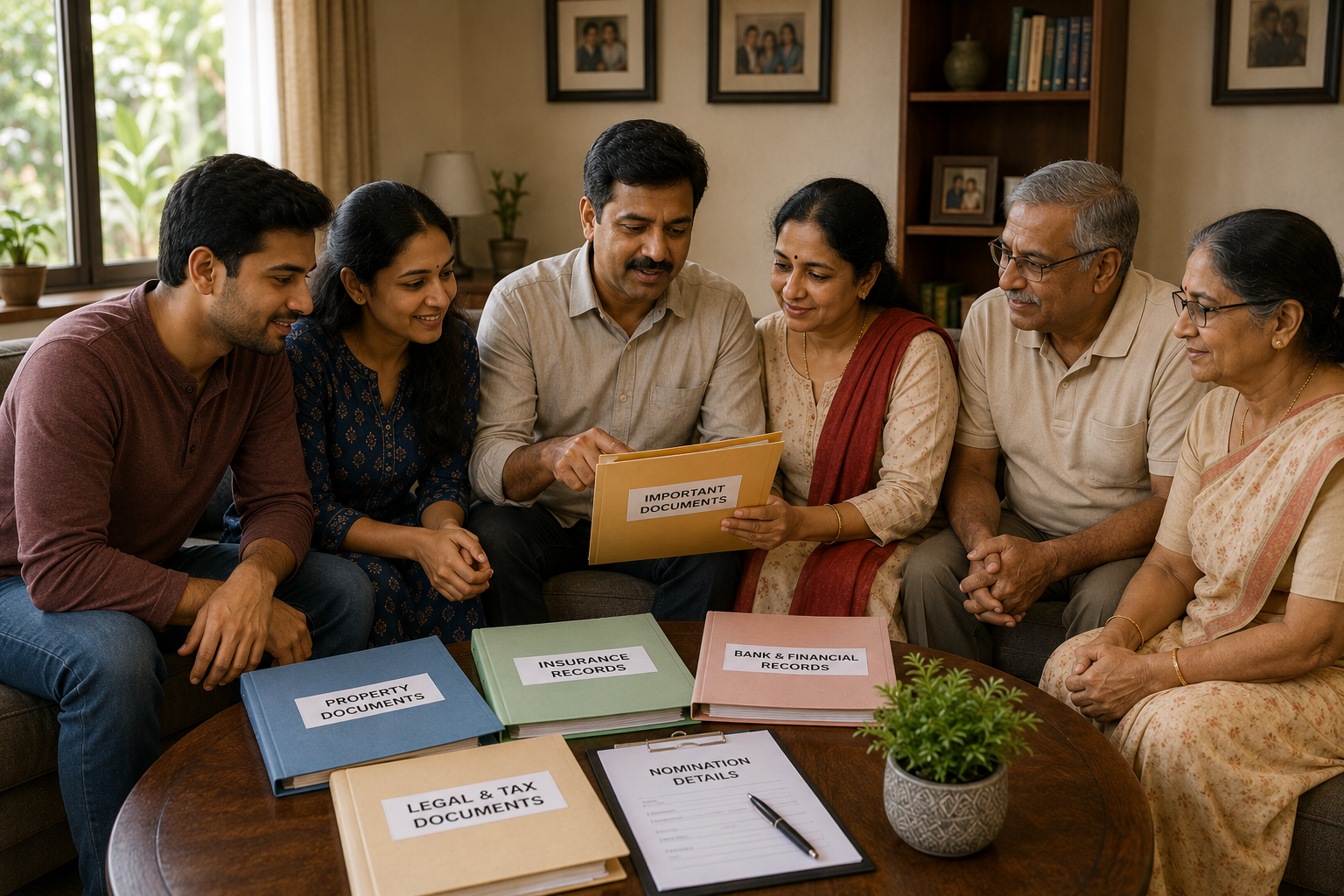
The Joshi family chose a different approach. Once every year, usually during the festive season when everyone was together, they set aside an hour to review important household records. The discussion was simple and practical. They confirmed where important documents were stored, checked whether insurance policies and nomination details needed updating, reviewed digital backups, and ensured that responsible family members knew how to access essential records if required. The conversation was never about dividing assets or expecting problems. Instead, it became another routine family responsibility, much like reviewing household finances or planning future goals.
Open communication often prevents confusion more effectively than last-minute explanations. When family members understand where important records are kept, who maintains them, and when they were last updated, they are less likely to face uncertainty during important life events. This habit also encourages younger family members to appreciate the value of organised documentation and responsible planning, helping them develop similar habits in their own lives.
Developing family legal awareness therefore extends beyond organising files. It includes creating an environment where important administrative responsibilities can be discussed calmly, respectfully, and without unnecessary hesitation. Families that communicate openly about documentation often discover that preparation strengthens confidence rather than creating concern.
Many families avoid discussing important records because they fear the conversation may seem uncomfortable. In reality, thoughtful communication usually has the opposite effect. When discussions focus on organisation, preparedness, and shared responsibility instead of ownership or disagreement, they help build trust and reduce uncertainty. A short annual conversation today can prevent countless questions tomorrow, allowing family members to focus on supporting one another rather than searching for information during stressful situations.
An Annual Family Documentation Review
Good organisation is not a task that is completed once and forgotten forever. Families grow, children become adults, careers change, new investments are made, addresses are updated, insurance policies are renewed, and financial priorities gradually evolve. Because life continues to change, family records should also be reviewed periodically to ensure they remain complete, accurate, and relevant.
An annual documentation review does not need to become a lengthy or complicated exercise. Setting aside one afternoon each year is often enough to verify that identity documents remain accurate, property records are properly organised, nominations still reflect current circumstances, insurance information is up to date, and digital backups remain accessible. During the same review, families can safely dispose of unnecessary duplicate papers while ensuring that important originals continue to be preserved securely.
This annual habit also provides an opportunity to identify administrative tasks that might otherwise be overlooked. A missing receipt can be replaced while memories are still fresh. Expiring documents can be renewed before deadlines become urgent. Contact details can be corrected, and new family responsibilities can be reflected appropriately in household records. By addressing these matters gradually, families avoid the pressure of trying to solve multiple administrative problems at the same time.
Strong family legal awareness is not measured by the number of documents a family possesses. It is reflected in how well those records are organised, reviewed, and understood. Consistent annual reviews transform documentation from a forgotten collection of papers into a practical system that quietly supports the family's long-term security and confidence.
Annual Family Documentation Checklist
A structured review makes it easier to maintain consistency from year to year. The following checklist can serve as a practical reminder during your family's annual documentation review.
| Review Area | Questions to Consider |
|---|---|
| Identity Documents | Are names, addresses, and contact details current? |
| Property Records | Are all important property-related documents organised and accessible? |
| Financial Records | Have bank, investment, and insurance records been updated where necessary? |
| Nominations | Do existing nominations still reflect current family circumstances? |
| Digital Backup | Have secure electronic copies been updated and verified? |
| Family Folder | Can trusted family members locate important records if required? |
| Professional Advice | Are there any significant family or property matters that now require professional guidance? |
This checklist is intended as a practical organisational tool. Individual families may require additional records depending on their financial, personal, or professional circumstances.
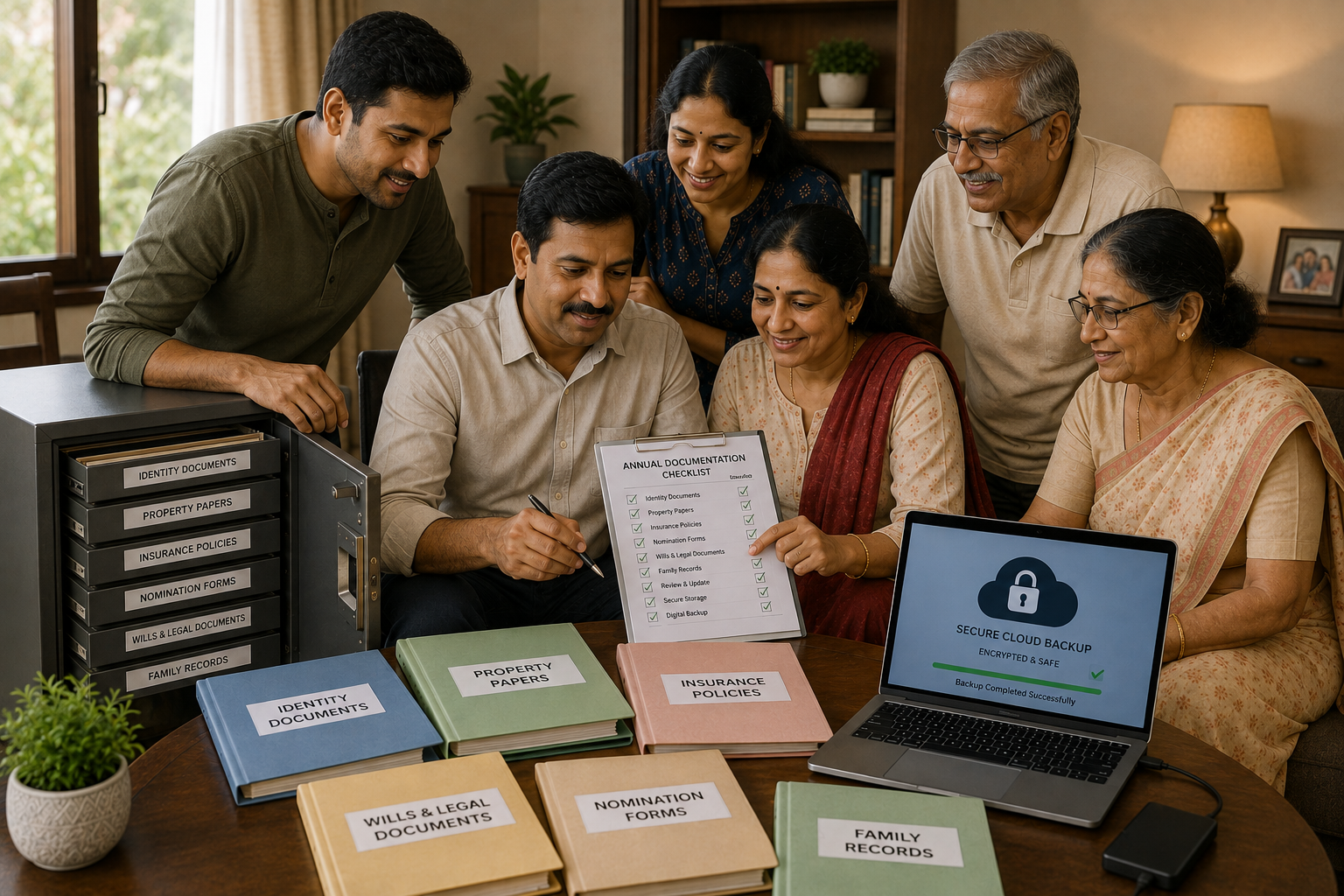
The purpose of an annual documentation review is not to search for problems. It is to maintain clarity while life is running smoothly. Families who review their records regularly rarely need to organise everything under pressure because important information has already been maintained carefully over time. Consistency, rather than complexity, is what makes family preparedness effective.
Final Reflection
Families spend years building homes, careers, businesses, savings, and memories that they hope will benefit future generations. Yet one of the most meaningful gifts they can leave behind is not simply financial security—it is clarity. Organised records, updated documents, thoughtful planning, and open communication help ensure that future decisions are guided by preparation rather than uncertainty. These quiet habits rarely attract attention during ordinary life, but they often become invaluable when important moments arrive.
Developing family legal awareness does not require specialised legal knowledge or complicated procedures. It begins with practical habits that any household can adopt: organising identity documents, reviewing property records, updating nominations when life changes, understanding the importance of succession planning, maintaining a family document folder, and communicating openly about responsibilities. Each habit may seem small on its own, yet together they create a strong foundation for responsible family planning.
It is equally important to recognise that every family's circumstances are different. Property ownership, financial arrangements, succession planning, and documentation requirements vary according to individual situations and applicable laws. Whenever important legal questions arise, seeking guidance from a qualified legal professional ensures that decisions are based on accurate advice tailored to the family's specific needs.
A well-prepared family is remembered not because it accumulated more documents than others, but because it left behind organisation instead of confusion, clarity instead of uncertainty, and thoughtful planning instead of unanswered questions.
Key Takeaways
- Family legal awareness begins with simple organisational habits rather than complex legal procedures.
- Keeping identity documents, property records, financial papers, and family records organised reduces confusion during important life events.
- Property-related documents should be reviewed periodically because documentation requirements and personal circumstances change over time.
- Nominations and wills serve different purposes, and families should understand their respective roles while seeking professional advice whenever required.
- A well-maintained family document folder helps trusted family members locate important records quickly during emergencies or administrative processes.
- Open family discussions about documentation encourage shared responsibility and reduce uncertainty for future generations.
- An annual review of important records helps families keep documents accurate, accessible, and aligned with current circumstances.
Family legal awareness means developing practical habits that help a household organise important legal and financial records responsibly. It includes maintaining identity documents, property papers, nominations, insurance policies, family records, and other essential documents so they remain accurate, accessible, and well organised. The objective is not to become legal experts but to ensure that important information is available whenever it is genuinely needed.
A practical approach is to review important records at least once every year or whenever a significant life event occurs. Marriage, the birth of a child, retirement, purchasing property, changing addresses, or making major financial decisions are all good opportunities to verify whether family records remain complete and up to date. Regular reviews help identify missing documents, outdated information, or records that require professional attention before they become urgent.
Maintaining original physical documents remains important for many official purposes. However, families may also benefit from keeping secure digital copies as backups, provided those copies are stored responsibly and protected with appropriate privacy and security measures. Digital backups improve accessibility, while physical originals continue to serve as important official records whenever required.
No. Although both are connected with future planning, they serve different purposes and may have different legal implications depending on the applicable laws and the specific circumstances involved. Because succession planning can become legally complex, families should seek guidance from a qualified legal professional whenever they need advice about nominations, wills, inheritance, or estate planning.
A well-organised family document folder helps household members locate essential records quickly during medical emergencies, financial transactions, insurance claims, educational admissions, property matters, or other important situations. Instead of searching through multiple cupboards, files, or digital devices, families can access organised information with confidence. This simple habit saves time, reduces stress, and supports better decision-making when it matters most.
Divyal Vision – Continue Your Personal Growth Journey
Building a well-prepared family goes beyond organising documents. The following DivyalVision articles complement this topic by helping readers strengthen legal awareness, improve everyday decision-making, and develop responsible habits that protect both individuals and families:
- 📖 1. Legal Mistakes That Can Cost You More Than Money: 10 Facts Everyone Should Know – Many avoidable problems begin with everyday decisions that seem insignificant at the time. This article explains common legal mistakes and the practical habits that help prevent them before they affect your family, finances, or peace of mind. Read More
- 📖 2. The Hidden Legal Risks in Everyday Life That Most People Completely Ignore – Some legal risks develop quietly through routine activities rather than major events. Discover how greater awareness and better preparation help families recognise these situations before they become complicated. Read More
- 📖 3. Your Rights Begin with Awareness: Why Legal Knowledge Is Your Greatest Protection – Organising documents is only one part of family preparedness. Understanding basic legal rights and responsibilities empowers every family to make more informed and confident decisions throughout life. Read More
- 📖 4. The Truth About Verbal Promises and Written Agreements: What Really Protects You? – Clear documentation often protects relationships by preventing misunderstandings. Learn why written records and organised agreements play an important role in both personal and professional life. Read More
- 📖 5. Digital Life, Real Laws: Legal Responsibilities in the Online World Explained – Modern families increasingly manage records, banking, communication, and important documents online. This article explains how responsible digital habits help protect privacy, maintain organised records, and strengthen digital trust. Read More