UPI Spending: Is Digital Payment Making You Spend More Without Realizing It?
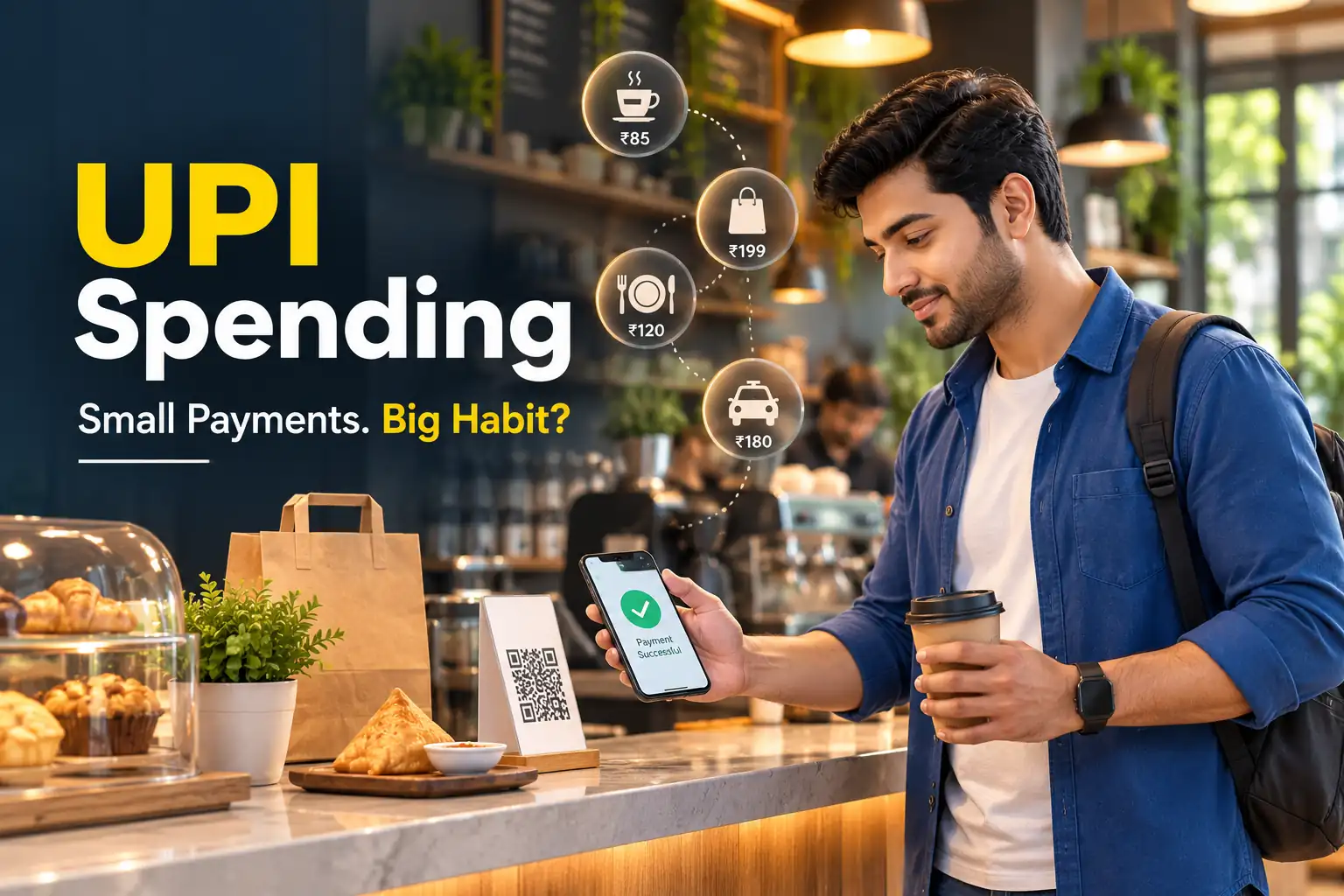
The difference between cash and digital payment is not only about technology. It is also about the experience of spending. When you pay with cash, you physically hand over notes and coins and can immediately see what remains in your wallet. That physical action can act as a small reminder that money has left your hands.
A UPI payment works differently. You can scan a QR code, confirm the amount and complete the transaction within seconds. There is no need to open a wallet, count notes or physically separate the money you are spending. For many everyday purchases, the process can feel almost invisible once the payment is complete.
This becomes interesting when the individual amounts are small. A ₹50 snack, ₹100 coffee or ₹150 convenience purchase may not seem significant when considered separately. The concern is not that these purchases are automatically unnecessary. It is that repeated small payments can be difficult to notice when each one feels too minor to deserve much attention.
The better habit is therefore not to judge every UPI payment. Instead, look at the pattern created by multiple payments. A single transaction tells you what you spent once. Your transaction history can tell you how often similar spending happens.
That distinction matters because financial awareness is not about avoiding every small pleasure or treating every purchase as a mistake. It is about knowing where your money is going well enough to decide whether your spending reflects your priorities.
When Small Digital Payments Stop Feeling Like Spending
One reason small digital payments can be easy to overlook is that the process requires very little effort. You do not need to carry cash, count notes or think about whether you have enough change. A QR code and a few taps can complete a purchase almost immediately.
That convenience becomes more noticeable when similar purchases happen repeatedly. A ₹70 breakfast add-on, ₹120 delivery charge, ₹90 evening snack and ₹150 convenience purchase may each seem minor on its own. The larger pattern becomes visible only when these transactions are considered together over several days.
This is where UPI Spending becomes a question of awareness rather than technology. The payment method does not determine whether a purchase is sensible. What matters is whether you remain aware of how often you are making these payments and how much they add up to over time.
You do not need to eliminate small purchases to manage your money better. Instead, try noticing when “just a small payment” becomes a repeated habit.
The Convenience Effect on Everyday Purchases
Convenience is one of the strongest reasons people prefer digital payments, and there is nothing inherently wrong with that. Paying a bill, buying groceries or splitting a restaurant expense becomes faster when the payment process is simple. The same convenience, however, can make it easier to complete a purchase without pausing to ask whether it fits your priorities.
Consider a simple example. You are travelling home and decide to order a snack because the payment takes only a few seconds. Later, you see an offer and make another small purchase. Neither decision necessarily creates a financial problem. But if similar decisions happen several times a week, the cumulative spending can become meaningful.
The useful question is not, “Should I use UPI?” It is “Am I still making a conscious spending decision when the payment is extremely easy?”
That distinction keeps the discussion balanced. Digital payments can save time and make routine transactions easier. The goal is not to make every payment feel uncomfortable, but to combine that convenience with enough awareness to recognise your own spending patterns.
One practical approach is to create a short pause before discretionary purchases. It does not need to become a complicated budgeting exercise. Simply asking yourself whether you still want something after a few minutes can sometimes separate an intentional purchase from an automatic decision.
It is also useful to remember that your available bank balance is not necessarily the same as money available for discretionary spending. Rent, bills, savings goals and upcoming commitments may already have a claim on that balance.
Digital payments make the transaction easier. Your spending decision still needs to come from you.
What Your UPI Transaction History Can Reveal
One advantage of digital payments is that transactions leave a record. That record can be more useful than trying to remember where your money went.
Instead of checking your history only when something feels wrong, look at a recent period and group transactions into broad categories. Food, transport, shopping, entertainment, household purchases and other expenses can provide a clearer picture than a long list of individual payments.
You may discover that the biggest issue is not one unusually expensive purchase. It could be the frequency of smaller payments. Five or six modest food-related transactions, for example, may tell you more about your routine than one large weekend purchase.
Reviewing UPI Spending can therefore become a practical financial habit rather than a source of guilt. The purpose is not to label every purchase as good or bad. It is to compare your actual behaviour with what you thought you were spending.
There can be a surprising difference between the two.
You might believe that you rarely order food, but your transaction history may show several small orders during the week. You might think you have reduced impulse shopping, yet repeated low-value purchases could tell a different story. Or you may discover that your spending is reasonable and that your concern came from remembering a few purchases more strongly than the rest.
The record gives you evidence instead of relying entirely on memory.

A Better Question to Ask
Rather than asking, “Where did all my money go?”, try asking:
“What spending pattern appeared repeatedly this month?”
That question shifts attention from one-off mistakes to habits. A single unusual expense may not need any action. A repeated pattern might.
You can also compare your transaction history with your own expectations. If you intended to limit discretionary spending but notice that small digital purchases repeatedly occupy a large part of it, the issue is not UPI itself. Your actual behaviour and intended budget may simply be moving in different directions.
That is a much more constructive problem to solve.
How to Build Better Spending Awareness Without Giving Up UPI
There is no need to give up digital payments simply to become more aware of your spending. UPI is now a routine part of everyday transactions, from paying for groceries and meals to settling bills and sending money to family or friends. The more practical approach is to keep that convenience while creating a few habits that make your spending easier to notice.
One useful habit is to separate payment convenience from spending convenience. Paying quickly is convenient, but deciding quickly is not always necessary. For an essential purchase or regular bill, there may be little reason to pause. For discretionary spending, however, taking a moment to ask whether the purchase was actually planned can make the decision more deliberate.
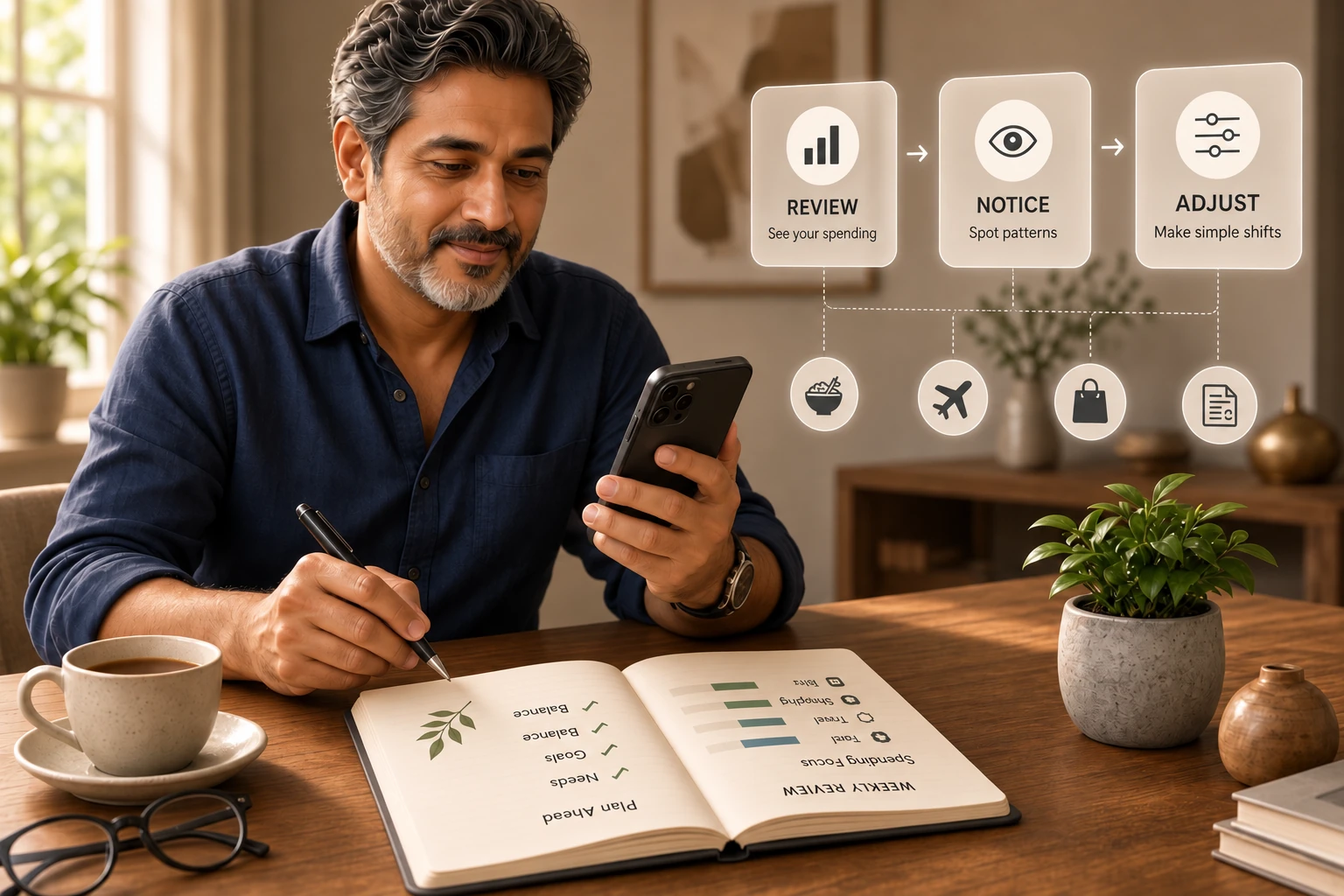
Another helpful habit is to review recent transactions periodically. You do not need to analyse every payment in detail. A quick look at the previous week or month can help you notice repeated categories, unusually frequent purchases or expenses that were not part of your original plans.
It can also help to create your own spending boundaries. For example, you might decide that discretionary purchases above a certain amount deserve a short pause before payment. The amount will naturally differ from person to person. The purpose is simply to create some distance between the urge to buy and the decision to pay.
The goal is not to make every UPI payment feel uncomfortable. Good financial habits should make money easier to manage, not make ordinary spending stressful.
A Simple UPI Spending Check You Can Actually Follow
A useful review does not require a complicated spreadsheet. Once a week, take a few minutes to look through your recent transactions and ask yourself four simple questions.
What did I spend repeatedly?
Look for patterns rather than isolated purchases. Several small food, transport or shopping payments may deserve more attention than one unusual expense.
Which payments were planned?
Separate regular commitments and necessary purchases from expenses that happened simply because something looked convenient or appealing at the time.
Did any category surprise me?
Sometimes the most useful discovery is not a large expense but a category that appears more often than expected. A few minutes of review can make that pattern easier to recognise.
Would I make the same choices again?
This question is more useful than criticising yourself for past spending. If a purchase genuinely added value, there may be nothing to change. If a recurring expense no longer feels worthwhile, you have identified something worth reviewing.
This kind of review turns UPI Spending from something you simply see in a transaction history into information that can help you make more deliberate money decisions.
The Goal Is Awareness, Not Avoidance
Digital payments have changed the way people interact with money. A transaction can now happen almost anywhere, at almost any time, with very little physical effort. That convenience can make everyday financial tasks easier, but it also makes personal awareness more important.
You do not need to question every cup of tea, grocery purchase or small digital payment. The more useful habit is to notice when a collection of ordinary decisions starts becoming a recurring spending pattern.
That is the balanced way to think about UPI Spending. The technology is simply the payment channel. Your habits, priorities and decisions determine how that convenience affects your finances.
The aim is not to make digital payments difficult. It is to make sure that easy payments do not lead to invisible spending. A few minutes of regular review can help you stay aware while keeping the convenience that made UPI useful in the first place.
Key Takeaways
- UPI makes everyday payments fast and convenient, but convenience does not automatically lead to better spending decisions.
- Small digital payments can feel less significant when each transaction is considered separately.
- Repeated low-value payments can become more meaningful when viewed as a combined pattern.
- The payment method itself does not determine whether spending is sensible; your habits and priorities matter.
- Your transaction history can provide a clearer picture of your spending than memory alone.
- Grouping transactions into broad categories can help identify recurring spending patterns.
- Planned purchases and impulse purchases deserve different levels of attention.
- A short pause before discretionary spending can encourage more deliberate decisions.
- A simple weekly review can improve spending awareness without turning money management into a complicated task.
- You do not need to stop using UPI to become more financially aware; the goal is to use its convenience without losing sight of where your money is going.
Frequently Asked Questions
Not necessarily. UPI makes payments faster and easier, but its effect on spending can vary from person to person. The more useful question is whether the convenience of digital payments makes repeated small purchases easier to overlook.
Small payments may feel insignificant when considered individually. When similar transactions happen repeatedly, however, their combined value can become much more noticeable.
There is no general need to stop using UPI. A better approach is to keep the convenience of digital payments while reviewing your transactions regularly and paying closer attention to discretionary purchases.
Review your recent transaction history and group payments into broad categories such as food, transport, shopping, entertainment and bills. Looking at the pattern over a week or month can be more useful than relying on memory.
Start with a short weekly review. Look for repeated purchases, categories that appear more often than expected and discretionary expenses that were not planned. The purpose is to understand your behaviour, not to feel guilty about individual purchases.
Continue Your Personal Growth Journey
At DivyalVision.com, you can explore more practical Finance & Money articles that connect naturally with the ideas discussed in this article:
- 5 Smart Money Habits Everyone Should Learn – Build everyday money habits that can help you stay more aware of your spending and maintain better financial control. Read the article
- The Hidden Money Leaks in Everyday Life: 9 Expenses Worth Rethinking – Take a closer look at recurring and unnoticed expenses that may gradually affect your ability to save. Read the article
- Financial Decisions That Feel Small but Can Change Your Future – Explore how everyday financial choices can influence longer-term priorities and help you approach important money decisions more thoughtfully. Read the article