Psychology of Spending: 8 Powerful Reasons We Buy Things We Do Not Need
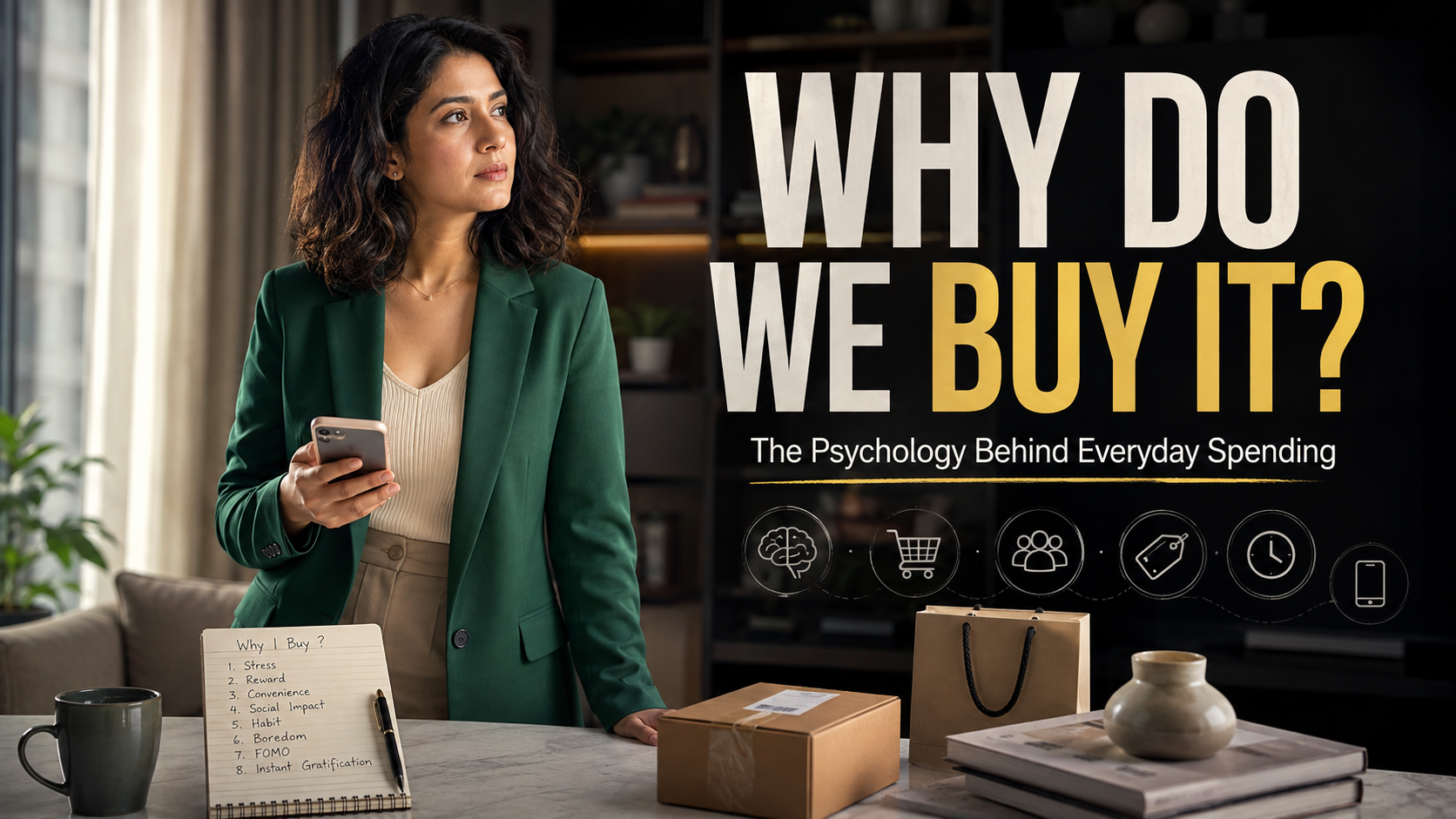
- Buying things we do not need is rarely simple: It is influenced by mood, convenience, social expectations, advertising, habit, digital design, discounts, and the way we see ourselves.
- Shifting perspective helps observe patterns: Instead of asking why money was wasted, look at what made the purchase feel worthwhile at that moment.
- Modern environments accelerate choices: Digital systems and advertisements can move a product from unknown to desirable within seconds, reducing natural pauses.
- Awareness preserves conscious choices: Understanding triggers helps ensure spending remains a deliberate choice rather than an automatic reaction.
Buying something we do not strictly need is rarely as simple as being careless with money. A purchase can be influenced by mood, convenience, social expectations, advertising, habit, digital design, discounts, and the way we see ourselves. Often, the decision happens quickly while the reasoning behind it has been developing quietly for much longer. Understanding these influences can make spending behaviour easier to observe without turning every purchase into a source of guilt.
The Psychology of Spending is useful because it shifts the question from “Why did I waste money?” to “What made this purchase feel worthwhile at that moment?” That small change in perspective can reveal patterns that are otherwise easy to miss. Someone may shop after a stressful day, buy because an offer appears temporary, or repeatedly choose convenience simply because it has become part of a routine. None of these behaviours automatically makes a person irresponsible, but repeated patterns can affect financial priorities over time.
Modern shopping environments can make these influences even harder to notice. A product can move from being unknown to being desirable within seconds through an advertisement, recommendation, social-media post, or personalised offer. Digital payment systems can also remove some of the natural pauses that once existed between wanting something and paying for it. When the process becomes effortless, the opportunity to reconsider can become smaller.
The goal of understanding spending psychology is not to eliminate enjoyment or convenience from everyday life. It is to become more aware of the forces influencing a purchase so that spending remains a conscious choice rather than an automatic reaction. Once you recognise your personal triggers, it becomes easier to decide which purchases genuinely add value and which ones simply respond to a temporary feeling.
Why Understanding the Psychology of Spending Matters
Most people like to think that their purchases are based on clear reasoning. Sometimes they are. We compare products, consider the price, think about whether something is useful, and then make a decision. But everyday spending is not always the result of a carefully planned calculation, because feelings, surroundings, habits, and social influences can become part of the decision without us consciously noticing them.
This is where the Psychology of Spending becomes practical rather than theoretical. It helps explain why a purchase can feel attractive even when we already know we do not need it. The answer may have little to do with the object itself and more to do with what the purchase represents at that moment. It might offer comfort, save effort, create a feeling of belonging, reward a difficult day, or simply provide a short burst of excitement.
Another reason this matters is repetition. One unplanned purchase may have very little effect on a person's finances. But when the same trigger produces the same response repeatedly, it can become a spending pattern. A person who shops whenever they feel stressed, orders convenience services whenever they are tired, or buys something whenever a discount appears may eventually spend much more than they consciously realise.
Awareness creates an opportunity to interrupt that pattern without becoming overly restrictive. The objective is not to question every coffee, meal, purchase, or subscription. Instead, it is to notice the situations in which spending becomes less deliberate and ask whether the purchase still makes sense after the initial emotion has passed.
1. Emotion: We Buy to Change How We Feel
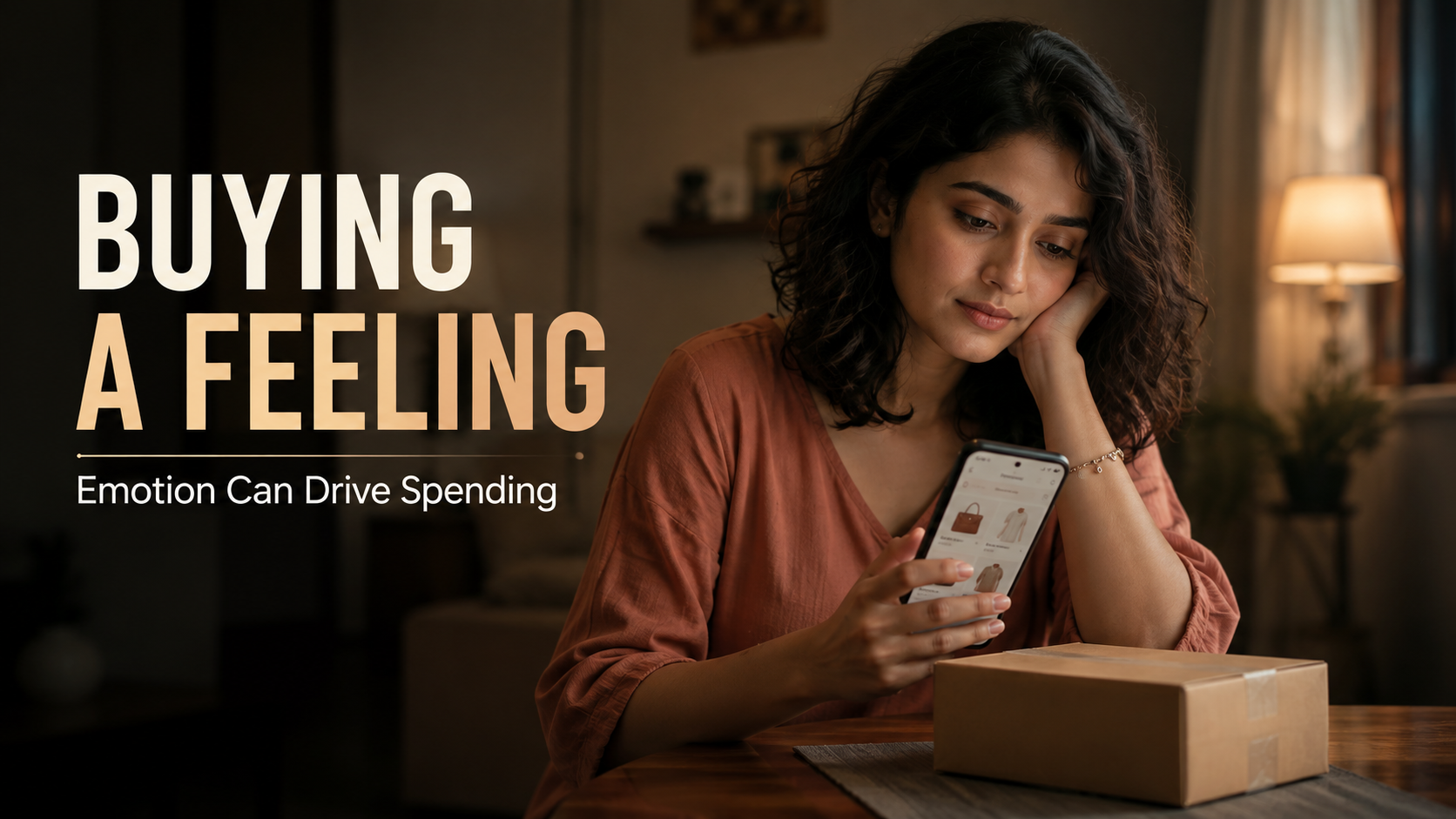
Emotions can influence what feels appealing in the moment. After a difficult day, shopping can become a form of relief, entertainment, or reward. During a celebration, spending may feel like a natural expression of happiness. When someone feels bored, restless, disappointed, or frustrated, browsing products can provide a temporary distraction from those feelings.
This does not mean that emotional purchases are always harmful. Enjoyment is a legitimate part of life, and spending money on something that makes an occasion special can be entirely reasonable. The concern begins when purchasing becomes the easiest response to an emotion, especially when the purchase is repeated without considering whether it actually addresses what the person is feeling.
The psychology becomes clearer when you separate the feeling from the purchase. Ask yourself what you wanted before you opened the shopping app or entered the store. Were you looking for the product, or were you looking for comfort, excitement, recognition, or a change of mood? Sometimes the answer reveals that the product is only one possible way of responding to the underlying feeling.
A useful pause does not have to involve denying yourself the purchase. It can simply mean waiting long enough to see whether the desire remains once the emotion becomes less intense. If you still want the item later and it fits your priorities, the decision is likely to be more deliberate.
2. Convenience: We Pay to Save Time and Effort
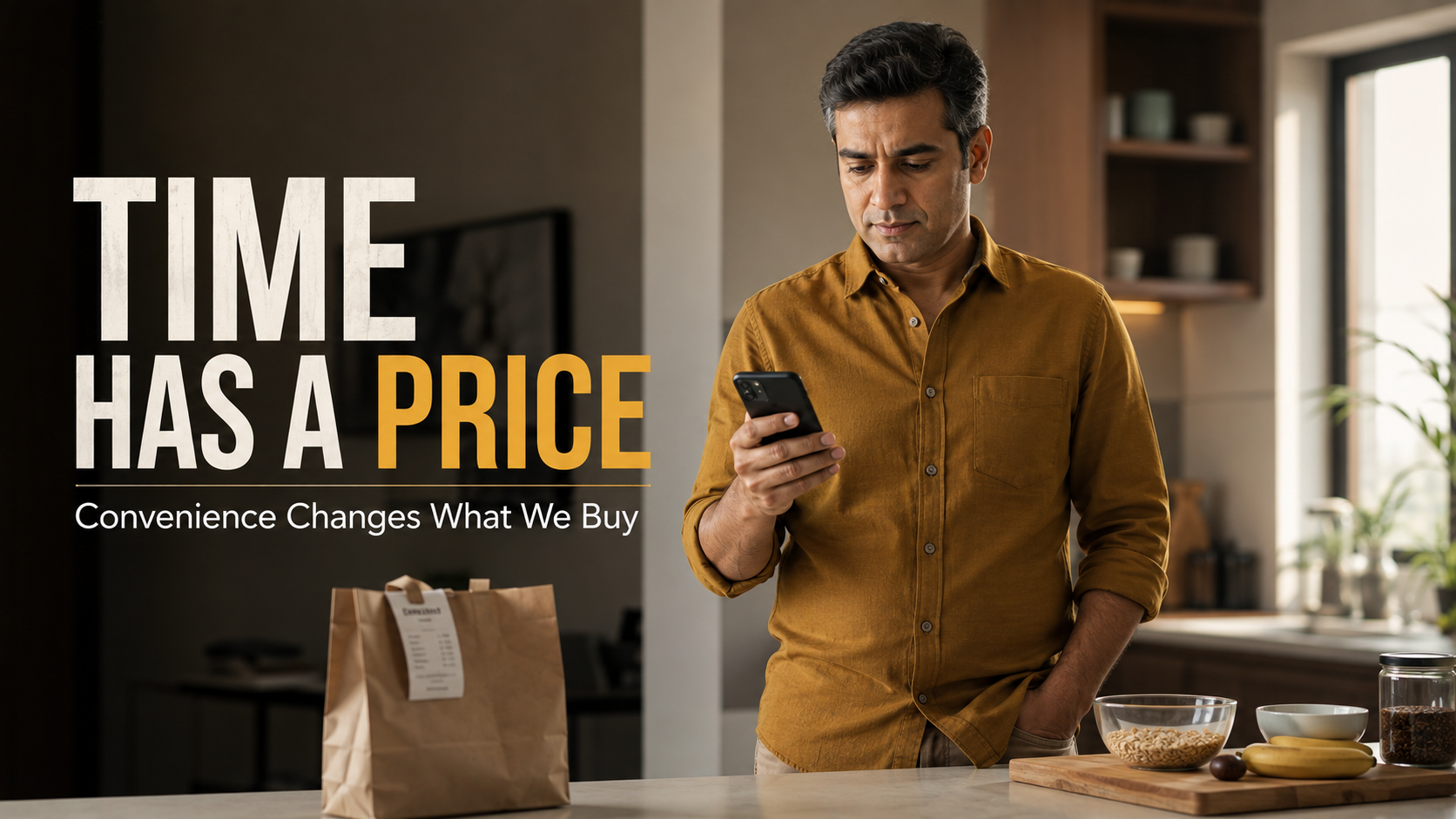
Convenience has real value. When life is busy, paying for delivery, faster service, ready-made meals, transportation, or another shortcut can save time that could be used elsewhere. The decision becomes less straightforward when convenience spending shifts from an occasional solution to an automatic response to ordinary situations.
The appeal is understandable because convenience removes friction. Instead of cooking, travelling to a store, comparing options, or completing a task ourselves, we can often pay to make the process disappear. The immediate benefit is visible, while the repeated financial cost can be much less noticeable because each individual payment may feel small.
This is one reason the Psychology of Spending cannot be separated from the value people place on time and effort. A person may willingly pay more because the time saved is genuinely worth it. Another person may discover that they are paying for convenience even when they have enough time and would prefer to keep the money for another purpose.
The useful question is therefore not “Is convenience spending bad?” It is “Is this convenience worth what I am repeatedly paying for it?” If the answer remains yes, the expense can be intentional. If the answer changes when you look at the monthly pattern rather than one transaction, you have identified an area worth reconsidering.
3. Social Pressure: We Want to Keep Up
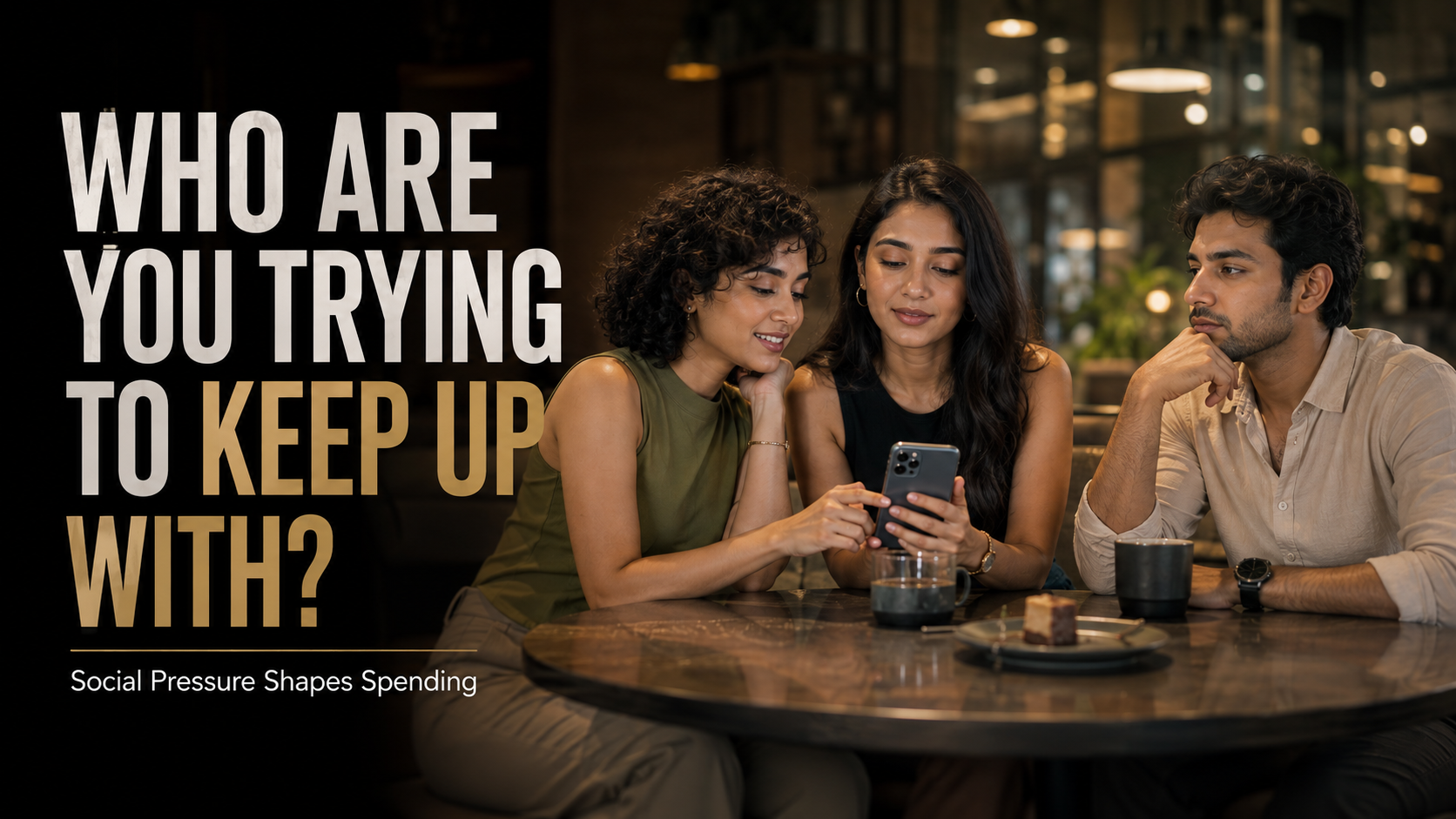
Spending does not always begin with a personal desire. Sometimes it begins with comparison. Seeing friends travel, upgrade their phones, change their wardrobes, eat at expensive restaurants, or adopt a particular lifestyle can subtly influence what begins to feel normal or necessary.
Social pressure is not always direct. Nobody needs to tell you to buy something for comparison to affect your choices. Repeated exposure to other people's lifestyles can create the impression that you are missing something. The purchase then becomes less about the item's practical value and more about belonging, participation, or avoiding the feeling of being left behind.
Social media can make this effect stronger because people are usually exposed to selected moments rather than complete financial realities. A photograph can show a holiday without showing the planning, savings, financing, or other choices behind it. Comparing your everyday life with someone else's carefully presented highlights can therefore create expectations that may not fit your own circumstances.
Understanding the Psychology of Spending means recognising that comparison can quietly change the standard by which you judge your own purchases. Instead of asking whether you genuinely want or need something, you may begin asking whether your lifestyle looks similar to someone else's. Returning the decision to your own priorities can help restore perspective.
4. Advertising: We Are Shown a Better Version of Ourselves
Advertising rarely presents a product as simply an object that can be purchased. Instead, it often connects the product with a feeling, lifestyle, identity, or possibility. A new phone may be presented as a way to feel more capable. A piece of clothing may be associated with confidence. A holiday advertisement may sell relaxation and escape rather than simply transportation and accommodation.

This is where the Psychology of Spending becomes particularly interesting. We may respond not only to what a product does, but to the version of ourselves that the advertisement suggests we could become after buying it. The emotional promise can sometimes be more persuasive than the practical features of the product.
Advertising can also create a sense of urgency. Limited-time offers, countdowns, exclusive launches, personalised recommendations, and repeated reminders can make a purchase feel more important than it was before we encountered the message. The pressure may be subtle, but it can shorten the time available for thoughtful consideration.
The useful response is not to distrust every advertisement. Advertising can help people discover products and services that genuinely solve problems. The better habit is to separate the message from the need. Ask yourself whether you wanted the product before seeing the advertisement and whether its practical value still seems strong when the promotional message is removed.
Once that distinction becomes familiar, it becomes easier to appreciate advertising without automatically allowing it to determine what deserves a place in your budget.
5. Habit: Repeated Buying Becomes Automatic
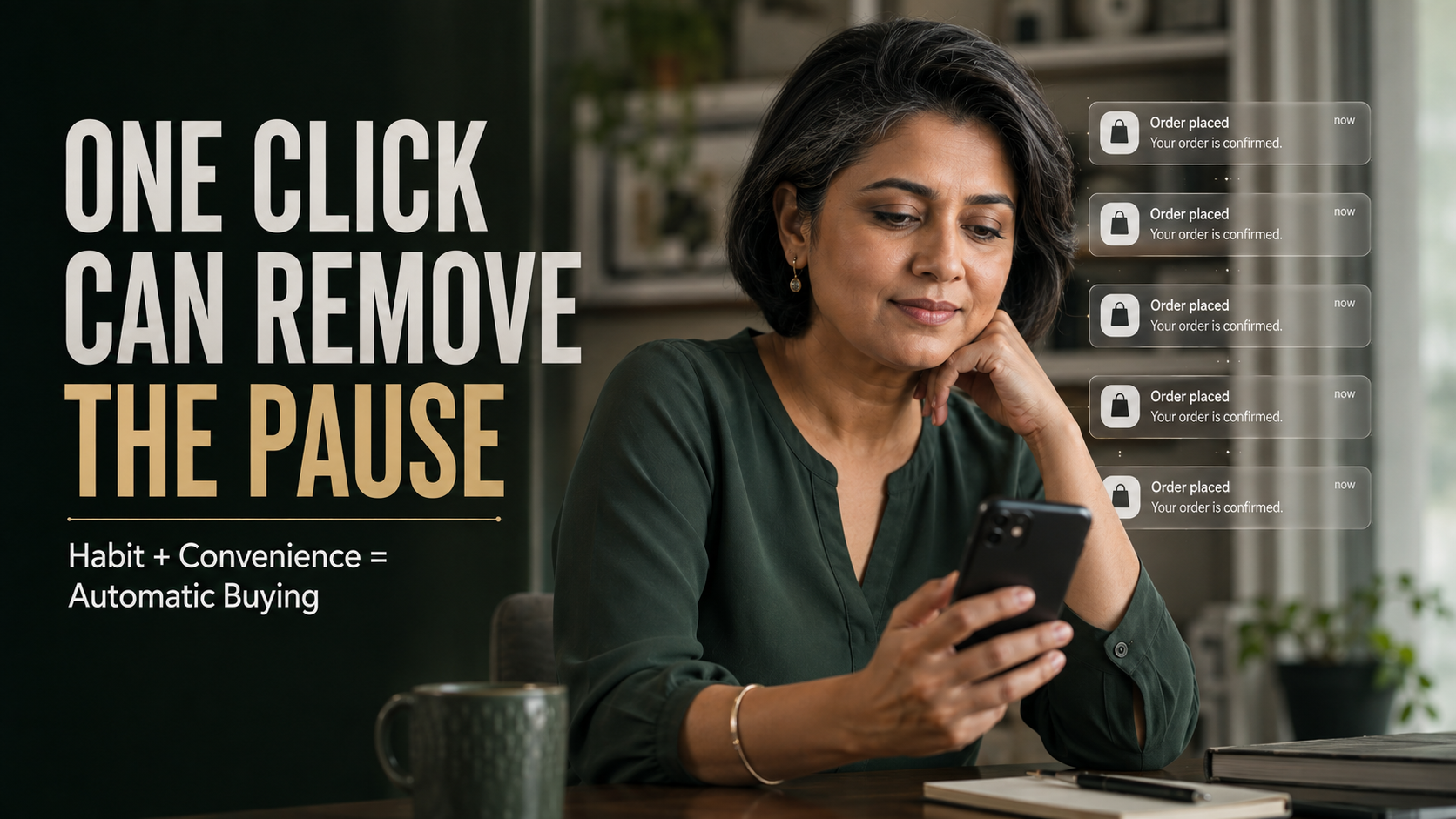
Not every purchase begins with a conscious decision. Some purchases happen because they have become part of a routine. The same coffee order, the same online store, the same weekend shopping pattern, or the same monthly upgrade can gradually become automatic.
Habits are powerful because they reduce the amount of thinking required. Once a behaviour becomes familiar, we often repeat it without asking whether it still makes sense. This is useful for many areas of life, but it can also make spending patterns difficult to notice.
The Psychology of Spending becomes especially relevant when a purchase is no longer connected to a specific need. You may buy something because that is what you normally do at a particular time, in a particular place, or after a particular event. The original reason for starting the habit may have disappeared while the behaviour remains.
One practical way to recognise this is to look for repetition rather than individual transactions. Instead of asking whether one purchase was reasonable, look at what you repeatedly buy over several weeks or months. Patterns often become much easier to see when viewed together.
Breaking a spending habit does not necessarily require eliminating the purchase permanently. Sometimes changing the timing, reducing the frequency, or introducing a short pause is enough to determine whether the behaviour is still valuable.
The goal is not to make every routine complicated. It is to make sure that familiar spending remains intentional enough to deserve its place in your everyday life.
6. Digital Shopping: Frictionless Buying Reduces the Pause
Digital shopping has changed not only where people buy but also how quickly they can move from wanting something to purchasing it. A product can be discovered, compared, added to a cart, and paid for within a very short period. That convenience can be useful, but it also reduces some of the natural pauses that once existed between desire and action.
A physical store may require travel, browsing, carrying the item, and standing in a queue before payment. Online shopping can remove many of those steps. Saved payment information, personalised recommendations, instant notifications, and one-click purchasing can make the entire process feel almost effortless.
This does not make digital shopping inherently irresponsible. In many situations, online purchasing saves time and allows people to compare products more easily. The issue is that convenience can sometimes make the emotional part of a purchase stronger because there is less time for the initial desire to fade.
One simple response is to create your own pause. For non-essential purchases, adding an item to a list rather than immediately completing the transaction can give you time to reconsider. The exact waiting period does not matter as much as creating enough distance between the impulse and the payment.
Understanding the Psychology of Spending means recognising that the shopping environment itself can influence behaviour. When buying becomes effortless, deliberate decision-making may need to become more intentional.
7. Discounts: A Lower Price Can Make an Unnecessary Purchase Feel Smart
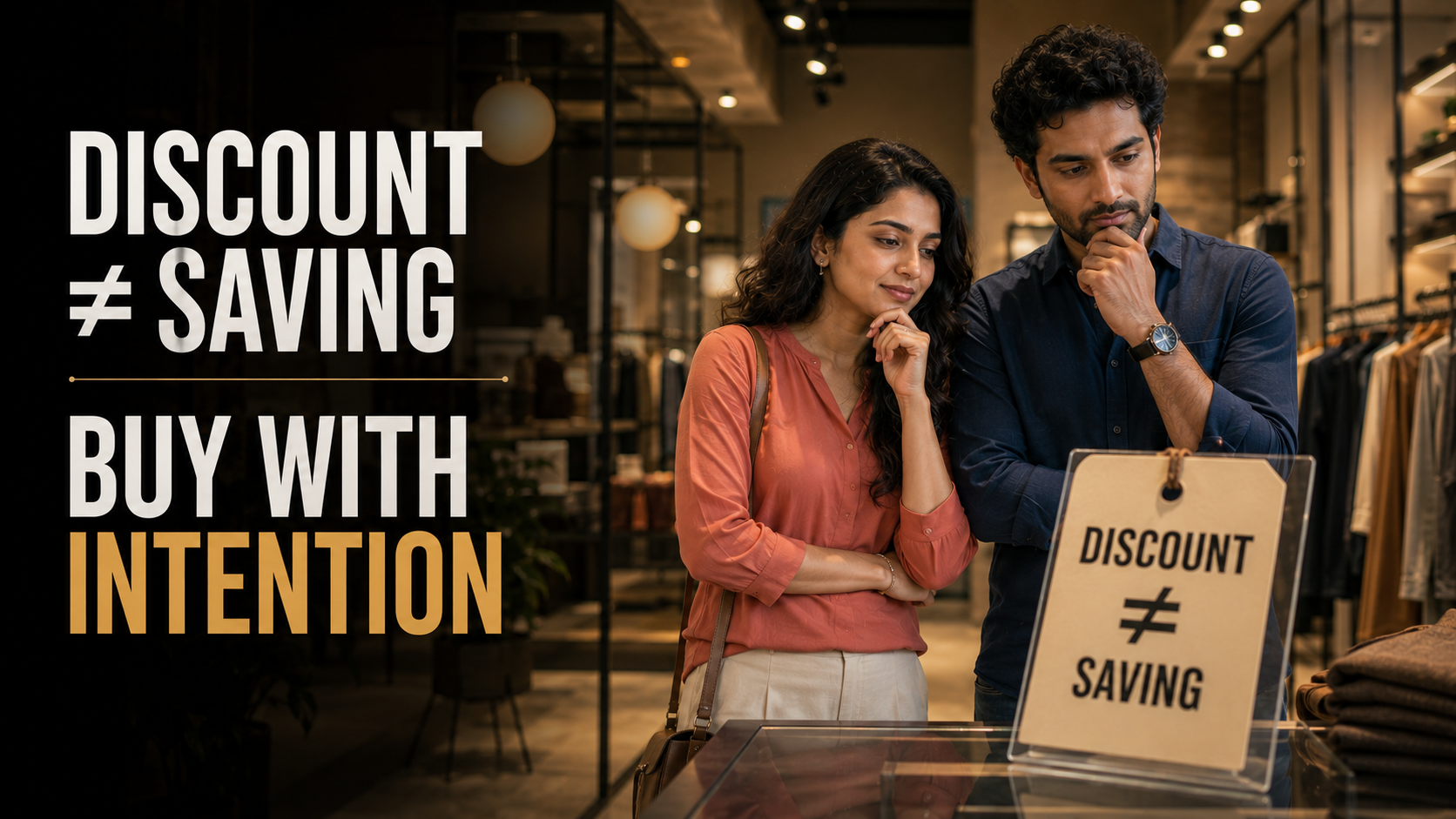
A discount can create a powerful sense of value. Seeing a product reduced from a higher listed price can make the purchase feel like an opportunity rather than an expense. The problem is that saving money on something you did not need is not necessarily the same as spending less money overall.
The psychological attraction of a discount often comes from comparison. Instead of asking “Do I need this?”, we may start asking “How much would I lose by not buying it at this price?” That changes the decision from evaluating the product to evaluating the offer.
Limited-time discounts can make this effect stronger. A message suggesting that an offer will soon disappear can encourage quick action before there is enough time to think. Again, the issue is not that every limited offer is misleading or unnecessary. It is that urgency can make an optional purchase feel like a financial opportunity that must not be missed.
A useful habit is to imagine the discount does not exist. Ask yourself whether you would still want the product at its normal price. If the answer is no, the discount may be creating the desire rather than simply reducing the cost of an existing need.
The Psychology of Spending behind discounts is therefore less about mathematics and more about perception. A lower price can be genuinely useful when the purchase was already planned. But a lower price does not automatically turn an unnecessary purchase into a saving.
8. Identity: We Sometimes Buy to Express Who We Want to Be
Some purchases are connected to identity. The clothes we wear, the technology we use, the places we visit, and even the products we keep around us can communicate something about how we see ourselves or how we would like others to see us.
This is not necessarily negative. Personal style, hobbies, interests, and experiences can all be meaningful parts of life. Spending money on something that genuinely reflects your interests can provide real value. The difficulty appears when a purchase is made mainly to create an image that does not fit the person's actual priorities or financial situation.
A product can sometimes become a symbol of an imagined future self. We may buy equipment for a hobby we have not yet started, clothing for a lifestyle we rarely live, or an expensive item because it represents the person we hope to become. The purchase can feel motivating in the moment, even when the underlying behaviour never changes.
The Psychology of Spending here involves a subtle question: Are you buying something because it supports who you already are, or because you hope the purchase itself will transform you? The answer does not have to be one or the other, but asking the question can reveal whether the purchase has genuine practical or personal value.
A healthier relationship with spending does not require rejecting identity-related purchases. It means making sure that what you buy reflects your priorities rather than replacing them. When your spending and values point in the same direction, purchases are more likely to feel meaningful after the excitement of buying has passed.
How to Recognise Your Own Spending Triggers
Understanding the Psychology of Spending becomes most useful when you start recognising your own patterns. The same trigger does not affect everyone in the same way. One person may spend more when stressed, another when bored, while someone else may be influenced mainly by convenience, discounts, or social comparison.
Start by looking at when you tend to make unplanned purchases. Do they happen late at night, after a difficult day, during weekends, after receiving income, or when you are scrolling through social media? The timing can reveal more than a single transaction.
Next, look at what happens immediately before the purchase. Perhaps an advertisement appeared, someone recommended a product, a limited-time offer caught your attention, or you simply wanted a quick reward. Identifying the trigger is often more useful than criticising yourself afterward.
Then consider how you feel after buying. Genuine purchases that provide value often continue to feel worthwhile after the excitement disappears. Impulse purchases may instead produce disappointment, indifference, or the feeling that you could have used the money elsewhere.
You can also examine your spending by category rather than by individual purchase. A single convenience order may not seem significant, but repeated convenience spending may reveal a broader habit. Similarly, one discounted purchase may be perfectly reasonable while repeated discount-driven buying may show that the offer itself has become the trigger.
The Psychology of Spending is ultimately personal. You do not need to eliminate every trigger you discover. The objective is to recognise which influences repeatedly move your money away from what you actually value.
A Simple Pause Before You Buy
Once you recognise your triggers, the next step is creating a small gap between wanting something and paying for it. That gap does not have to be complicated. Its purpose is simply to give your more deliberate thinking a chance to catch up with the initial impulse.
Before buying something that was not already planned, ask yourself:
- Do I actually need this? A genuine need and a temporary desire are not always easy to distinguish. Asking the question creates a useful moment of reflection.
- Would I still want it tomorrow? If the answer changes after the initial excitement fades, the purchase may have been driven more by emotion, urgency, or advertising than by genuine value.
- Would I buy it without the discount? This question is particularly useful when a sale is creating the feeling that you are saving money. If you would not want the item without the offer, consider whether the discount is actually influencing the decision.
- Am I buying the product or the feeling? A purchase may represent comfort, excitement, confidence, belonging, or reward. Identifying the feeling can help you decide whether buying the product is really the best response.
- Is convenience worth the repeated cost? Convenience can be valuable. The question is whether the benefit remains worth paying for when you consider how often the expense occurs.
- Does this fit the person I actually am? Identity can influence buying decisions. Ask whether the purchase genuinely supports your interests and lifestyle or whether you are buying an imagined version of yourself.
- Is there a future priority that matters more? Every purchase uses money that could potentially support something else. That does not make spending wrong, but recognising the trade-off can make the decision more intentional.
These questions are not meant to turn ordinary shopping into a complicated financial exercise. They are simply tools for slowing down when a purchase feels unusually urgent, emotional, or tempting.
The Psychology of Spending teaches an important lesson here: sometimes the most powerful financial habit is not saying no to everything, but learning to recognise why you want to say yes.
Spending With Awareness Instead of Guilt
Understanding spending psychology should not turn into a reason to feel guilty about every purchase. Money is not only for necessities and long-term goals. It can also provide comfort, entertainment, experiences, convenience, and opportunities that make life more enjoyable.
The goal is to make those choices deliberately.
A person who understands their own Psychology of Spending may still buy an expensive meal, take a holiday, purchase new technology, or pay for convenience. The difference is that the decision is less likely to be controlled entirely by a temporary emotion, social comparison, or promotional message.
This distinction matters because extreme restriction can create its own problems. If every enjoyable purchase is treated as irresponsible, maintaining a financial plan can become frustrating and unrealistic. A sustainable approach leaves room for enjoyment while keeping important priorities visible.
One useful question is:
“Will I be happy that I made this purchase after the excitement of buying it has passed?”
There will not always be a perfect answer. But asking the question can create enough distance to make spending more conscious.
Key Takeaways
- The Psychology of Spending helps explain why people sometimes buy things they do not actually need.
- Emotions can turn shopping into a source of comfort, excitement, reward, or distraction.
- Convenience has genuine value, but repeated convenience spending deserves occasional review.
- Social comparison can make another person's lifestyle feel like a standard you need to match.
- Advertising often sells emotions, aspirations, and possibilities rather than only products.
- Repeated purchases can become habits that no longer receive much conscious attention.
- Digital shopping can reduce the natural pause between wanting something and paying for it.
- Discounts can make unnecessary purchases feel financially clever even when the money would have been better kept.
- Identity can influence what we buy and how we want others to see us.
- Recognising personal spending triggers is more useful than simply feeling guilty about past purchases.
- A short pause before buying can help separate genuine value from temporary impulse.
- Intentional spending does not mean avoiding enjoyment; it means understanding why you are spending.
The Psychology of Spending refers to the emotional, behavioural, social, and environmental influences that can affect how people decide to use money. These influences can include emotions, habits, convenience, advertising, social comparison, digital shopping design, discounts, and personal identity.
There can be several reasons. You may be responding to an emotion, seeking convenience, reacting to a discount, following a habit, comparing yourself with others, or being influenced by advertising. Identifying the trigger can help you understand the behaviour rather than simply judging the purchase afterward.
No. An occasional unplanned purchase does not automatically create a financial problem. The bigger concern is repeated behaviour that consistently moves money away from important priorities. The useful question is whether the purchase provides enough value to justify the cost.
Start by identifying the emotions that commonly appear before an unplanned purchase. Creating a short pause before buying, using a waiting period for non-essential items, and finding other ways to respond to stress or boredom can help reduce automatic reactions.
A discount can save money when you were already planning to buy the product and the reduced price provides genuine value. But if the discount is the reason you decided to buy something you did not need, the lower price does not necessarily represent a saving.
Continue Your Personal Growth Journey
Understanding spending behaviour becomes more useful when combined with practical money habits and thoughtful financial planning. These related DivyalVision articles can help you continue: