How to Pack for a Trip: A Practical Packing Checklist
You arrive at your hotel after a long journey, open your suitcase, and discover that you packed three extra outfits but forgot your phone charger. Or perhaps your bag is so full that finding your passport holder means unpacking half of it.
These small problems can make travelling more stressful than necessary. The solution is not to pack more items or prepare for every possible situation. It is to decide what you actually need before anything goes into your bag.
Knowing how to pack for a trip starts with a few practical decisions: where you are going, how long you will stay, what activities you have planned, what the weather may be like, and how much luggage you can carry.
A weekend city break requires a different approach from a week-long beach holiday or a family trip. This guide explains how to choose the right essentials, organize your luggage, prepare a useful checklist, and complete the final checks before leaving home.
Table of Contents
- Start With Four Packing Priorities
- Choose Your Packing Plan
- How to Pack for a Trip Without Overpacking
- Pack Your Bag in a Practical Order
- What Should Stay in Your Carry-On?
- The Night-Before Departure Test
- Frequently Asked Questions
- Conclusion
- Helpful Official Resources
- Disclaimer
Start With Four Packing Priorities
Before choosing clothes or opening your suitcase, divide your packing decisions into four priorities. This makes it easier to identify what matters and what can be left behind.
Priority 1: Items You Cannot Easily Replace
Start with the items that could cause serious disruption if forgotten:
- Required identification and travel documents.
- Tickets and essential booking confirmations.
- Payment cards and suitable local currency.
- Necessary medication.
- Important contact information.
Check your destination's entry requirements and document rules before departure. For international travel, these may include passport validity, visas, or other required documents.
Keep essential documents secure and accessible. Where possible, have offline copies of important confirmations instead of relying exclusively on an internet connection.
Priority 2: Items Required for Your Planned Activities
Your itinerary should determine the rest of your packing decisions.
A beach holiday may require swimwear and sun protection. A walking holiday may need comfortable footwear and weather-appropriate layers. A business trip may require formal clothing and work equipment.
Write down your main activities and identify any items needed specifically for them. If an item does not support a planned activity, meet a genuine personal need, or serve a practical purpose, reconsider whether it belongs in your bag.
Priority 3: Everyday Essentials
These are the items you use regularly, such as clothing, toiletries, charging accessories, and personal care products.
Pack only what suits the length and nature of your trip. Check whether your accommodation provides items such as towels or a hairdryer before taking your own.
Priority 4: Optional Extras
Extra shoes, duplicate gadgets, additional outfits, and items packed for unlikely situations can quickly make luggage heavier.
Keep optional items separate until your essentials are packed. Add them only if you have a clear reason and sufficient luggage space.
A simple rule: Pack for the trip you have planned, not for every situation you can imagine.
Before finalizing your packing list, it helps to organize your travel schedule. Read our guide on How to Plan a Travel Itinerary: A Step-by-Step Guide to plan your activities, travel time, and daily arrangements more effectively.
Choose Your Packing Plan
Instead of following one universal checklist, choose a plan that matches the type of trip you are taking.
Plan A: A Weekend City Break
For a short city break, convenience matters more than carrying multiple outfit choices.
Consider packing:
- Two or three coordinated everyday outfits, depending on your plans.
- Underwear and socks for the trip, plus a sensible spare.
- Comfortable walking shoes.
- Sleepwear and basic toiletries.
- Phone, charger, identification, and booking details.
- A lightweight jacket or umbrella if the weather calls for it.
A compact cabin bag may be enough, provided it meets your transport provider's size and weight restrictions.
Plan B: A Week-Long Holiday
A longer trip requires more planning, but it does not necessarily require a much larger wardrobe.
Consider:
- Clothing that can be combined into several outfits.
- Enough underwear and socks for your plans.
- Suitable footwear for your main activities.
- Weather-appropriate layers.
- Toiletries and personal care essentials.
- Electronics, chargers, and travel documents.
- A laundry pouch or access to laundry facilities if useful.
Check whether your accommodation offers laundry facilities. Washing a few items may be more practical than packing clothes for every possible day and activity.
Plan C: A Family Trip
Family packing works best when each person's essentials are organized separately.
Consider preparing:
- Individual clothing bundles or packing cubes.
- Children's everyday clothing and spare outfits.
- Personal care products suited to each family member.
- Required medication and comfort items.
- Travel documents for every traveller.
- Snacks and journey activities where appropriate.
- Any equipment required for children or other family members.
Keep items needed during the journey in an accessible bag. Avoid putting every person's essential belongings into one suitcase if losing access to that bag would create a serious problem.
For all three plans, confirm the baggage allowance, expected weather, and special requirements of your actual trip before finalizing the contents.
How to Pack for a Trip Without Overpacking
Clothes often occupy most of a suitcase, so choosing versatile pieces can make a noticeable difference.
Rather than selecting a completely different outfit for every day, choose colours and styles that work together. Neutral trousers or skirts can pair with several tops, while a lightweight layer can be useful in different settings.
A practical clothing selection may include:
- Everyday tops and bottoms.
- Underwear and socks.
- Sleepwear.
- Comfortable walking shoes.
- A suitable jacket or outer layer.
- Special clothing required for a planned event.
- Swimwear or activity-specific clothing when necessary.
Wear your bulkiest suitable shoes or jacket during the journey if it is comfortable and practical. This can free up space in your luggage.
Do not forget that climate matters more than appearance alone. Check expected conditions shortly before departure, especially if your destination experiences changing temperatures or unpredictable weather.
Before closing your suitcase, lay out everything you plan to take. Remove duplicate items and reconsider anything included only because you might possibly use it.
Packing thoughtfully can also help you manage your travel budget. Read our guide on How to Plan a Budget-Friendly Trip: 9 Smart Tips for practical ways to manage transport, accommodation, food, and activity costs.

Pack Your Bag in a Practical Order
Once you have chosen what to bring, think about how to arrange it.
First, place all your selected items on a clear surface. Compare them with your list and remove duplicates or anything that no longer serves a purpose.
Then pack in a way that makes the suitcase easy to use.
- Start with heavier items. Place shoes and heavier belongings near the wheel end of a rolling suitcase, while protecting clothing from dirty soles.
- Group similar items. Use small pouches or packing cubes for clothing, underwear, toiletries, and electronic accessories. These are optional tools, not a requirement.
- Protect toiletries. Put liquids and personal care products in leak-resistant containers or bags. Follow the relevant transport rules for liquids.
- Keep delicate items safe. Position fragile belongings where they are less likely to be crushed. Keep valuable electronics secure.
- Leave room for access. Items you may need soon after arrival should not be buried underneath everything else.
Rolling some clothes may make them easier to organize, while folding may work better for structured garments. Choose whichever method suits your clothing and luggage.
Finally, close the suitcase without forcing the zipper. Check its weight against your transport provider's restrictions.
A Quick Packing Decision
Before adding an optional item, ask yourself:
- Will I use it during this trip?
- Can another item serve the same purpose?
- Is it available easily at my destination if needed?
- Is carrying it worth the extra space and weight?
If you have no clear reason to bring it, leave it out.
What Should Stay in Your Carry-On?
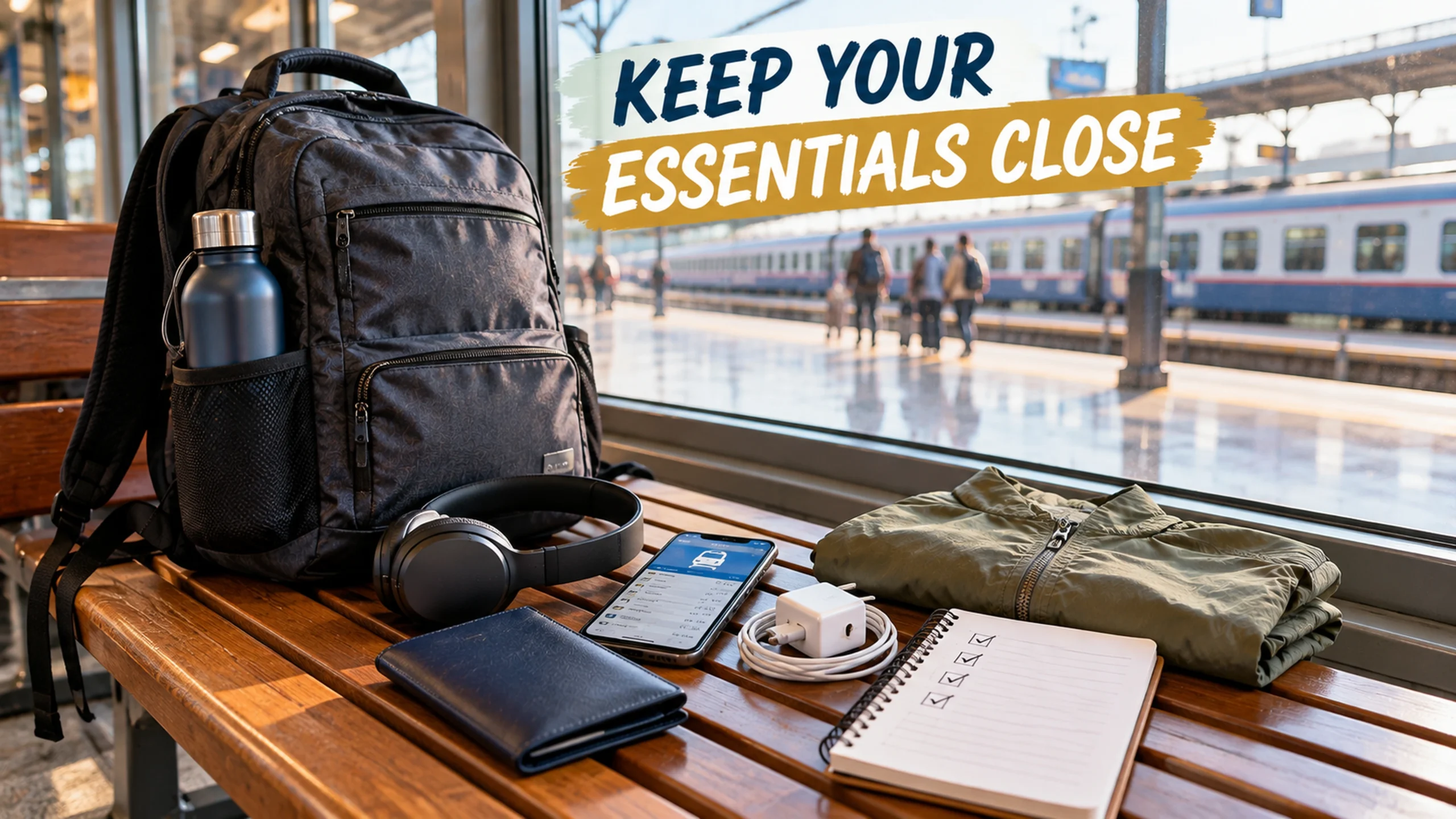
Your main suitcase is for most of your belongings. Your carry-on or day bag should contain items you may need during the journey or cannot easily replace if your checked bag is delayed.
Keep these items accessible:
- Required identification and travel documents.
- Phone and essential charging accessories.
- Payment cards and some suitable currency.
- Necessary medication.
- Accommodation details and key booking confirmations.
- A light layer, tissues, and other useful personal items.
- Water or snacks where permitted.
For air travel, verify the airline's rules for cabin baggage, liquids, batteries, and restricted items. Power banks and spare lithium batteries may have specific carriage requirements, so check the current rules before packing them.
For a sightseeing day, carry only what you expect to need, such as your phone, water bottle, sun protection, and relevant tickets. A lighter day bag is usually easier to manage than carrying your full travel luggage.
The Night-Before Departure Test
The final evening before your trip is the time to check the details that are easiest to overlook when you are rushing.
Instead of reopening your suitcase repeatedly, work through these three checks.
Check One: The Essentials
Confirm that you have your required travel documents, tickets, accommodation details, payment methods, and necessary medication. Check the actual departure time and how you will reach the station, airport, or other departure point.
Check Two: The Suitcase
Confirm that the bag meets the relevant size and weight limits. Check that liquids are secure, devices are packed safely, and the items you need during the journey are in your carry-on.
Check Three: Home and Departure Arrangements
Arrange anything necessary at home before leaving. Depending on your circumstances, this might include locking windows and doors, arranging care for pets, checking transport to your departure point, and ensuring your phone and essential devices are charged.
Your Final Packing Checklist
Use this checklist as a final review. Remove any items that do not apply to your trip.
Documents and money
- Required identification and travel documents.
- Tickets and booking confirmations.
- Accommodation address and contact information.
- Payment cards and suitable local currency.
Clothing and personal items
- Weather-appropriate clothes and footwear.
- Underwear, socks, and sleepwear.
- Required toiletries and personal care products.
- Necessary medication and personal essentials.
Electronics
- Phone and charging cable.
- Compatible power adapter.
- Permitted power bank or other essential devices.
Before leaving
- Luggage checked against applicable limits.
- Important documents accessible.
- Departure time and transport arrangements confirmed.
- Essential devices charged.
- Home arrangements completed.
Once these checks are complete, close your bag and keep your travel documents accessible. There is no need to unpack everything again unless you discover a specific problem.
Frequently Asked Questions
Start with required documents, tickets, payment methods, and necessary medication because forgetting these items can disrupt your journey. Then pack clothing, toiletries, electronics, and items required for your planned activities.
Choose versatile clothing, avoid duplicate items, and check whether laundry facilities are available. Pack according to your planned activities and the expected weather rather than bringing alternatives for every imaginable situation.
Keep essential documents, valuables, necessary medication, your phone, and items you may need during the journey accessible. Follow your transport provider's current restrictions for liquids, batteries, and other items.
Both methods can work. Rolling may help organize some casual clothing, while folding can suit structured garments. The best method depends on the fabric, suitcase design, and how you prefer to organize your belongings.
Prepare your checklist and gather essential items a few days before departure when possible. Start earlier if you need travel documents, special equipment, or items that must be purchased or arranged in advance.
Packing well is less about fitting as much as possible into a suitcase and more about choosing the right items for your journey. Start with your travel documents and essential needs, select clothing that works together, and organize your luggage so that frequently used items remain accessible.
A weekend break, a week-long holiday, and a family trip each call for a different packing plan. Use the checklist as a starting point and adapt it to your destination, activities, weather, and luggage allowance.
Before departure, complete the night-before checks, verify your transport arrangements, and make sure you can reach the documents and essentials you may need during the journey.
A little preparation can help you leave home knowing that your bag contains what you need, without unnecessary weight.