Digital Life, Real Laws: Legal Responsibilities in the Online World Explained
Technology has quietly become one of the most influential parts of modern life. Within a few hours of waking up, many people check messages, respond to emails, browse social media, make digital payments, join virtual meetings, and search for information online. These activities feel ordinary because they have become part of everyday routines. Yet every click, post, message, comment, and upload exists within a framework of digital responsibilities that many users rarely stop to consider.
The internet offers remarkable freedom, but that freedom comes with expectations. Sharing information, expressing opinions, protecting personal data, respecting other people's privacy, and communicating responsibly are no longer just matters of good manners they are essential aspects of living in a connected world. As technology continues to evolve, understanding digital responsibilities has become just as important as learning how to use digital devices themselves.
Many people mistakenly believe that legal responsibilities only arise when someone commits a serious cybercrime. In reality, responsible online behaviour begins much earlier. It starts with understanding how everyday actions-forwarding a message, posting a photograph, reviewing a business, using artificial intelligence, or participating in an online discussion can affect both ourselves and others. Informed digital behaviour reduces misunderstandings, builds trust, and encourages safer online communities.
This article explores how digital responsibilities influence everyday life, why responsible online behaviour matters, and how individuals, families, and workplaces can confidently navigate the digital world while respecting the rights and responsibilities that accompany every online interaction.
A Typical Day in the Digital World
Imagine an ordinary weekday.
Before getting out of bed, Rahul checks overnight messages on his phone. During breakfast, he forwards a health tip received in a family WhatsApp group without checking where it came from. On his way to work, he pays for coffee using a digital payment app and posts a quick photograph on Instagram. Later, he joins an online meeting, sends confidential office files through email, experiments with an AI chatbot to prepare a presentation, and ends the evening by writing an online review after ordering dinner.
Nothing about Rahul's day feels unusual. In fact, millions of people follow a remarkably similar routine. Yet every one of these digital interactions carries responsibilities that often remain invisible. Forwarding unverified information may unintentionally spread misinformation. Sharing photographs without permission may affect someone else's privacy. Sending workplace documents through insecure channels may create professional concerns. Even an online review should be honest, respectful, and based on genuine experience rather than emotion.
This is why digital responsibilities deserve greater attention. They are not designed to make people fearful of technology. Instead, they encourage thoughtful decisions that help create a safer, more trustworthy digital environment. Technology changes rapidly, but the principles of honesty, respect, responsibility, and accountability remain constant regardless of the platform being used.
Digital Reality
The internet remembers more than we often realize. Messages can be copied, screenshots can be preserved, and public posts may continue to exist long after we forget about them. Developing strong digital responsibilities means recognizing that convenience should never replace careful thinking. A few extra moments spent verifying information or considering the consequences of a post can prevent misunderstandings that might otherwise remain online for years.

Why Every Digital Action Carries Responsibility
Many people think of the internet as a place where actions disappear almost as quickly as they happen. A message is sent, a post receives a few likes, a comment is written, and life moves on. However, the digital world does not operate in quite the same way. Every online interaction contributes to a larger record of behaviour, communication, and reputation that may influence future relationships, educational opportunities, and professional credibility.
Understanding digital responsibilities begins with recognizing that technology amplifies both positive and negative actions. A helpful post can educate thousands of people, while an inaccurate message can spread confusion just as quickly. Respectful online discussions can strengthen communities, whereas careless communication can damage trust in a matter of moments. Technology itself is neutral; the responsibility lies in how people choose to use it.
Responsible digital behaviour also involves understanding context. Sharing a family photograph may seem harmless until someone else's privacy is affected. Recording a public event may feel natural until private conversations become visible without consent. Posting a review may appear straightforward until emotions replace facts. These situations rarely begin with harmful intentions. More often, they result from acting quickly without considering the wider consequences.
Developing stronger digital responsibilities therefore means slowing down before acting. Reading carefully before sharing, confirming information before forwarding it, respecting privacy before publishing content, and communicating respectfully even during disagreements are habits that strengthen digital trust. These practices require very little effort, yet they contribute significantly to creating safer online communities where information, conversations, and relationships are treated responsibly.
Your Digital Footprint Never Completely Disappears
One evening, Meera attended a college reunion where old friends laughed over photographs from their student days. During the conversation, someone searched her name online and discovered a public social media post she had shared nearly eight years earlier. Although she had completely forgotten about it, the post was still visible and immediately became part of the discussion. Nothing illegal had happened, but the experience reminded her that digital content often survives much longer than the moment in which it is created.
This is the reality of the modern internet. Every photo uploaded, comment posted, profile created, email sent, or review published contributes to what is commonly known as a digital footprint. Some information is intentionally shared, while other details are collected automatically through online services. Together, they create a digital history that may influence personal relationships, educational opportunities, professional credibility, and public reputation.
Understanding digital responsibilities means recognizing that online actions are rarely as temporary as they appear. A deleted message may already have been copied, a social media story may have been captured through screenshots, and a public comment may continue to appear in search results long after it has been forgotten. Technology makes sharing information incredibly easy, but it does not always make removing that information equally simple.
The purpose of thinking about a digital footprint is not to discourage people from expressing themselves online. Instead, it encourages thoughtful decision-making before sharing information. Asking simple questions such as "Would I be comfortable if this post were still visible five years from now?" or "Could this affect someone else's privacy?" often leads to wiser choices without limiting genuine self-expression.
Digital Footprint: Think Before You Share
Responsible digital behaviour often begins with a brief pause before clicking "Post" or "Send." Consider whether the information is accurate, respectful, necessary, and appropriate for the audience. A few moments of reflection today may help preserve both your personal reputation and the trust others place in you tomorrow. Practising these small habits consistently is one of the most practical ways to strengthen your digital responsibilities.
Practical Comparison: Before You Post Online
| Think Before Posting | Why It Matters |
|---|---|
| Is the information accurate? | Helps prevent misinformation and confusion. |
| Does it respect someone else's privacy? | Protects personal boundaries and builds trust. |
| Could it be misunderstood without context? | Reduces unnecessary conflict or misinterpretation. |
| Would you be comfortable seeing it years later? | Protects your long-term digital reputation. |
| Are emotions influencing your decision? | Encourages calm and responsible communication. |
The table above is not about restricting personal expression. Instead, it serves as a simple reminder that every online action contributes to the kind of digital identity we build over time. Responsible communication often begins with thoughtful reflection rather than immediate reaction.
Social Media Freedom Comes With Responsibility
Social media has transformed the way people communicate, express opinions, celebrate achievements, and participate in public conversations. It gives individuals an opportunity to connect with family, friends, colleagues, and communities regardless of physical distance. This freedom has created extraordinary opportunities for learning, collaboration, and creativity. At the same time, it has also increased the importance of understanding digital responsibilities in everyday communication.

Freedom of expression is valuable, but responsible expression is equally important. Before publishing a post, commenting on a public discussion, or sharing someone else's content, it is worth considering whether the information is accurate, respectful, and appropriate. A comment written in frustration may remain online long after emotions have faded. Likewise, forwarding unverified information may unintentionally contribute to confusion even when there is no intention to mislead.
Responsible social media use also involves respecting the privacy and dignity of others. Uploading photographs without permission, sharing private conversations publicly, or revealing personal information about someone else can affect relationships and trust. Good digital citizenship means recognizing that every individual deserves the same respect online that they would expect during face-to-face interactions.
Strong digital responsibilities are built through everyday habits rather than complicated rules. Reading before reacting, verifying before forwarding, and thinking before posting create a healthier online environment for everyone. These habits protect not only individual reputations but also the quality of public conversations that shape communities every day.
Many people believe that deleting a social media post removes every trace of it. In reality, screenshots, archived pages, forwarded messages, and cached copies may continue to exist even after the original content has been removed. This is why thoughtful communication before publishing is usually more effective than trying to correct mistakes afterward. Responsible digital habits begin long before pressing the "Post" button.
Responsible communication is closely connected to personal character. The way we express ourselves online often reflects the same habits we practise in everyday life. If you found this discussion valuable, continue with our article Confidence vs. Arrogance: Understanding the Difference, where we explore how respectful communication, humility, and emotional maturity influence relationships both online and offline.
Privacy Is Everyone's Responsibility
During a family gathering, Rohan proudly clicked several photographs and uploaded them to social media before anyone had left the venue. Later that evening, one of his relatives called and politely requested that a particular photograph be removed because it included their young child and revealed their current location. Rohan had shared the pictures with good intentions, yet he realized he had overlooked something important privacy is not only about protecting our own personal information but also about respecting the privacy of others.
This situation has become increasingly common in the digital age. Smartphones make it possible to capture and share moments instantly, but instant sharing does not always mean thoughtful sharing. Personal photographs, contact details, location information, workplace identities, travel plans, and family events often become public without people fully considering who might see them or how they might be used later. Responsible online behaviour begins with understanding that privacy deserves careful consideration before information is published.
Developing strong digital responsibilities means asking simple but meaningful questions before sharing content. Has everyone in the photograph agreed to its publication? Does the image reveal sensitive personal information? Could the post unintentionally expose someone's routine, workplace, or home address? These questions require only a few seconds to answer, yet they demonstrate respect for the rights and preferences of other people.
Privacy should never be viewed as an obstacle to communication. Instead, it represents one of the foundations of trust in the digital world. Friends, colleagues, customers, and family members feel more comfortable interacting online when they know their personal information will be treated with care and respect. Every thoughtful decision strengthens that trust, making digital communities safer and more respectful for everyone.
A Simple Privacy Checklist Before You Share
Protecting privacy does not require advanced technical knowledge. Most responsible decisions begin with everyday habits that anyone can develop through awareness and consistency.
| Before Sharing Online | Ask Yourself |
|---|---|
| Photograph or Video | Has everyone given permission to share it publicly? |
| Personal Information | Does this reveal phone numbers, addresses, or identity documents? |
| Live Location | Is it necessary to share my current location immediately? |
| Family Content | Could this affect the privacy of children or elderly family members? |
| Workplace Information | Does this unintentionally reveal confidential business details? |
This checklist is not intended to discourage online sharing. Instead, it encourages thoughtful communication that balances openness with responsibility. Small precautions often protect both personal relationships and long-term digital trust.
Professional Communication in the Digital Workplace
Digital communication has transformed modern workplaces. Emails, instant messaging platforms, virtual meetings, collaborative documents, and cloud-based services allow teams to work together across different cities and even different countries. While these technologies improve efficiency, they also increase the importance of maintaining digital responsibilities in professional environments.

Consider a new employee who receives an important company document through email. Wanting to complete the task quickly, he forwards the document to his personal email account so he can continue working from home. Although his intention is simply to be productive, he may unknowingly bypass workplace security policies designed to protect confidential business information. In many organizations, responsible digital behaviour is not only a matter of good practice but also an essential part of professional ethics.
Professional communication extends beyond protecting confidential files. The tone of an email, the accuracy of shared information, the respectful use of messaging platforms, and the careful handling of virtual meetings all contribute to an individual's professional reputation. Messages written in haste may be misunderstood, while incomplete information can create unnecessary confusion among colleagues. Taking a few extra moments to review important communications often prevents avoidable misunderstandings.
Strong digital responsibilities in the workplace are built through consistency rather than complexity. Respect organizational policies, verify recipients before sending confidential information, use professional language even during disagreements, and treat digital records with the same care as printed documents. These habits strengthen trust within teams while protecting both individuals and organizations from unnecessary complications.
Professional reputation is no longer built only through face-to-face interactions. Every email, shared document, virtual meeting, and digital conversation contributes to how colleagues, clients, and employers perceive reliability and professionalism. Responsible communication demonstrates respect not only for organizational policies but also for the people who depend on accurate and trustworthy information every day.
Digital responsibility is closely connected with trust. Understanding how trust develops in online environments helps individuals make better decisions while communicating, collaborating, and sharing information. Continue reading Digital Trust: The Invisible Foundation of the Connected World, where we explore how responsible digital behaviour strengthens relationships, workplaces, and online communities through credibility, transparency, and ethical technology use.
Technology changes rapidly, but responsible behaviour never goes out of date. People may remember advanced software for a short time, yet they remember honesty, professionalism, and respect for much longer. Every thoughtful digital interaction contributes to a reputation that may follow an individual throughout their personal and professional journey.
Artificial Intelligence and Responsible Digital Behaviour
Artificial intelligence has quickly become part of everyday life. Students use AI tools to understand difficult concepts, professionals rely on them to draft emails and presentations, entrepreneurs generate business ideas, and families search for quick answers to everyday questions. What once seemed like futuristic technology is now available on smartphones and laptops, making AI one of the most widely used digital tools in the world.
Despite its convenience, artificial intelligence does not remove human responsibility. AI can generate information within seconds, but it cannot always determine whether that information is accurate, complete, or appropriate for every situation. This is why digital responsibilities become even more important when using AI-powered platforms. The responsibility for verifying information, respecting intellectual property, protecting confidential data, and making ethical decisions always remains with the user.
Imagine a university student preparing a research assignment using an AI writing assistant. The generated content appears well written, so the student considers submitting it immediately without checking facts or citing sources. A teacher later discovers factual inaccuracies and uncited material, raising questions about academic integrity. The issue was not the use of artificial intelligence itself; it was the decision to rely on technology without exercising independent judgment.
The same principle applies in workplaces and businesses. Employees may use AI to summarize reports or draft client communications, but confidential company information should never be entered into public AI platforms without authorization. Likewise, AI-generated content should always be reviewed carefully before publication because accuracy, professionalism, and accountability cannot be delegated to software alone.
Responsible AI Use: A Practical Guide
Artificial intelligence is most valuable when it supports human thinking rather than replacing it. Developing healthy habits while using AI helps individuals benefit from technology without compromising responsibility or trust.
| Responsible Practice | Why It Matters |
|---|---|
| Verify AI-generated information before sharing it. | AI systems can occasionally produce inaccurate or outdated information. |
| Never upload confidential personal or workplace information without permission. | Protects privacy and sensitive data from unnecessary exposure. |
| Review AI-generated emails, reports, and presentations before sending them. | Ensures accuracy, professionalism, and appropriate context. |
| Clearly identify AI-generated content when transparency is important. | Builds trust and encourages honest communication. |
| Use AI as a learning assistant rather than a replacement for critical thinking. | Strengthens independent judgment and informed decision-making. |
Responsible use of artificial intelligence is ultimately about balance. Technology can improve productivity and creativity, but thoughtful human oversight remains essential in every important decision.
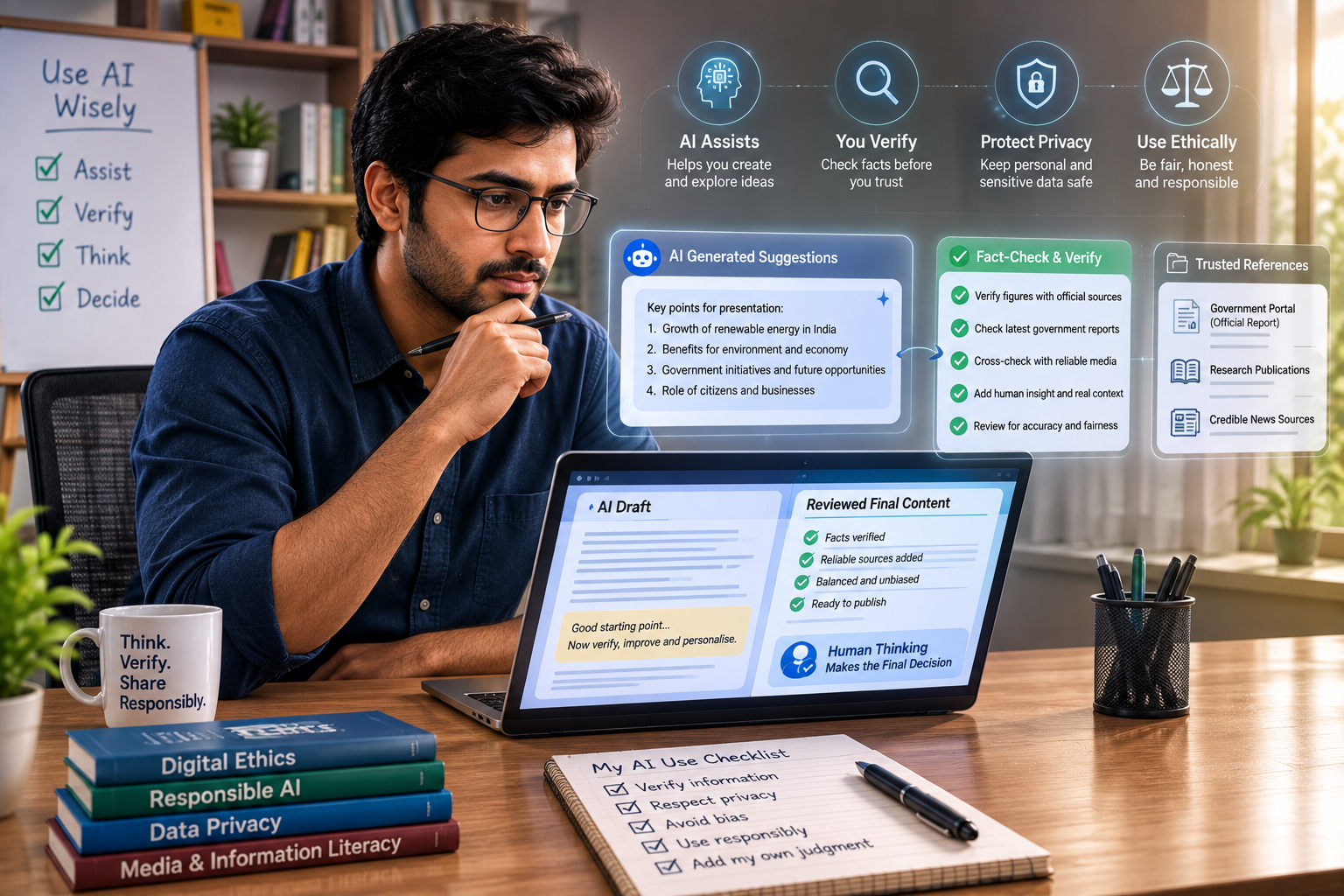
Myth vs Reality: Artificial Intelligence and Online Responsibility
Artificial intelligence has made many digital tasks easier, but it has also created several misconceptions. Understanding the difference between popular assumptions and reality helps people use technology more responsibly.
| Myth | Reality |
|---|---|
| AI always provides correct information. | AI-generated responses should always be verified using reliable sources before important decisions are made. |
| If AI creates the content, I am not responsible for it. | The person publishing or sharing the content remains responsible for its accuracy and impact. |
| AI can replace human judgment in every situation. | AI supports decision-making, but ethical judgment, context, and responsibility still require human involvement. |
| Using AI removes the need for learning. | AI works best when combined with knowledge, curiosity, and critical thinking. |
This comparison highlights an important principle: artificial intelligence is a powerful assistant, but it is not a substitute for responsibility. People who combine technology with thoughtful decision-making are more likely to use AI effectively while maintaining trust and credibility.
Helping Children Become Responsible Digital Citizens
Twelve-year-old Arjun wanted to create his first social media profile after seeing many of his classmates become active online. Instead of simply allowing or refusing the request, his parents decided to turn the moment into a learning opportunity. Together, they discussed why strong passwords matter, why personal information should not be shared publicly, how to recognise misleading online content, and why respectful communication is just as important online as it is in real life. That conversation lasted only a short time, yet it provided lessons that could guide Arjun's digital behaviour for many years.
Children today are growing up in a world where digital technology is woven into education, entertainment, communication, and friendships. Because of this, teaching digital citizenship has become just as important as teaching road safety or financial responsibility. Young people do not simply need technical skills; they need the judgment to use those skills responsibly and respectfully.
Parents, teachers, and guardians play an important role in shaping these habits. Encouraging children to ask questions before sharing information, verify online content, protect personal details, and treat others respectfully helps create confident digital citizens rather than passive technology users. These conversations should evolve as children grow, helping them understand that responsible online behaviour is a lifelong skill rather than a one-time lesson.
Developing digital responsibilities at an early age benefits not only children but also the communities they become part of in the future. Young people who learn responsible online habits are more likely to become adults who contribute positively to workplaces, public discussions, and digital society as a whole.
Children rarely separate the digital world from the real world they see both as parts of everyday life. When adults consistently demonstrate respectful communication, careful information sharing, and responsible technology use, young people naturally begin to adopt those same behaviours. Everyday examples often become more powerful teachers than formal instructions.
Practical Habits for Responsible Online Living
Living responsibly in the digital world does not require advanced technical skills or legal expertise. Instead, it depends on a collection of simple habits that gradually become part of everyday life. Just as people learn to lock their homes before leaving or wear seatbelts while travelling, responsible online behaviour develops through consistent actions rather than occasional efforts. Small decisions made every day often have a far greater impact than one major decision made once in a while.
Consider two individuals who use technology for almost identical purposes. Both communicate through social media, use digital payment applications, attend virtual meetings, and rely on online services for work and personal tasks. The difference is not the technology they use but the habits they follow. One person pauses before forwarding messages, reviews privacy settings regularly, verifies information before sharing it, and protects important accounts with strong security practices. The other reacts quickly without much thought. Over time, these different habits shape very different digital experiences.
Strong digital responsibilities are built through consistency. Responsible behaviour is rarely noticed because it quietly prevents unnecessary problems before they develop. People who adopt these habits often experience greater confidence while using technology because they understand that thoughtful actions reduce unnecessary risks without limiting the benefits of digital innovation.
The goal is not to become suspicious of every online interaction. The goal is to become a careful and informed digital citizen who understands that responsible choices create safer experiences for everyone connected through technology.
Everyday Habits That Strengthen Digital Responsibilities
The following practices require very little time, yet they can significantly improve the quality of your digital life.
| Responsible Digital Habit | How It Helps |
|---|---|
| Verify information before forwarding it. | Reduces the spread of misinformation and builds credibility. |
| Review privacy settings regularly. | Protects personal information and controls who can access it. |
| Create strong, unique passwords for important accounts. | Improves account security and reduces unauthorized access. |
| Think before posting comments or photographs. | Protects personal reputation and respects the privacy of others. |
| Keep software and devices updated. | Helps maintain security and improves digital reliability. |
| Review AI-generated content before using it. | Encourages accuracy and responsible decision-making. |
| Separate personal and professional digital communication. | Maintains professionalism and protects confidential information. |
Responsible habits rarely require dramatic changes. Instead, they become small routines that quietly improve security, communication, and trust throughout everyday digital life.
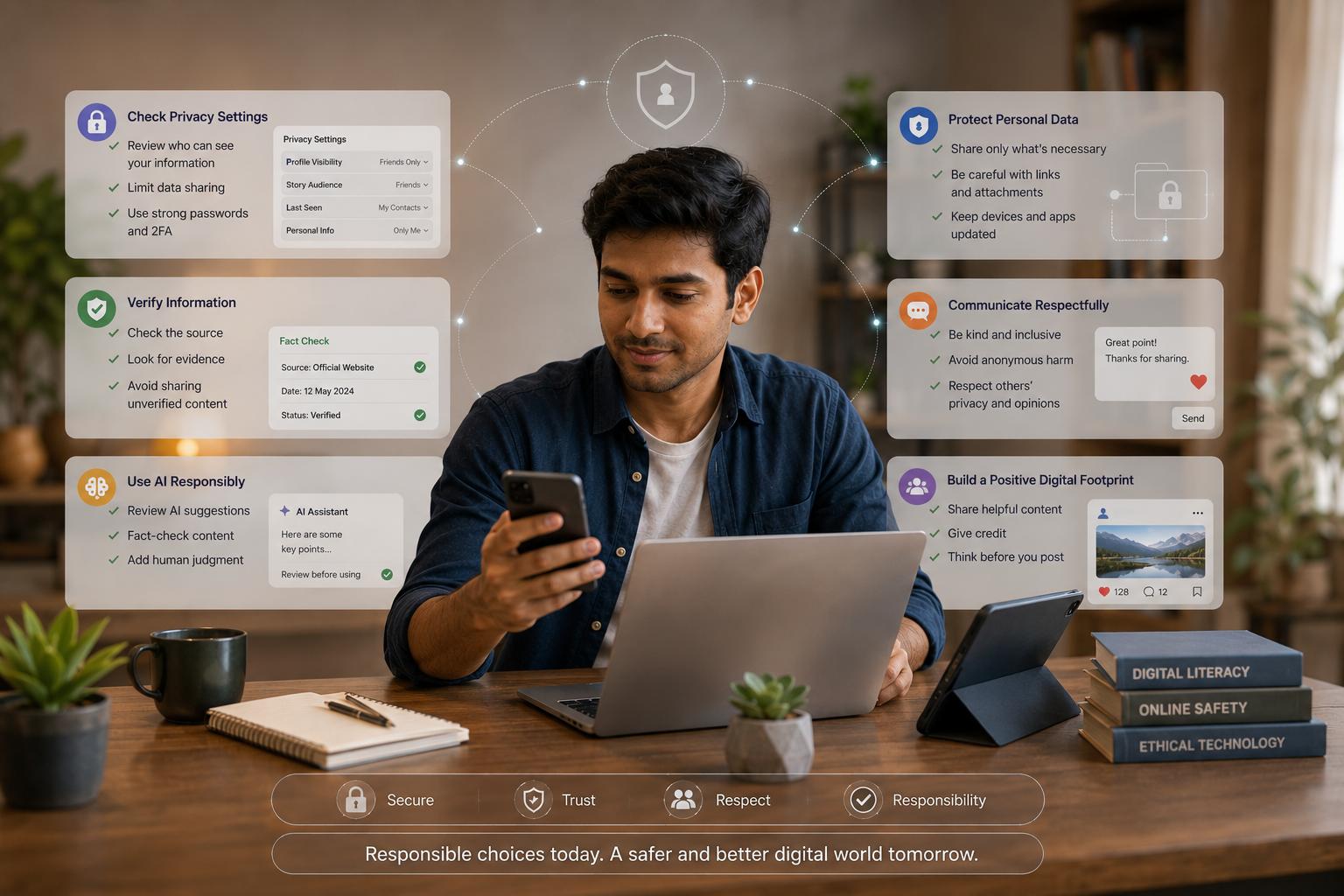
Digital Responsibility Checklist
Before sharing, uploading, forwarding, or publishing anything online, take a moment to ask yourself these questions:
- Have I verified that the information is accurate and reliable?
- Am I respecting another person's privacy and personal information?
- Could this content harm someone if it is misunderstood or taken out of context?
- Would I feel comfortable if this post remained visible several years from now?
- Am I following my workplace, school, or organization's digital communication policies?
- Have I reviewed AI-generated content before using or sharing it?
- Does this action reflect the kind of digital reputation I want to build?
If you can confidently answer "Yes" to these questions, you are already practising responsible digital behaviour and strengthening your digital responsibilities in meaningful ways.
Final Reflection
Technology will continue to evolve, introducing new platforms, artificial intelligence, connected devices, and forms of digital communication that may not even exist today. While these innovations will change the way people interact with the world, one principle is unlikely to change: every technological advancement still depends on human judgment. Responsible choices will always remain more valuable than sophisticated technology alone.
Understanding digital responsibilities is not about limiting freedom or creating unnecessary fear around the internet. It is about recognising that every online action has the potential to influence trust, privacy, relationships, and personal reputation. People who communicate thoughtfully, respect other people's information, verify what they share, and use technology responsibly contribute to a healthier digital environment for everyone.
The most respected digital citizens are not necessarily the people who use the newest devices or the latest applications. They are the individuals who consistently demonstrate honesty, respect, accountability, and thoughtful decision-making every time they interact online. Those qualities remain valuable regardless of how technology changes.
Every click leaves a trace. Every message creates an impression. Every responsible decision strengthens the digital world we all share.
Key Takeaways
- Digital responsibilities are part of everyday life and apply to social media, emails, AI tools, digital payments, and online communication.
- Every online action contributes to a lasting digital footprint that may influence future opportunities and personal reputation.
- Respecting privacy means protecting both your own information and the personal information of others.
- Professional communication requires the same honesty, accuracy, and respect online as it does in face-to-face interactions.
- Artificial intelligence should support human judgment, not replace responsibility or critical thinking.
- Parents and educators play an essential role in helping children become responsible digital citizens.
- Small habits practised consistently create safer, more trustworthy online communities.
Digital responsibilities are the everyday duties that individuals have while using the internet and digital technologies. They include communicating respectfully, protecting privacy, verifying information before sharing it, using artificial intelligence responsibly, and respecting the rights of others in online environments.
A digital footprint represents the information created through online activities such as social media posts, emails, comments, photographs, and digital accounts. Because this information may remain accessible for many years, thoughtful online behaviour helps protect both personal reputation and future opportunities.
Protecting privacy begins with practical habits such as reviewing privacy settings, avoiding unnecessary sharing of personal information, using strong passwords, verifying website authenticity, and asking permission before publishing photographs or personal details involving other people.
No. Artificial intelligence can assist with learning, writing, research, and productivity, but it cannot replace human judgment. Users remain responsible for verifying information, protecting confidential data, respecting intellectual property, and ensuring that AI-generated content is appropriate before sharing or publishing it.
Parents can help children become responsible digital citizens by discussing online privacy, respectful communication, strong password practices, critical thinking, and responsible social media habits. Consistent conversations and positive examples are often more effective than strict rules alone.
Divyal Vision – Continue Your Personal Growth Journey
Responsible digital behaviour is closely connected with broader life skills such as critical thinking, responsible decision-making, and understanding your rights. Continue exploring these topics through the following Divyal Vision articles:
- Digital Trust: The Invisible Foundation of the Connected World
- Your Rights Begin with Awareness: Why Legal Knowledge Is Your Greatest Protection
- Legal Risks in Everyday Life: 10 Hidden Dangers Most People Ignore
- Confidence vs. Arrogance: Understanding the Difference
- Small Positive Habits That Can Transform Your Life
If you would like to stay informed about official cybersecurity advisories, digital safety practices, and guidance on handling online security incidents, the Indian Computer Emergency Response Team (CERT-In) provides reliable resources and updates. Exploring trusted official sources alongside responsible digital habits can help you navigate the online world more safely and confidently.