The Invisible Technology That Controls More of Your Life Than You Realize
Most people imagine technology as something they can see and touch. A smart phone resting on a desk, a smart watch tracking fitness, a laptop powering a meeting, or a smart television streaming movies are all obvious examples. These devices occupy our attention because they are visible, interactive, and familiar. Yet the most influential technologies in modern life often exist quietly in the background, performing countless tasks without ever demanding recognition.
Every time you unlock your phone, search for information, receive a product recommendation, navigate through traffic, or even watch another video online, hidden digital systems begin working behind the scenes. They analyze information, recognize patterns, predict preferences, and automate decisions that simplify everyday experiences. Because these systems operate silently, most people rarely pause to consider how much they influence daily routines.
This quiet digital infrastructure has become one of the defining characteristics of the modern world. Rather than replacing human activity, it continuously supports, organizes, filters, and personalizes it. Many everyday conveniences that people now consider normal would feel almost impossible without these invisible systems operating in the background every second.
The fascinating part is that this transformation happened gradually. There was no single moment when society agreed to let digital systems become constant companions. Instead, each new service promised greater convenience, faster access, and better personalization. Over time, countless invisible technologies became deeply woven into daily life until they almost disappeared from conscious attention.
Understanding Invisible Technology is no longer just a topic for engineers or cyber security professionals. It has become essential knowledge for anyone who uses the internet, owns a smart phone, shops online, travels with navigation apps, or communicates through digital platforms. Awareness helps people appreciate the remarkable convenience these technologies provide while also recognizing the importance of making informed choices in an increasingly connected world.
How Invisible Technology Became Part of Everyday Life
Technology has evolved far beyond machines that simply respond to commands. Modern digital systems constantly observe patterns, process information, and automate routine tasks without requiring direct human involvement. Their purpose is not to draw attention to themselves but to make everyday experiences smoother, faster, and more personalized.
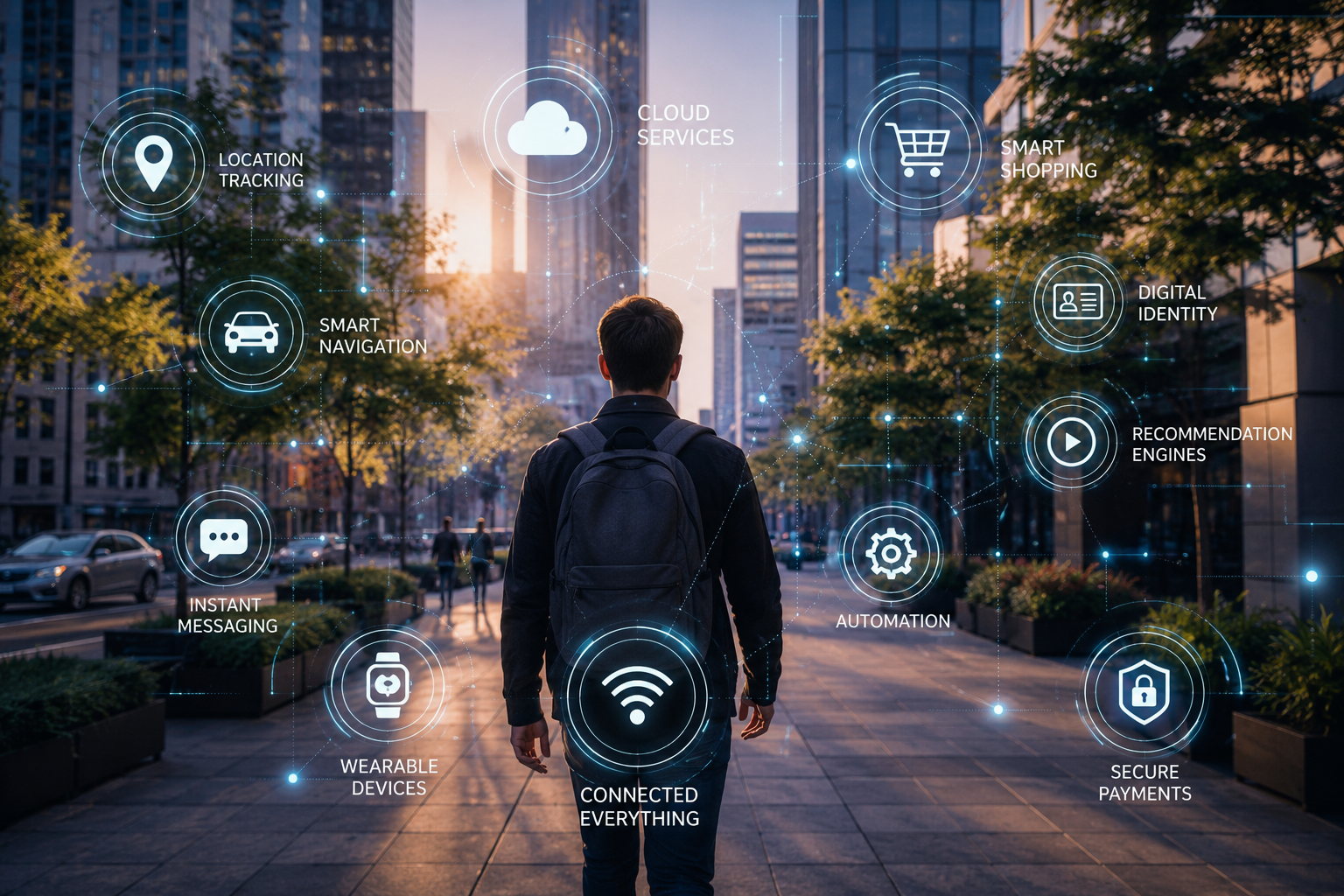
Consider how naturally people move through an ordinary day. A weather application already knows their location before showing the forecast. A music platform suggests songs that match previous listening habits. Navigation software automatically reroutes traffic around congestion. Online shopping platforms display products that seem surprisingly relevant. Email services quietly separate spam from important messages before the inbox is even opened.
None of these experiences feel extraordinary anymore because Invisible Technology has become deeply integrated into daily routines. Its greatest strength lies in remaining almost unnoticed. The less attention it demands, the more successful it becomes.
Behind every one of these seemingly effortless experiences is an enormous network of software, cloud computing, artificial intelligence, sensors, databases, and communication systems working together in real time. Individually, these technologies may appear simple, but collectively they create an intelligent digital ecosystem capable of responding almost instantly to changing situations.
This shift represents one of the biggest technological transformations of the twenty-first century. Earlier generations primarily used computers as tools that waited for instructions. Today's digital systems increasingly anticipate needs before users even recognize them. Instead of asking technology to perform every task manually, people now rely on automated systems that quietly assist throughout the day.
Why Most People Never Notice These Hidden Systems
One reason these technologies remain invisible is that they are designed to reduce effort rather than attract attention. Successful digital experiences feel effortless. When a map instantly calculates the fastest route or a streaming service remembers exactly where a viewer stopped watching, the technology disappears into the experience itself.
This seamless design creates an interesting paradox. The more advanced digital systems become, the less people actually notice them. Convenience slowly replaces curiosity, and complex processes fade into the background of everyday life.
As a result, millions of people interact with Invisible Technology dozens or even hundreds of times each day without consciously realizing it. That quiet presence has become one of the defining features of the digital age, setting the stage for technologies that influence choices, personalize experiences, and reshape modern living in ways that are both remarkable and worth understanding.
Recommendation Engines: The Silent Curators of Modern Life
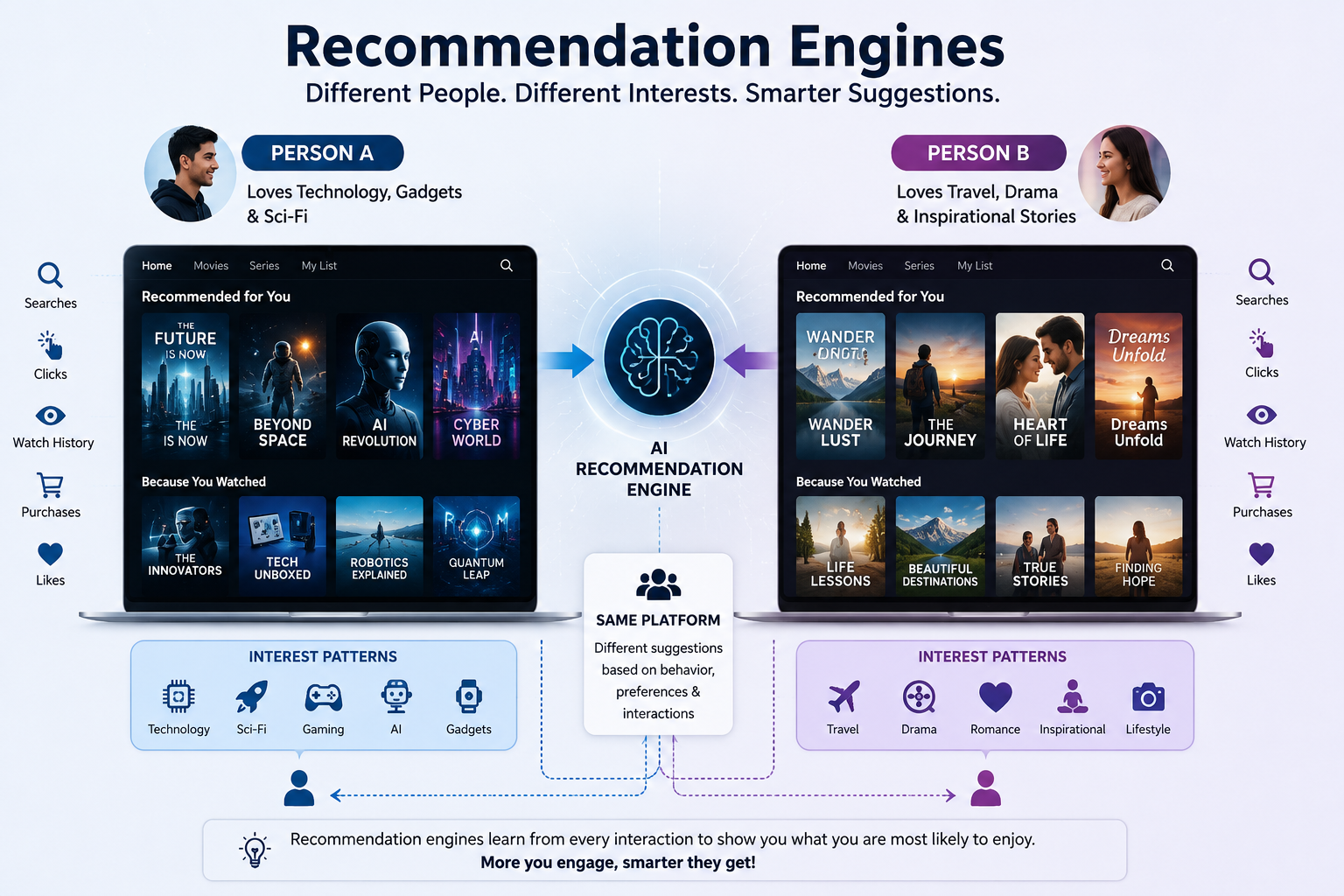
Imagine searching for a single book online. Within minutes, your screen begins displaying similar titles, related authors, and products that appear surprisingly relevant. Open a video platform, and the homepage seems to understand exactly what you might enjoy watching next. Browse an online clothing store, and the suggestions gradually become more accurate with every visit.
These experiences are powered by recommendation engines, one of the most widespread forms of Invisible Technology. Rather than making random suggestions, these systems analyze patterns created through searches, clicks, viewing history, purchases, and countless anonymous interactions. Their purpose is simple: reduce the time people spend searching by presenting options that are likely to match individual interests.
Recommendation engines are now woven into nearly every major digital service. Streaming platforms recommend movies, music services suggest playlists, news websites personalize headlines, online stores display products, and even learning platforms recommend courses based on previous activity. Instead of presenting identical content to every user, these systems create unique experiences tailored to individual preferences.
While personalization improves convenience, it also changes how people discover information. Instead of actively exploring a wide variety of choices, users often encounter content selected by algorithms. This can make digital experiences faster and more enjoyable, but it may also reduce exposure to new perspectives and unexpected discoveries.
How Recommendation Systems Learn Over Time
Unlike traditional software that follows fixed instructions, modern recommendation systems improve continuously through learning. Every interaction provides another small piece of information that helps refine future suggestions.
For example, consider how a music application responds when someone skips certain songs but repeatedly listens to others. Over time, the platform begins identifying preferred genres, favorite artists, listening times, and even mood patterns. Without requiring manual settings, it gradually creates a more personalized experience.
The same process occurs across many digital services. Small actions that seem insignificant individually become valuable when combined with thousands of similar interactions. This allows Invisible Technology to adapt naturally instead of relying on constant user input.
Although these systems are designed to improve convenience, understanding how they learn helps users become more aware of why certain content appears repeatedly on their screens.
The Digital Footprints You Leave Behind Every Day
Many people think about privacy only when filling out online forms or creating new accounts. In reality, digital footprints are created far more frequently. Every search query, website visit, mobile application, online purchase, navigation request, and social media interaction leaves behind pieces of information that contribute to a much larger digital picture.
Most of these footprints are not dramatic or personally sensitive by themselves. Searching for nearby restaurants, checking the weather, reading news articles, or watching educational videos may seem ordinary. However, when these activities accumulate over weeks, months, or years, they begin revealing patterns about habits, interests, routines, and preferences.
This is another important area where Invisible Technology quietly operates. Hidden systems organize enormous volumes of information to improve services, strengthen security, reduce fraud, and personalize user experiences. In many cases, these processes happen automatically without interrupting daily activities.
Understanding digital footprints does not mean becoming fearful of technology. Instead, it encourages people to recognize that nearly every connected activity contributes to a larger digital presence that continues to evolve over time.
Everyday Activities That Create Digital Footprints
Many common online actions contribute to your digital footprint without attracting attention.
| Everyday Activity | Invisible Technology Working Behind the Scenes |
|---|---|
| Using GPS navigation | Location services and traffic prediction |
| Watching videos | Recommendation algorithms |
| Shopping online | Personalized product suggestions |
| Reading news | Content personalization systems |
| Online payments | Fraud detection and security monitoring |
| Logging into apps | Identity verification systems |
| Using smart assistants | Voice recognition and cloud processing |
Most of these technologies exist to improve convenience, speed, and security. The important point is not to avoid them, but to understand how naturally they become part of everyday life.
Location Tracking: More Helpful Than Most People Realize
One of the clearest examples of Invisible Technology is location tracking. Today, many applications rely on location information to provide useful services that people often take for granted.
Navigation apps calculate the fastest routes by combining live traffic conditions with millions of anonymous location updates. Food delivery services estimate arrival times based on real-time movement. Ride-sharing platforms connect passengers with nearby drivers in seconds. Weather applications automatically display local forecasts without requiring users to type their city every time.
These conveniences depend on location technologies working continuously in the background. In many situations, they save time, improve safety, and make travel significantly more efficient.
At the same time, location information deserves thoughtful management. Most modern smartphones allow users to decide which applications can access their location and whether that access is always active, available only while using the app, or completely disabled. Reviewing these permissions regularly helps people enjoy the benefits of connected services while maintaining greater control over their personal information.
Technology itself is neither inherently intrusive nor entirely harmless. Its impact often depends on how transparently it operates and how consciously individuals choose to use it.
Your Digital Identity Exists Even When You're Offline
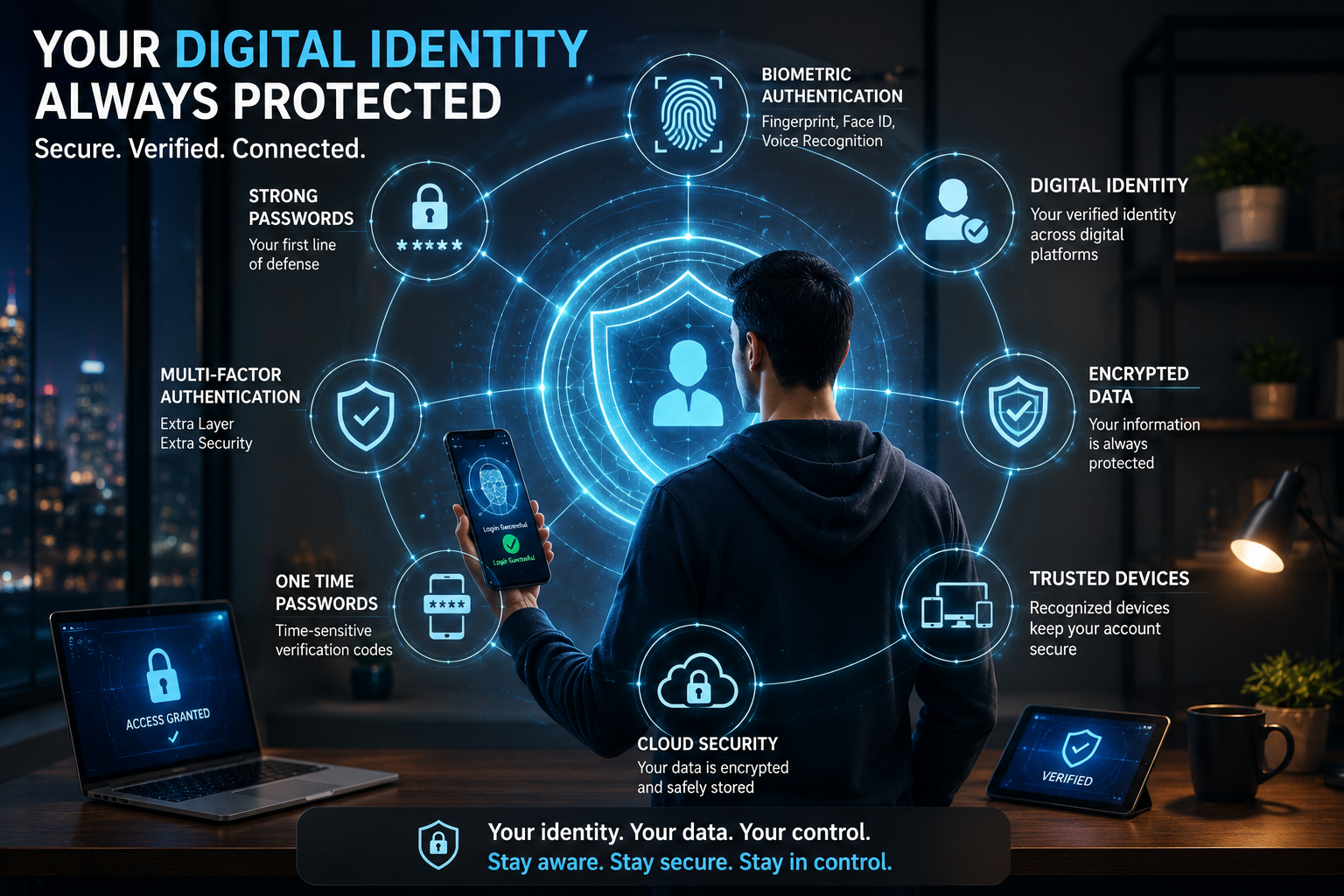
Most people think of identity as a name, a photograph, or an official document. In the digital world, however, identity extends far beyond these visible details. Every account you create, every device you connect, and every secure login contributes to a broader digital identity that allows online services to recognize and protect you.
This digital identity is one of the most important forms of Invisible Technology because it works continuously without demanding attention. Whether you sign in to your email, access online banking, purchase tickets, or verify your identity through a one-time password, hidden systems quietly authenticate your credentials within seconds. The process feels effortless, yet it depends on sophisticated encryption, identity management, and security protocols operating behind the scenes.
Unlike passwords alone, modern digital identity combines multiple layers of protection. Devices, login history, location patterns, biometric authentication, and verification codes all work together to determine whether an access request appears legitimate. These invisible security measures help reduce fraud while making digital services more reliable.
The growing importance of digital identity also means individuals share greater responsibility for protecting it. Strong passwords, multi-factor authentication, and regular account reviews are no longer optional habits—they have become essential practices for participating safely in the connected world.
Why Digital Identity Matters More Than Ever
As governments, businesses, educational institutions, and financial services continue expanding online, digital identity becomes the foundation of trust between people and technology.
Consider how many activities now depend on secure digital verification:
- Accessing online banking
- Signing into work platforms
- Booking travel
- Receiving healthcare services
- Shopping online
- Using government portals
- Managing cloud storage
- Completing digital payments
Behind each of these actions, Invisible Technology verifies identity almost instantly while attempting to keep personal information secure. Most users experience only a smooth login process, rarely seeing the sophisticated systems working underneath.
Automation: The Invisible Assistant That Never Sleeps
Automation is often associated with robots in factories, but its influence reaches much further. Today, automation quietly manages thousands of routine digital tasks every second without requiring human intervention. It schedules backups, filters spam emails, updates software, processes online payments, synchronizes cloud files, and manages countless background operations that most people never notice.
This hidden efficiency has transformed the way individuals and organizations work. Instead of repeating routine processes manually, automated systems handle repetitive tasks with remarkable consistency, allowing people to focus on work that requires creativity, judgment, and problem-solving.
One reason automation feels almost invisible is that successful automation removes friction rather than creating attention. When photos automatically appear across devices or calendars synchronize instantly between computers and smartphones, users simply expect everything to work. Few stop to think about the complex sequence of events happening behind the scenes.
As Invisible Technology continues evolving, automation is becoming smarter rather than merely faster. Modern systems can recognize patterns, detect unusual activity, organize information, and even trigger actions based on changing conditions, often without requiring manual instructions.
Everyday Examples of Invisible Automation
Many everyday conveniences rely entirely on automated systems operating in the background.
| Everyday Situation | Automation at Work |
|---|---|
| Spam emails disappear | Email filtering systems |
| Photos sync automatically | Cloud synchronization |
| Phone updates overnight | Automatic software updates |
| Calendar reminders appear | Smart scheduling |
| Bank fraud alerts | Risk detection automation |
| Online orders update instantly | Inventory and logistics automation |
| Smart home devices respond | Connected automation systems |
These examples demonstrate that automation is no longer limited to businesses or technology companies. It has quietly become part of ordinary daily life.
The Balance Between Convenience and Privacy
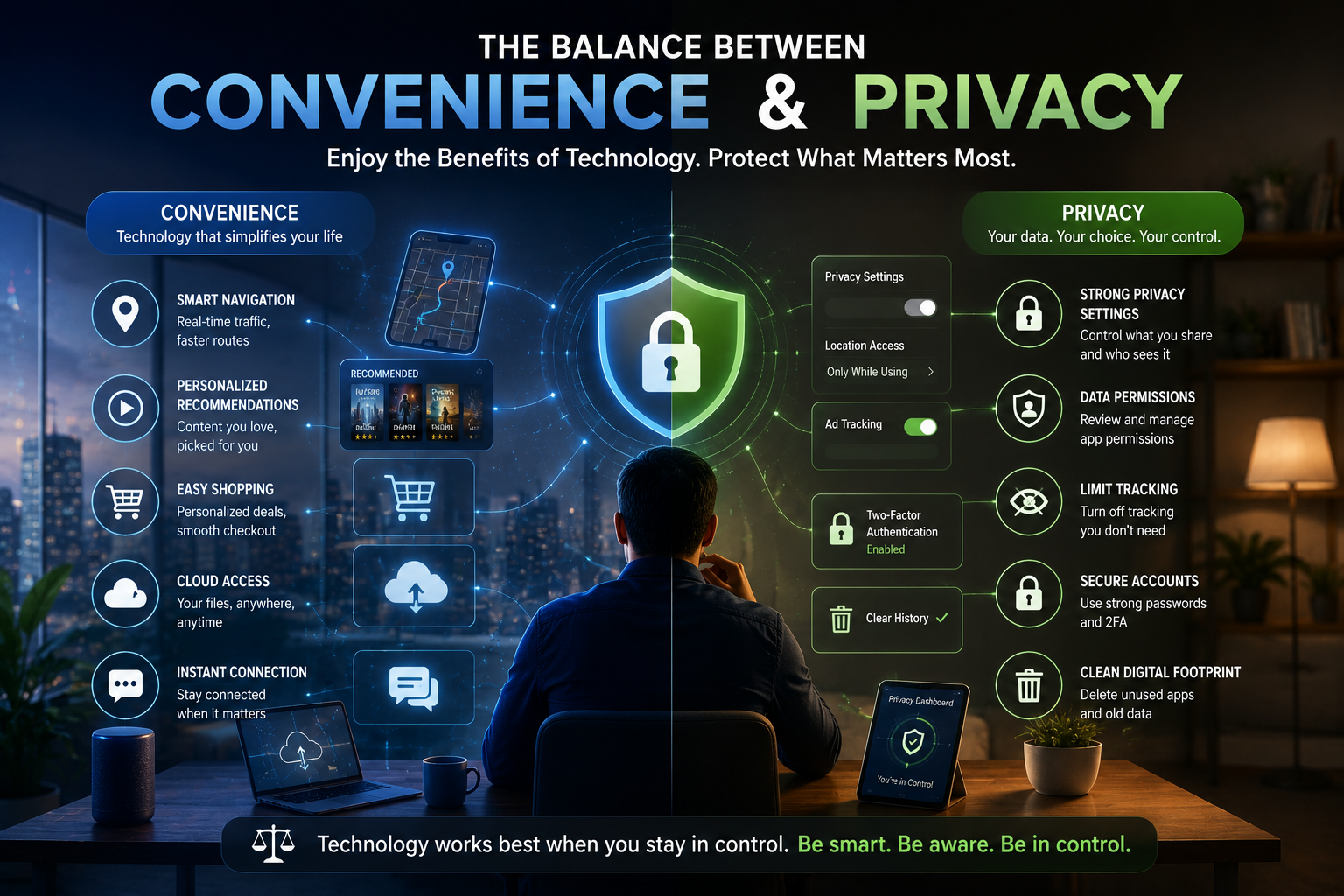
Modern technology has dramatically reduced the effort required to perform everyday tasks. Information is available within seconds, navigation is more accurate than ever, shopping is personalized, and communication happens almost instantly. These improvements illustrate the tremendous value created by Invisible Technology.
However, convenience and privacy often exist in careful balance. Many personalized services rely on collecting certain types of information to function effectively. Navigation applications need location data to calculate traffic conditions. Streaming services analyze viewing history to recommend relevant content. Online stores remember preferences to simplify future purchases.
None of these processes automatically represent a problem. The important consideration is understanding what information is collected, why it is collected, and how users can manage their preferences.
Fortunately, modern digital platforms increasingly provide tools that help people make informed decisions about privacy.
Some useful practices include:
- Reviewing application permissions regularly.
- Disabling unnecessary location access.
- Using strong, unique passwords.
- Enabling multi-factor authentication.
- Updating software promptly.
- Reading privacy settings before accepting defaults.
- Removing unused applications from devices.
These simple habits allow individuals to enjoy the benefits of connected technology while maintaining greater awareness of their digital environment.
Practical Guidance: Staying Aware Without Becoming Fearful
Technology should not be viewed as something to fear, nor should it be accepted without question. The healthiest approach lies somewhere between these extremes. Awareness empowers people to use technology wisely rather than passively.
A few thoughtful habits can make a meaningful difference:
- Ask why an app requests certain permissions.
- Review privacy settings every few months.
- Understand how recommendation systems influence content.
- Verify important information from multiple reliable sources.
- Think before sharing personal information online.
- Keep devices and applications updated.
- Learn how digital services actually work instead of simply using them.
These practices do not reduce convenience. Instead, they strengthen digital confidence by helping users understand the systems they interact with every day.
The future will almost certainly include even more connected devices, smarter automation, and increasingly personalized experiences. People who understand the role of Invisible Technology will be better prepared to enjoy its benefits while making informed decisions about privacy, security, and responsible digital living.
Key Takeaways
- Invisible Technology powers many of the digital experiences people rely on every day, often without drawing attention to itself.
- Recommendation engines personalize content, products, and entertainment by learning from user interactions over time.
- Digital footprints are created through everyday online activities and contribute to personalized, secure, and efficient digital services.
- Location tracking, digital identity, and automation improve convenience but also require thoughtful privacy management.
- Understanding how hidden digital systems work helps people make more informed decisions about technology use.
- Reviewing privacy settings, managing app permissions, and enabling strong security measures are practical habits for every digital user.
- The future of technology is not just about smarter devices—it is about creating a balanced relationship between innovation, trust, and human awareness.
Invisible Technology refers to digital systems that operate quietly in the background without requiring direct interaction. Examples include recommendation engines, cloud computing, location tracking, digital identity systems, and automation that simplify everyday digital experiences.
No. Artificial Intelligence is only one part of Invisible Technology. Many invisible systems rely on cloud infrastructure, sensors, databases, cybersecurity, networking, and automation rather than AI alone.
Not necessarily. Many hidden technologies are designed to improve convenience, security, and efficiency. However, users should understand what information they share and regularly review privacy settings to maintain control over their personal data.
Recommendation engines analyze previous interactions such as searches, purchases, viewing history, or listening habits to suggest content that matches your interests. Their goal is to create a faster and more personalized user experience.
Simple habits can make a significant difference: review app permissions regularly, enable multi-factor authentication, keep software updated, use strong and unique passwords, verify information before sharing it, and learn how digital services manage your data. These practices help you enjoy the benefits of Invisible Technology while protecting your privacy and digital security.