A Beginner’s Guide to Personal Financial Planning

- Personal financial planning is not reserved for people with high incomes, complicated investments, or extensive financial knowledge. At its simplest, it is the process of understanding your current financial position, deciding what matters to you, preparing for uncertainty, and creating a realistic path toward future goals. A useful financial plan connects today's income and expenses with tomorrow's priorities instead of treating each financial decision as a separate event. A good plan begins with a clear picture of where your money comes from and where it goes.
- From there, savings, emergency funds, financial goals, insurance, debt responsibilities, and long-term priorities can be considered in a way that reflects your actual circumstances. The purpose is not to predict everything that will happen in the future, because no plan can do that. The purpose is to become better prepared for different possibilities. Personal Financial Planning also needs to be flexible.
- Income can change, family responsibilities can increase, priorities can shift, and unexpected expenses can appear. A financial plan that is reviewed and adjusted periodically is more useful than one created once and then forgotten. Financial decisions often feel disconnected from one another. One month may involve paying household expenses, another may bring a large purchase, and a later month may require an unexpected payment that was never part of the original plan.
- When these decisions are made one at a time, it can be difficult to see how they affect the bigger financial picture. A financial plan provides a way to connect those individual decisions. The starting point is not investing or finding a product that promises attractive returns. It is understanding your own financial situation.
What Personal Financial Planning Really Means
At its core, financial planning is about making your money serve your priorities in a structured way. It involves looking at your present financial position, identifying what you want to achieve, considering risks that could interfere with those goals, and deciding how your available resources can be organised. It is not a single document or a one -time calculation.
It is an ongoing process that changes as life changes. For a beginner, this distinction is important. A financial plan does not need to contain complicated charts or sophisticated investment strategies to be useful.
A simple plan that clearly shows income, regular expenses, savings, emergency preparation, important goals, insurance needs, and existing obligations can already provide valuable direction. Personal circumstances should always influence the plan. Someone supporting a family may have very different priorities from someone who has recently started working.
A person with irregular income may need a different approach from someone receiving a predictable monthly salary. Someone planning for a major education expense may have a differe nt time horizon from someone focused primarily on retirement. This is why copying another person's financial plan is rarely a good starting point.
A useful plan should reflect your own income, responsibilities, goals, financial commitments, and level of comfort with uncertainty. The objective is not to make your finances look impressive on paper. It is to create a structure that can actually work in your life.
Start With Your Current Financial Picture
Before deciding where you want your money to go, it helps to understand where you are starting from. This means looking beyond your monthly salary or primary source of income and considering the wider picture. Regular income, occasional income, recurring expenses, savings, outstanding debt, insurance premiu ms, and other financial commitments can all influence how much flexibility you actually have.
For many beginners, this stage can feel uncomfortable because it may reveal spending patterns or financial commitments they have previously avoided examining. That discomfort is not a reason to skip the exercise. A financial plan cannot become more useful by hiding information from yourself.
The purpose of understanding your current position is not to judge past decisions but to make future decisions with better information. A simple starting document can contain several sections: monthly income, essential expenses, flexible expenses, savings, debt obligations, existing protection such as insurance, and major upcoming financial needs. You do not need to make the first version perfect.
The initial objective is simply to create a reasonably accurate snapshot. It can also help to separate what you own, what you owe, and what you regularly spend. These are different parts of your financial position and should not be mixed together.
Someone may have valuable assets but also substantial obligations, while another p erson may have limited assets but very little debt. Looking at the complete picture gives you a more realistic understanding of your position. Once this information is visible, financial planning becomes less abstract.
Instead of thinking, “I should save m ore,” you can ask more useful questions: How much can I realistically save each month? Which upcoming expense needs preparation? Which financial commitment is taking up the greatest part of my available income?
What would happen if an unexpected expense appeared? That shift—from vague concern to specific information —is one of the most valuable early steps in Personal Financial Planning.
Understand Income and Expenses

Income is the starting resource for most financial plans, but knowing the amount that comes in is only half the picture. You also need to understand how much of that income is already committed before you make new financial decisions. Regular household expenses, transportation, education, utilities, debt payments, subscriptions, food, and other costs can gradually reduce the amount available for saving or future goals.
A useful approach is to divide expenses into categories rather than looking only at one total number. Essential expenses are those that are difficult to avoid without affecting basic needs or important responsibilities. Flexible expenses may be adjusted depending on circumstances.
Irregular expenses are different again because they may not appear every month but can still have a meaningful effect when they arrive. This distinction helps because a budget should reflect real life. If an annual payment appears only once a year, treating it as though it does not exist can create a misleading monthly picture.
A better approach is to recognise that the e xpense exists and prepare for it gradually when possible. Income also needs to be considered realistically. Someone with variable earnings should be cautious about building a financial plan around the highest month of income.
A plan based on an unusually strong month may become difficult to maintain when income returns to normal. Using a more conservative and realistic income estimate can provide greater stability. The goal is not to predict every rupee perfectly.
The goal is to understand your normal finan cial flow well enough to make informed decisions. When you know what comes in, what goes out, and which expenses are predictable or flexible, it becomes easier to decide how much room exists for savings and future priorities.
Build a Realistic Savings Plan
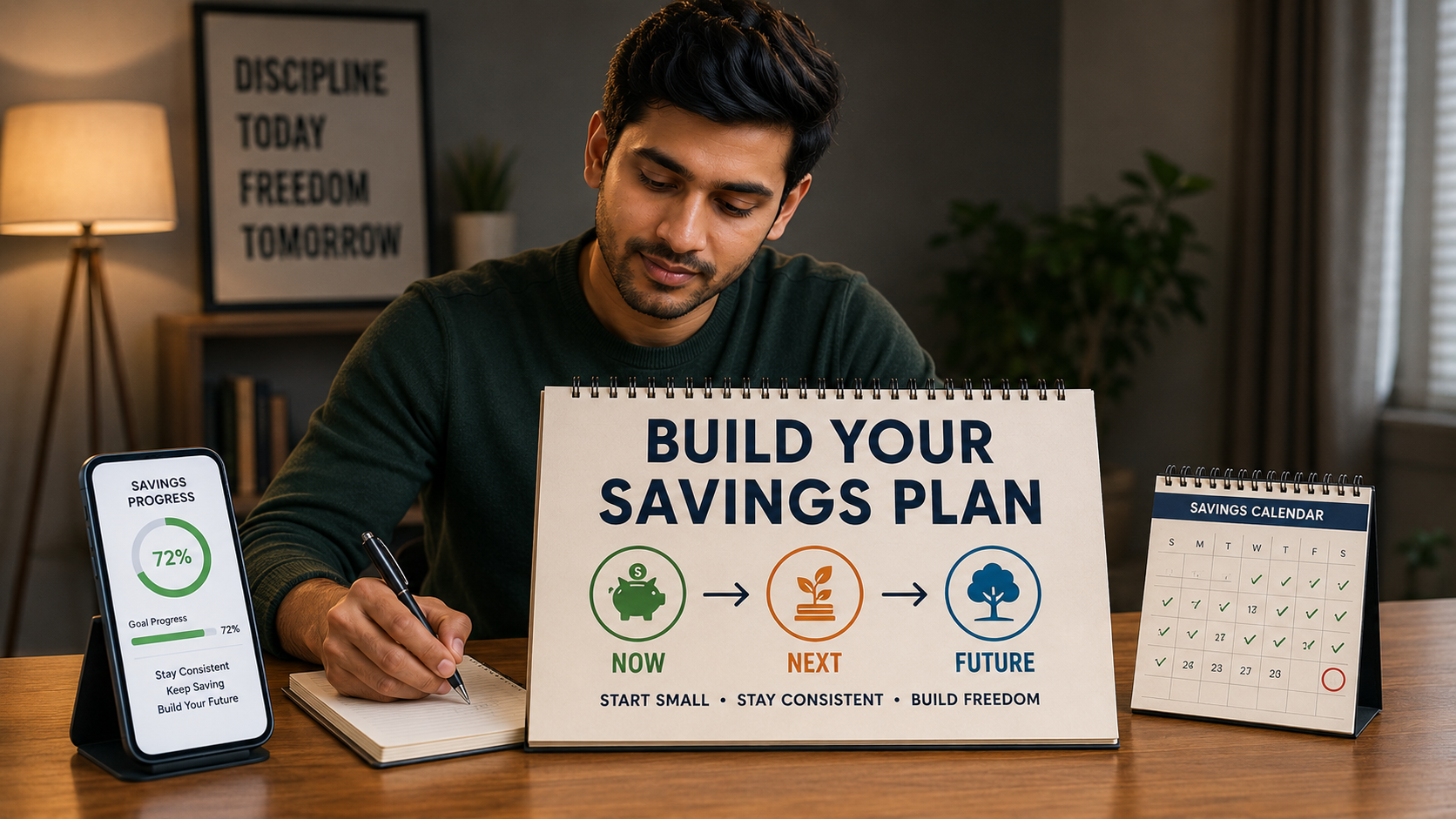
Once your current financial position is clearer, the next question is how much money can be directed toward future needs. Saving is an important part of financial planning, but a useful savings plan needs to be realistic. Setting an amount that looks impressive but cannot be maintained may create frustration rather than progress.
A better starting point is to consider your actual monthly financial capacity. After essential expenses and important obligations are accounted for, identify an amount that can reasonably be set aside. The amount can change as your income or responsibilities change.
What matters is creating a repeatable system rather than waiting for a month when there happens to be a large amount of money left over. Savings can also be separated according to purpose. Money intended for a near -term purchase should not necessarily be treated the same way as money intended for a much longer -term objective.
Keeping different goals visible can help prevent one priority fro m quietly consuming funds intended for another. Automation may also make saving easier for people who find it difficult to remember each month. Where suitable and practical, a person can arrange for a chosen amount to move into a separate savings destination after income is received.
The exact method depends on the individual's circumstances and banking arrangements, but the principle is simple: make the desired behaviour easier to repeat. A savings plan should also leave room for ordinary life. Financial planning should not become so restrictive that every unexpected meal, family event, or modest personal purchase feels like a failure.
A sustainable plan allows reasonable flexibility while keeping important goals visible. The purpose of saving is therefore larger than simply accumulating a balance. It creates options.
Having money available for a future need can reduce pressure when an expense arrives and can make it easier to pursue an important goal without depending entirely on the next month's income.
Create an Emergency Fund

An emergency fund is one of the most practical parts of Personal Financial Planning because it prepares for expenses that cannot always be predicted. A sudden medical expense, urgent home or vehicle repair, temporary interruption in income, or an important family responsibility can place pressure on a household budget. Without accessible savings, an unexpected expense may force a person to postpone another priority or depend on borrowing.
An emergency fund c reates a separate layer of financial flexibility for situations that genuinely cannot be planned in advance. The amount required will not be identical for everyone. A person with stable income and limited fixed responsibilities may have different needs fro m someone supporting a family or working with irregular income.
Rather than focusing only on a universal number, it is more useful to consider your essential monthly expenses, income stability, existing obligations, and the types of unexpected costs you are most likely to face. An emergency fund should also remain reasonably accessible. Its purpose is not to chase the highest possible return; its purpose is to be available when a genuine financial need arises.
The appropriate place to keep such money depend s on individual circumstances and current financial products, but accessibility and safety should be considered alongside any return. It can be tempting to use emergency savings for planned purchases when the balance begins to look substantial. That can we aken the purpose of the fund.
A useful distinction is to maintain separate money for known future goals and money reserved specifically for unexpected situations. This separation can make it easier to know whether a withdrawal is genuinely necessary. Building an emergency fund can take time, particularly when income is already committed to essential expenses.
That does not make the goal less worthwhile. Starting with a manageable amount and increasing it when circumstances permit can gradually create a rese rve that makes future uncertainty easier to handle.
Turn Financial Goals Into a Plan
Having a financial goal is different from having a financial plan. Saying that you want to buy a home, fund education, build savings, travel, reduce financial pressure, or prepare for later life gives you a destination, but it does not explain how you will get there. A financial pla n begins to become useful when a broad goal is translated into a time frame, an estimated requirement, and a realistic course of action.
Start by identifying what the goal actually means to you. A short -term goal might involve an expense expected within th e next year or two, while another goal may require several years of preparation. Long-term goals can have an even longer horizon and may need regular adjustments because circumstances, costs, and priorities can change.
Time matters because it affects how m uch needs to be set aside and how much flexibility you have. A goal that is several years away may allow you to build it gradually, while a large expense that is only a few months away may require more immediate preparation. The closer a financial deadline becomes, the more important it is to have a realistic view of what can actually be accumulated within the remaining time.
It is also useful to avoid treating every goal as equally urgent. A person may have several things they would like to accomplish, but available income and savings capacity are limited. Prioritising goals can help prevent money from being spread so thinly that none of the important objectives receives enough attention.
A written list can make this process much clearer. For each major goa l, note the purpose, approximate amount, target date, and current progress. If the goal changes later, update the plan rather than considering the original target permanent.
Financial planning is meant to support real life, so a changed goal should lead to an adjusted plan rather than unnecessary frustration.
Short-, Medium-, and Long-Term Financial Planning
A useful way to organise financial goals is to consider them according to time horizon. Short-term goals generally involve needs or priorities that are relatively close, such as an upcoming education payment, a planned purchase, or building an initial financial reserve. Medium -term goals may require several years of preparation, while long -term planning may involve ma jor future priorities such as retirement or other goals that are far away.
This structure helps prevent different goals from competing without any clear order. Money needed soon should generally be considered differently from money intended for a distant objective because the time available and the need for accessibility may be different. The exact approach will depend on the individual goal and circumstances.
Long-term planning deserves particular patience. When a goal is many years away, it can be tempting to focus entirely on short -term results. A better approach is to consider how regularly you can contribute, how your circumstances might change, and how the plan should be reviewed over time.
Long -term financial planning is less about predicting the futu re perfectly and more about preparing consistently while remaining flexible. Goals can also change. Someone may initially prioritise buying a vehicle but later decide that education, family responsibilities, or another objective is more important.
That is not necessarily a failure of planning. A useful financial plan should be capable of changing when the person's priorities change. ️

Understand the Role of Insurance
Financial planning is not only about accumulating money. It is also about considering what could disrupt your financial position. Insurance can play an important role in managing certain financial risks by providing protection against covered events according to the terms of a policy.
The appropriate type and level of cover depend on a person's circumstances, responsibilities, existing protection, and financial situation. For a beginner, t he first useful question is not necessarily which policy to buy. It is what financial risks could create serious difficulty if they occurred unexpectedly.
Health -related expenses, loss of income, or responsibilities toward dependants can have a significant effect on a household's finances. Understanding which risks matter to your situation can help you think more clearly about protection. Insurance should also be understood on its own terms.
It is primarily a risk-management tool, not simply another way to accumulate money. Different insurance products have different purposes, costs, conditions, exclusions, and benefits. Those details matter, which is why policy documents and current terms should be reviewed carefully before making a decision.
A person's pro tection needs can also change over time. Starting employment, getting married, having children, taking on a major financial obligation, or reaching another stage of life may change the risks that deserve attention. An insurance review can therefore be part of a broader financial review rather than a decision made once and forgotten.
The goal is not to insure against every imaginable possibility. That could make a financial plan unnecessarily expensive and complicated. The more practical approach is to under stand the risks that could materially affect your financial stability and consider appropriate protection based on your circumstances. ️

Think About Long-Term Financial Planning
Long-term financial planning asks a different question from managing the current month: What kind of financial position do I want to cr eate over the years ahead? The answer may include retirement, children's education, supporting family members, purchasing a home, building financial independence, or maintaining a particular standard of living later in life. These goals are usually too lar ge to handle through last -minute decisions, which is why they benefit from early and consistent preparation.
Time can be one of the most valuable resources in long -term planning. Starting earlier can give a person more opportunities to adjust contributions as circumstances change, while delaying important preparation may leave fewer options later. This does not mean that someone who starts late has failed.
It simply means that the plan may need to reflect the time that remains, current income, existing resources, and realistic priorities. Long-term goals also require patience because progress may not always be visible from month to month. A person can make consistent contributions for a considerable period without feeling that the final objective is getting dramatically closer.
This is one reason it is useful to review progress periodically rather than making decisions based on short-term emotions. Long-term financial planning should also account for uncertainty. Income may change, family responsibilities may increase, inflation may affect future costs, and personal priorities may evolve.
A strong plan therefore needs enough structure to keep progress moving while remaining flexible enough to respond when circumstances change. For beginners, the most important step is not trying to predict exactly what the next twenty or thirty years will look like. It is developing a habit of thinking ahead.
Once long -term priorities are identified, they can be incorporated into the broader financial plan and reviewed as life develops.
Review and Adjust Your Financial Plan
A financial plan is not a contract with your future self. It is a working framework that should change when your circumstances change. A new job, a change in income, marriage, children, a major purchase, a change in debt, or an unexpected financial respons ibility can all affect the assumptions on which the original plan was based.
A regular review helps identify these changes before they create larger problems. You can begin by comparing your actual income and expenses with what you expected. Then look at s avings progress, emergency reserves, debt obligations, insurance needs, and major financial goals.
The objective is not to find fault with every difference but to understand why the difference occurred. It is also useful to review goals that may have becom e less relevant. A financial objective that made sense several years ago may no longer reflect your current priorities.
Continuing to save for an outdated goal simply because it was part of the original plan can make financial management less effective. Some changes may require a small adjustment, while others may require a broader rethink. If income falls significantly, for example, protecting essential expenses may become more important than pursuing an optional long -term goal at the same pace.
If income rises, the additional capacity could potentially support savings, debt reduction, future goals, or other priorities. The important point is that adjustment should be considered part of successful planning, not evidence that the original plan failed. Real l ife does not follow a fixed financial script.
A plan that can adapt to reality is more useful than one that looks perfect on paper but becomes impractical when circumstances change.
A Simple Beginner’s Financial Planning Framework
Someone beginning Personal Financial Planning does not need to build a complicated system on the first day. A simple framework can provide enough structure to begin making better decisions and can be expanded over time as financial knowledge and circumstances develop.
Step 1: Understand Your Starting Point
List your regular income, essential expenses, flexible spending, savings, existing debt, insurance arrangements, and major financial responsibilities.
The goal is to create an honest snapshot rather than a perfect financial report.
Step 2: Protect Your Financial Foundation
Before focusing heavily on long -term goals, consider whether your basic financial foundation is reasonably prepared.
This may include maintaining accessible emergency savings, managing important obligations, and understanding the financial risks that could significantly affect your household.
Step 3: Define Your Priorities
Write down the financial goals that matter most to you and place them into realistic time horizons.
A goal becomes easier to manage when you know why it matters, approximately when you need it, and how much preparation may be required.
Step 4: Decide How Much You Can Allocate
Look at the money available after essential expenses and important commitments.
From this amount, determine what can realistically support savings and other priorities without creating an unsustainable monthly burden.
Step 5: Consider Protection and Long-Term Needs
Think about risks that could interfere with your financial progress and con sider appropriate protection.
At the same time, give long -term priorities a place in the plan rather than waiting until they become urgent.
Step 6: Review the Plan Regularly
Choose a practical review schedule and update the plan when your circumstances cha nge.
A financial plan should reflect your current reality, not an outdated version of your life. This framework is deliberately simple. Its purpose is to help a beginner move from scattered financial decisions toward a more organised process.
As financial circumstances become more complex, additional professional guidance may become appropriate.
What a Good Financial Plan Should Help You Answer
A useful financial plan should make several important questions easier to answ er. Do I know how much money normally comes in? Do I understand my essential financial commitments?
Do I have some preparation for unexpected expenses? Do my major goals have realistic time frames? Do I understand the risks that could seriously affect my financial position?
It should also help you recognise what you do not yet know. Financial planning is not about pretending to have every answer. If you are uncertain about a financial product, insurance policy, tax matter, investment decision, or another sp ecialised issue, recognising that uncertainty can be more responsible than making a confident decision based on incomplete information.
For a beginner, that mindset can make the entire process less intimidating. You do not have to understand every part of personal finance before taking the first step. You can establish the basics, learn gradually, ask appropriate questions, and improve the plan as your knowledge develops.
Ultimately, Personal Financial Planning is about creating a clearer relationship betwe en the money you have today and the life you are preparing for tomorrow. It does not remove uncertainty, guarantee a particular outcome, or make every financial decision easy. What it can do is give you a structured way to make decisions, respond to change s, and keep important priorities visible.
Frequently Asked Questions
Personal financial planning is the process of understanding your income, expenses, savings, financial responsibilities, risks, and future goals, then organising them into a realistic plan. It provides a framework for making financial dec isions rather than dealing with each expense or goal separately.
There is no single amount that works for everyone. The appropriate amount depends on income, essential expenses, existing commitments, financial goals , and overall circumstances. A realistic amount that can be maintained consistently is generally more useful than setting an unrealistic target.
An emergency fund provides accessible money for unexp ected expenses or temporary financial disruptions. It can reduce the need to immediately depend on borrowing when an unplanned expense occurs. The appropriate size depends on individual circumstances and essential financial commitments.
Insurance can be an important part of financial risk management when a particular risk could seriously affect an individual's or family's financial position. The appropriate type and amount of coverage depend on personal circumstances, responsibilities, policy terms, exclusions, and other factors.
A simple review at regular intervals can help keep a plan relevant. Many people may find a monthly check useful for income, expenses , and savings, while a broader review can be considered when major circumstances change, such as a significant income change, marriage, children, major debt, or a new long-term goal.
Personal financial planning is connected with broader habits of discipline, well-being, responsible decision-making, and meaningful personal growth. These related DivyalVision articles explore some of those areas:
- 5 Smart Money Habits Everyone Should Learn — Explore practical everyday habits for managing spending, building savings, handling debt, and developing greater financial discipline. Read the article
- Small Positive Habits That Can Transform Your Life — Building consistent habits can make it easier to maintain the routines required for long-term financial planning and personal development. Read the article
- Mental Well-Being: A Daily Responsibility, Not an Occasional Priority — Financial planning is one part of a balanced life, and maintaining mental well-being can help people approach everyday responsibilities with greater awareness and perspective. Read the article
- Remarkable Community Efforts: 10 Transformative Success Stories — Explore how thoughtful individual actions and collective responsibility can create positive change beyond personal goals. Read the article