Supreme Court of India: Powers, Role and Rights Explained
- The Supreme Court of India occupies a unique position in the country’s judicial system. It is the highest court in India and performs several functions that directly shape the way constitutional rights, laws and disputes are understood and decided. Its work includes hearing appeals, enforcing Fundamental Rights, interpreting the Constitution and exercising original and advisory jurisdiction.
- Since its establishment, the Court has been closely connected with India’s constitutional development. It came into existence on 26 January 1950, when the Constitution came into force, and held its inaugural sitting on 28 January 1950. In its early years, the Court functioned from the Chamber of Princes in the old Parliament House before moving to its present building in New Delhi in 1958.
- Today, the Supreme Court is not simply a place where important cases are decided. It is supported by a large judicial and administrative system involving Judges, the Registry, legal professionals, committees, research facilities, legal-aid mechanisms and other institutional bodies. Understanding how these parts fit together gives citizens a clearer picture of how the country’s highest court works.
- This guide looks at the Supreme Court from that wider perspective—its history, constitutional role, jurisdiction, writ powers, Public Interest Litigation, legal aid, relationship with High Courts, institutional structure, committees, Judges’ Library and the Chief Justices who have led the Court over the years.
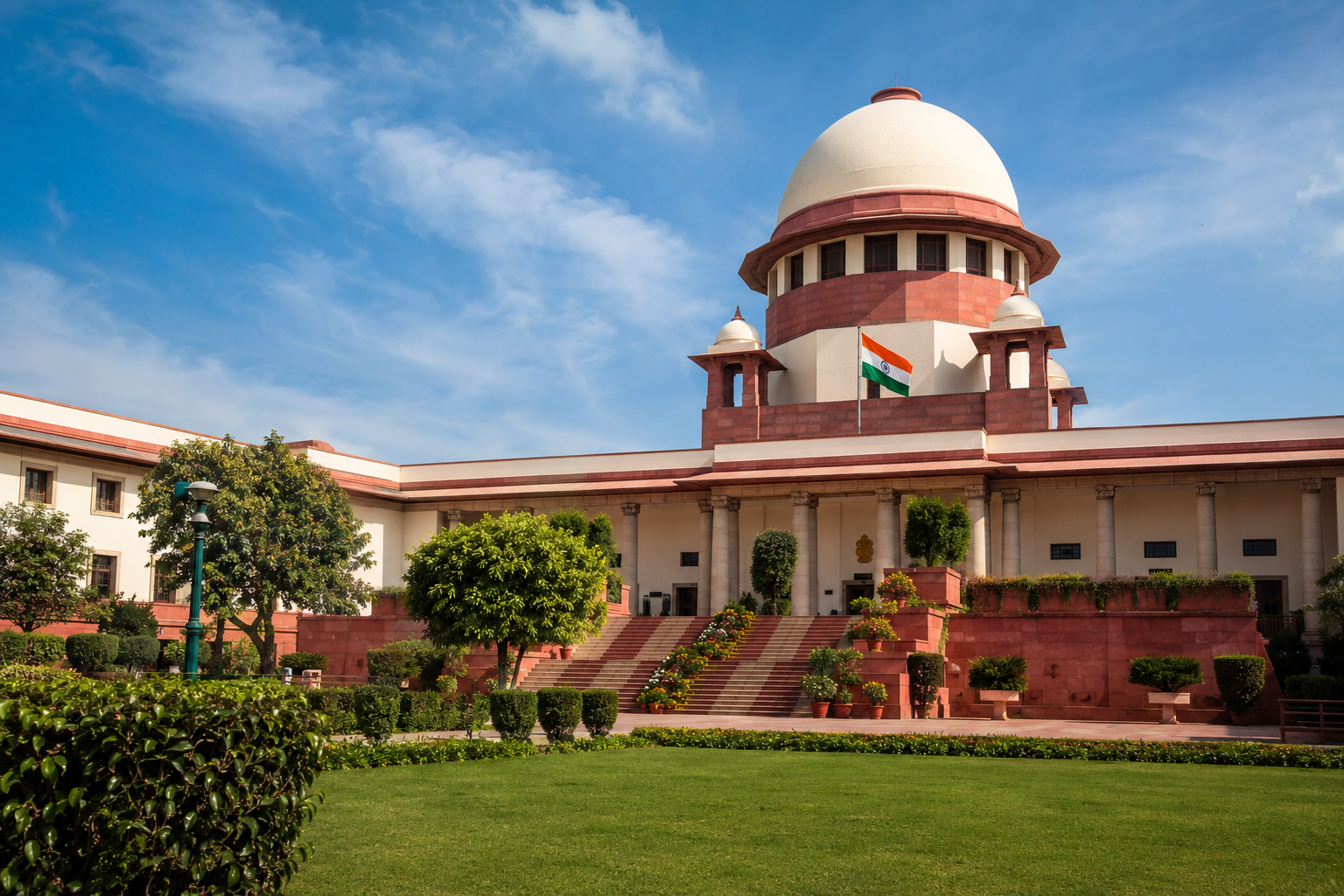
The Supreme Court of India occupies a unique position in the country’s judicial system. It is the highest court in India and performs several functions that directly shape the way constitutional rights, laws and disputes are understood and decided. Its work includes hearing appeals, enforcing Fundamental Rights, interpreting the Constitution and exercising original and advisory jurisdiction.
1. The Beginning of the Supreme Court of India
The story of the Supreme Court of India begins with the constitutional transformation that took place when India became a Republic. The Constitution of India came into force on 26 January 1950, and with it came the Supreme Court as the country’s highest judicial institution.
The Court held its inaugural sitting on 28 January 1950, marking the beginning of a new chapter in India’s judicial history. It succeeded the Federal Court, which had functioned under the Government of India Act, 1935. The creation of the Supreme Court was closely connected with the new constitutional framework in which the Constitution became the foundation of the country’s legal system.
In its early years, the Court did not function from the grand building associated with it today. Its proceedings initially took place in the Chamber of Princes in the old Parliament House. The Court continued to function there until it moved to its present premises in New Delhi in 1958.
From the Federal Court to the Supreme Court
The Federal Court provided an important institutional foundation for the Supreme Court. With the Constitution coming into force, however, India required a judicial institution designed specifically for the new constitutional order.
The Supreme Court therefore took on responsibilities that went beyond deciding ordinary disputes. It became the final judicial authority in the country and an important institution for interpreting constitutional provisions, protecting Fundamental Rights and maintaining the constitutional framework.
The Court’s history is consequently not just a story of a building or a succession of Judges. It is also part of the development of India’s constitutional democracy.
2. How the Supreme Court Became the Apex Court
The Supreme Court occupies the highest position in India’s integrated judicial system. Its decisions have authority throughout the country, and the Constitution gives it a range of powers that allow it to deal with constitutional questions, appeals, disputes and matters involving Fundamental Rights.
Its present institutional form developed over several decades. After moving to its current building in 1958, the Court continued to expand its facilities and administrative arrangements as its responsibilities grew. The Additional Building Complex later became part of this institutional development.
The Supreme Court’s work today involves much more than the Judges sitting in courtrooms and delivering judgments. Behind the judicial proceedings is a large system involving the Registry, Judges, legal professionals, committees, research facilities, libraries and administrative branches.
Its constitutional responsibilities are supported by a much wider judicial and administrative system. Its judicial role is exercised through different forms of jurisdiction, while its wider organisation supports the day-to-day functioning of the Court.
3. The Constitutional Role of the Supreme Court
The Constitution gives the Supreme Court a central place in India’s judicial structure. Its role includes interpreting constitutional provisions and deciding questions that can have implications far beyond the individual dispute before the Court.
One of its important constitutional responsibilities is the protection of Fundamental Rights. Under Article 32, a person can approach the Supreme Court for enforcement of Fundamental Rights. The Court has the power to issue constitutional writs for this purpose.
The Supreme Court also functions as the final appellate court in the country. Cases can reach it from High Courts and other judicial proceedings through the routes provided by the Constitution and applicable law. In appropriate matters, the Court can also exercise its special jurisdiction under Article 136.
Its constitutional role also includes an advisory function. Under Article 143, the President of India can refer certain questions to the Supreme Court for its opinion.
The Court also has powers relating to matters such as transfer of cases, contempt of court, review of its judgments and, in limited circumstances, curative jurisdiction. These powers are part of the broader constitutional and judicial framework within which the Court operates.
4. Jurisdiction of the Supreme Court
The word jurisdiction refers to the authority of a court to hear and decide a particular type of matter. The Supreme Court has several forms of jurisdiction, each serving a different purpose.
Original Jurisdiction
Original jurisdiction means that certain matters can come directly before the Supreme Court rather than reaching it through an appeal from another court.
The Constitution gives the Court original jurisdiction in specific disputes, including certain disputes involving the Government of India and one or more States, or disputes between States, where the constitutional requirements are satisfied.
This jurisdiction gives the Supreme Court a direct role in resolving particular constitutional disputes between governments.
Appellate Jurisdiction
A large part of the Supreme Court’s work involves appeals. Its appellate jurisdiction allows it to hear cases that have been decided by High Courts and, in specified circumstances, other judicial or quasi-judicial authorities.
Appeals may involve constitutional, civil or criminal matters depending on the applicable legal provisions. The Court therefore serves as the final judicial forum for a wide range of disputes.
There is also an important special route under Article 136, which gives the Supreme Court the power to grant Special Leave to Appeal from judgments, orders, determinations, sentences or other proceedings of courts and tribunals in India, subject to the constitutional framework.
This power is discretionary. It does not mean that every case automatically becomes appealable before the Supreme Court.
Advisory Jurisdiction
The Supreme Court also has an advisory role under Article 143. When the President refers a question of law or fact of public importance in accordance with the Constitution, the Court may consider the question and provide its opinion.
This is different from ordinary litigation because the Court is being asked for its constitutional opinion rather than deciding a conventional appeal between two parties.
Article 32 and Fundamental Rights
Article 32 gives a person a direct constitutional remedy before the Supreme Court for the enforcement of applicable Fundamental Rights.
This is one of the most significant ways in which the Court’s constitutional jurisdiction can become relevant to an individual. Where a Fundamental Right is alleged to have been violated, the constitutional remedy under Article 32 can allow the matter to be placed before the Supreme Court. The Court’s power to issue writs forms an important part of this jurisdiction.
5. Writs and the Protection of Fundamental Rights
The Supreme Court can issue constitutional writs for the enforcement of Fundamental Rights. These writs are important legal remedies, but each serves a different purpose.
Habeas Corpus
Habeas Corpus is associated with protection against unlawful detention. It allows the Court to examine whether a person is being unlawfully detained and, where the legal requirements are satisfied, order appropriate relief.
Mandamus
Mandamus is used to require a public authority or other body covered by the law to perform a legal duty that it is required to perform.
Prohibition
Prohibition is directed to a lower court or tribunal when it is acting beyond the limits of its jurisdiction. Its purpose is to prevent such proceedings from continuing where the legal conditions for the writ are met.
Certiorari
Certiorari can be used in appropriate circumstances to review and quash an order of a lower court, tribunal or authority where there is a legally recognised ground for doing so.
Quo Warranto
Quo Warranto questions the legal authority by which a person holds a public office. It allows the Court to examine whether the person is legally entitled to occupy that office.
These writs should not be treated as interchangeable remedies. Each has a specific legal purpose, and whether a particular writ is appropriate depends on the facts, the nature of the legal right involved and the jurisdiction of the Court.
The writ jurisdiction of the Supreme Court therefore provides an important constitutional mechanism through which Fundamental Rights can be protected. It is one of the clearest examples of how the Supreme Court of India connects constitutional principles with legal remedies available to citizens.
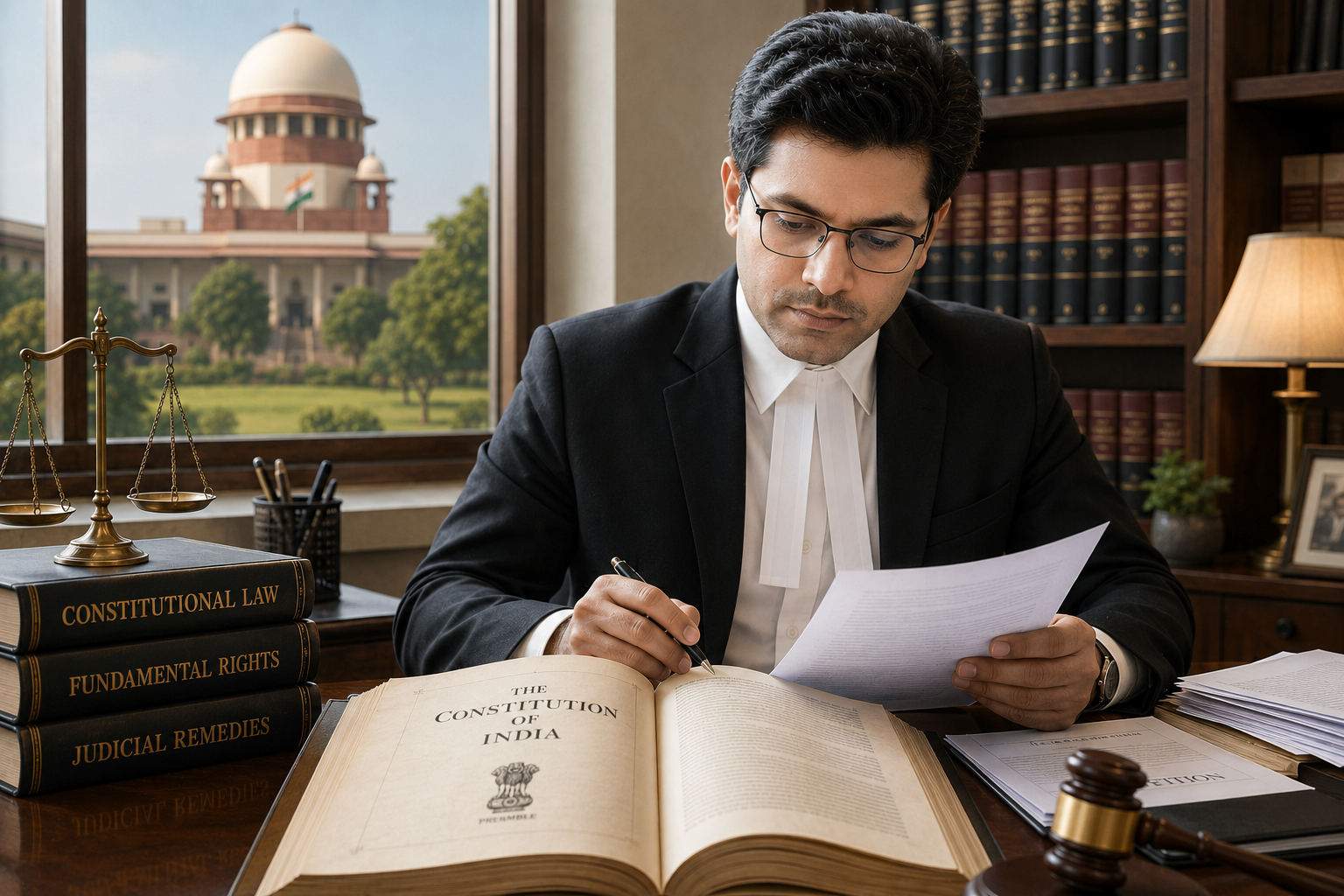
6. Public Interest Litigation and Access to Justice
The Supreme Court of India has also played an important role in making the judicial system more accessible in matters that affect the wider public. One of the important mechanisms associated with this approach is Public Interest Litigation (PIL).
A PIL is concerned with an issue involving public interest rather than being limited to a private dispute between two individuals. In appropriate cases, a public-spirited individual or group can approach the Court when a matter affecting the public requires judicial attention. This has helped bring issues involving wider sections of society before the courts.
PIL matters can come before the Supreme Court through a writ petition and, in appropriate circumstances, even through a letter addressed to the Court. This does not mean that every letter or complaint automatically becomes a PIL. The Court determines whether a matter falls within the scope of public-interest judicial intervention.
The importance of PIL lies in the opportunity it can provide for issues affecting people who may not be in a position to approach the Court themselves. It has therefore become an important part of the broader idea of access to justice.
7. Legal Aid and Mediation
Access to justice is not limited to having a right to approach a court. A person may also need legal assistance to understand the case, prepare the necessary material and present the matter effectively.
The Supreme Court Legal Services Committee (SCLSC) provides legal assistance to eligible persons under the applicable legal-aid framework. The support can include assistance in preparing the case and access to legal representation, subject to the applicable eligibility requirements.
There is also a Middle Income Group Legal Aid Scheme, under which eligible persons can obtain legal assistance on payment of a prescribed nominal amount. Such mechanisms recognise that the cost and complexity of legal proceedings can otherwise become a barrier for people seeking a remedy.
The Court also has a Mediation Centre for matters referred for mediation. Mediation provides a structured opportunity for parties to attempt to resolve their dispute with the assistance of a mediator rather than continuing with adversarial litigation until a judgment is delivered.
These mechanisms show that the justice system involves more than courtroom hearings. Legal assistance and alternative dispute-resolution processes can also play an important role in helping people navigate legal disputes.
8. Supreme Court and the High Courts
India has a single integrated judicial system in which the Supreme Court of India stands at the top, followed by the High Courts and subordinate courts.
High Courts occupy an important position within the judicial structure of each State or group of States and Union Territories. They exercise jurisdiction over matters arising within their respective territorial and legal framework and also exercise important constitutional powers.
One of the significant powers of a High Court is its writ jurisdiction. High Courts can issue writs in appropriate cases and exercise jurisdiction for the protection of legal and constitutional rights. They also exercise superintendence over courts and tribunals within their jurisdiction, subject to the constitutional framework.
The relationship between the Supreme Court and High Courts is therefore not simply that of two separate levels of courts. High Courts decide a vast range of matters at the State level, while the Supreme Court performs its constitutional and appellate role at the national level.
Cases may reach the Supreme Court from High Courts through the appellate routes provided by the Constitution and applicable laws. At the same time, the Supreme Court's jurisdiction is distinct from the ordinary supervisory functioning of a High Court over subordinate courts.
9. Judges, Advocates and the Court’s Institutional Structure
The work of the Supreme Court depends on a much wider institutional structure than the Judges seen during court hearings. The judicial side is supported by the Registry, administrative officers, legal professionals, research facilities and several specialised branches.
The Registry is responsible for important administrative and procedural functions connected with the Court's cases. Its organisation includes the Secretary General, Registrars, Additional Registrars, Deputy Registrars, Assistant Registrars, Branch Officers and other officials who handle different areas of the Court's work.
The legal profession associated with the Supreme Court also has its own structure. The Attorney General for India has a constitutional role as the country's highest law officer. The Court also has a system of Advocates-on-Record, along with Senior Advocates and other advocates who appear in matters before it according to the applicable rules.
In suitable cases, the Court may also appoint an amicus curiae, meaning a person who assists the Court by providing relevant legal or factual assistance on an issue before it. This can be particularly useful when the Court is dealing with questions requiring a wider perspective or specialised assistance.
The Court's organisation also includes branches dealing with areas such as judicial administration, technology, research, listing of matters, library and editorial work. Together, these functions support the judicial process that the public sees in the courtroom.
10. Committees and the Administration of Justice
A large institution such as the Supreme Court requires specialised committees to deal with different areas of judicial administration and policy. These committees allow Judges and the Court's administrative system to examine specific subjects in greater detail.
The Supreme Court has committees dealing with areas such as Public Interest Litigation matters, Supreme Court Rules, mediation and conciliation, technology, Family Court matters and juvenile justice. Other committees are concerned with case management, judicial administration and reducing delays and pendency.
The committees therefore cover both legal and administrative concerns. Some deal with the way particular categories of cases are handled, while others focus on improving the functioning of the Court and the wider justice system.
The Court's organisational structure also reflects this division of responsibilities. Different branches and officials work on judicial administration, technology, research, case listing, library services and other functions that keep the institution operating beyond the courtroom.
Understanding this structure gives a fuller picture of the Supreme Court of India. It is not only a bench of Judges delivering judgments; it is a large constitutional institution supported by people, procedures, technology, legal research and specialised administrative mechanisms.
11. The Supreme Court Judges’ Library
A court of the Supreme Court’s importance depends not only on its courtroom proceedings but also on access to reliable legal knowledge. The Supreme Court Judges’ Library is an important part of that system.
The library traces its origins to 1937, when it began as the Federal Court Library. Over the years, it developed into a major legal research facility containing books, monographs, law reports, statutes, commission and committee reports, parliamentary debates and other legislative material. Its collection now includes more than 3,80,000 legal documents, along with a wide range of electronic resources.
The library also maintains subscriptions to 131 journals, 19 newspapers and 8 magazines. Its main library in the Additional Building Complex occupies four floors and became functional in April 2023.
The library system extends beyond the main facility. It includes Residential Libraries, Court Room Libraries and Digital Court Libraries, allowing Judges and court staff to access legal material where it is needed. Court Room Library staff also assist Judges by making relevant books and legal material available during proceedings.
Another notable part of the library is Soli Sorabjee’s Bibliotheca, located on the second floor of the new library facility. Together, these resources form an important knowledge base supporting legal research and the work of the Court.
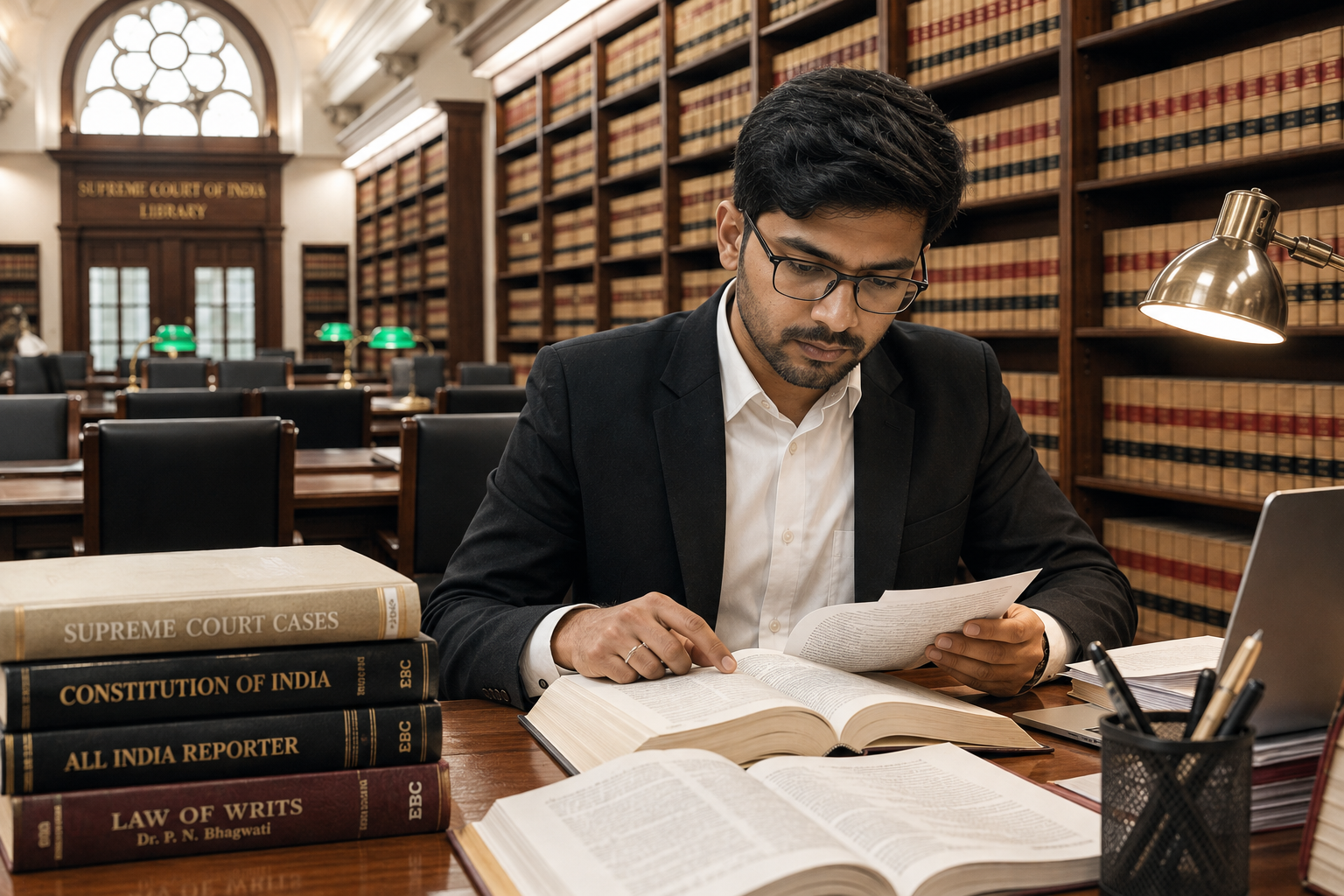
A knowledge system behind the courtroom
When a Supreme Court judgment deals with a difficult constitutional or legal question, the work behind that judgment can involve extensive examination of statutes, earlier decisions, legal principles and other material. A well-developed library and research system therefore forms an important part of the institution’s ability to perform its judicial responsibilities.
12. Former Chief Justices of India
The list below provides an institutional record of the former Chief Justices who have led the Supreme Court since its establishment. Their succession reflects the Court’s institutional history across different periods of India’s constitutional development.
The former Chief Justices, in the sequence provided by the Supreme Court, are:
- Justice Harilal Jekisundas Kania
- Justice M. Patanjali Sastri
- Justice Mehr Chand Mahajan
- Justice Bijan Kumar Mukherjea
- Justice Sudhi Ranjan Das
- Justice Bhuvneshwar Prasad Sinha
- Justice P.B. Gajendragadkar
- Justice A.K. Sarkar
- Justice K. Subba Rao
- Justice K.N. Wanchoo
- Justice M. Hidayatullah
- Justice J.C. Shah
- Justice S.M. Sikri
- Justice A.N. Ray
- Justice M.H. Beg
- Justice Y.V. Chandrachud
- Justice P.N. Bhagwati
- Justice R.S. Pathak
- Justice E.S. Venkataramiah
- Justice Sabyasachi Mukherjee
- Justice Ranganath Misra
- Justice K.N. Singh
- Justice M.H. Kania
- Justice L.M. Sharma
- Justice M.N. Venkachaliah
- Justice A.M. Ahmadi
- Justice J.S. Verma
- Justice M.M. Punchhi
- Justice A.S. Anand
- Justice S.P. Bharucha
- Justice B.N. Kirpal
- Justice G.B. Pattanaik
- Justice V.N. Khare
- Justice S. Rajendra Babu
- Justice R.C. Lahoti
- Justice Y.K. Sabharwal
- Justice K.G. Balakrishnan
- Justice S.H. Kapadia
- Justice Altamas Kabir
- Justice P. Sathasivam
- Justice R.M. Lodha
- Justice H.L. Dattu
- Justice T.S. Thakur
- Justice J.S. Khehar
- Justice Dipak Misra
- Justice Ranjan Gogoi
- Justice Sharad Arvind Bobde
- Justice N.V. Ramana
- Justice Uday Umesh Lalit
- Dr Justice D.Y. Chandrachud
- Justice Sanjiv Khanna
- Justice Bhushan Ramkrishna Gavai
This succession reflects more than a list of office-holders. Each period brought its own constitutional questions, legal challenges and institutional developments, making the history of the Court closely connected with the wider development of Indian constitutional law.
13. What the Supreme Court Means for Ordinary Citizens
For an ordinary citizen, the Supreme Court of India can sometimes appear distant because many of its proceedings involve complex constitutional or appellate questions. Yet several of its functions have a direct connection with individual rights and access to justice.
A person whose Fundamental Right is alleged to have been violated may have a constitutional remedy under Article 32. Writ jurisdiction can provide specific forms of judicial relief, while appeals provide a route for appropriate cases to reach the country's highest court through the legal system.
The Court's role in PIL also allows issues affecting the wider public to receive judicial attention in appropriate circumstances. Legal-aid mechanisms can assist eligible people who need representation, while mediation can provide another route for resolving suitable disputes.
At the same time, approaching the Supreme Court is not automatically the correct step in every legal dispute. The nature of the matter, available remedies, jurisdiction and procedural requirements all matter. For many cases, the appropriate starting point may be a lower court, tribunal or High Court.
Knowing what the Supreme Court can and cannot do is therefore an important part of legal awareness. It helps citizens understand the judicial system without assuming that every disagreement must ultimately be taken to the country's highest court.
14. Key Takeaways
- The Supreme Court of India came into existence on 26 January 1950 and held its inaugural sitting on 28 January 1950.
- It is the highest court in India's integrated judicial system.
- Its responsibilities include constitutional interpretation, Fundamental Rights protection and appellate decision-making.
- It exercises original, appellate and advisory jurisdiction under the constitutional framework.
- Article 32 provides a constitutional remedy for enforcement of Fundamental Rights.
- The Court can issue five major constitutional writs: Habeas Corpus, Mandamus, Prohibition, Certiorari and Quo Warranto.
- PIL provides a mechanism for appropriate matters involving public interest to reach the Court.
- Legal aid and mediation form part of the wider access-to-justice framework.
- The Supreme Court works through Judges, its Registry, legal professionals, committees, research facilities and other institutional branches.
- Its Judges’ Library provides extensive legal research resources supporting the Court’s work.
- The succession of Chief Justices forms an important part of the Court’s institutional history.
The Supreme Court of India is much more than the final destination for important appeals. Its history is closely connected with the making of the Republic, while its constitutional responsibilities place it at the centre of questions involving rights, laws and the functioning of the justice system.
From its early years in the old Parliament House to its present institutional structure, the Court has developed into a complex organisation supported by Judges, legal professionals, committees, research facilities, libraries and administrative systems. For citizens, understanding these functions makes the country's judicial system easier to navigate and helps put constitutional rights and legal remedies into clearer perspective.
15. Frequently Asked Questions
The Supreme Court of India is the highest court in the country's integrated judicial system. It deals with constitutional matters, appeals and other matters falling within the jurisdiction given to it by the Constitution and applicable law.
The Supreme Court came into existence on 26 January 1950, when the Constitution of India came into force. Its inaugural sitting was held on 28 January 1950.
The Court has original, appellate and advisory jurisdiction. It also exercises other constitutional powers, including writ jurisdiction for enforcement of Fundamental Rights and special leave jurisdiction under Article 136.
The five major constitutional writs are Habeas Corpus, Mandamus, Prohibition, Certiorari and Quo Warranto. Each serves a different legal purpose.
In appropriate circumstances, a citizen can approach the Supreme Court directly, including for enforcement of Fundamental Rights under Article 32. Whether the Supreme Court is the appropriate forum depends on the nature of the legal issue and the remedy available.
Public Interest Litigation is a form of judicial proceeding concerned with matters affecting public interest. In appropriate cases, a public-spirited individual or group may bring such a matter before the Court.
Yes. The Supreme Court has mechanisms for providing legal assistance to eligible persons. The availability and terms of assistance depend on the applicable eligibility requirements and scheme.
The Supreme Court is the apex court of India's integrated judicial system, while High Courts operate at the State or relevant territorial level. High Courts also exercise important constitutional and supervisory powers, and appropriate cases can reach the Supreme Court through appellate routes.
The Judges’ Library provides extensive legal and research material used in the Court’s work. Its collection includes books, law reports, statutes, legislative material, journals and electronic resources.
The Supreme Court is headed by the Chief Justice of India, along with the other Judges of the Court. Its judicial work is supported by the Registry, legal professionals, committees and various administrative and research functions.
Continue Exploring Legal Awareness
Understanding the Supreme Court becomes even more useful when read alongside other areas of law, constitutional rights and citizen protections covered through DivyalVision’s Legal Empowerment content:
- 📖 Legal Risks in Everyday Life: 10 Hidden Dangers Most People Ignore – Explore ordinary situations where overlooked legal risks can create unnecessary complications and understand the importance of recognising potential legal issues early. Read the article
- 📖 Your Rights Begin with Awareness: Why Legal Knowledge Is Your Greatest Protection – Understand why knowing your basic legal rights can support better everyday decisions, responsible action, and greater confidence when dealing with legal situations. Read the article
- 📖 Think Before You Sign: Legal Facts Hidden Inside Everyday Documents – Understand what to examine before accepting contracts, consent forms, financial paperwork, and other important documents that can create legal responsibilities. Read the article