The Financial Comfort Trap: Why Earning More Does Not Always Mean Building Wealth
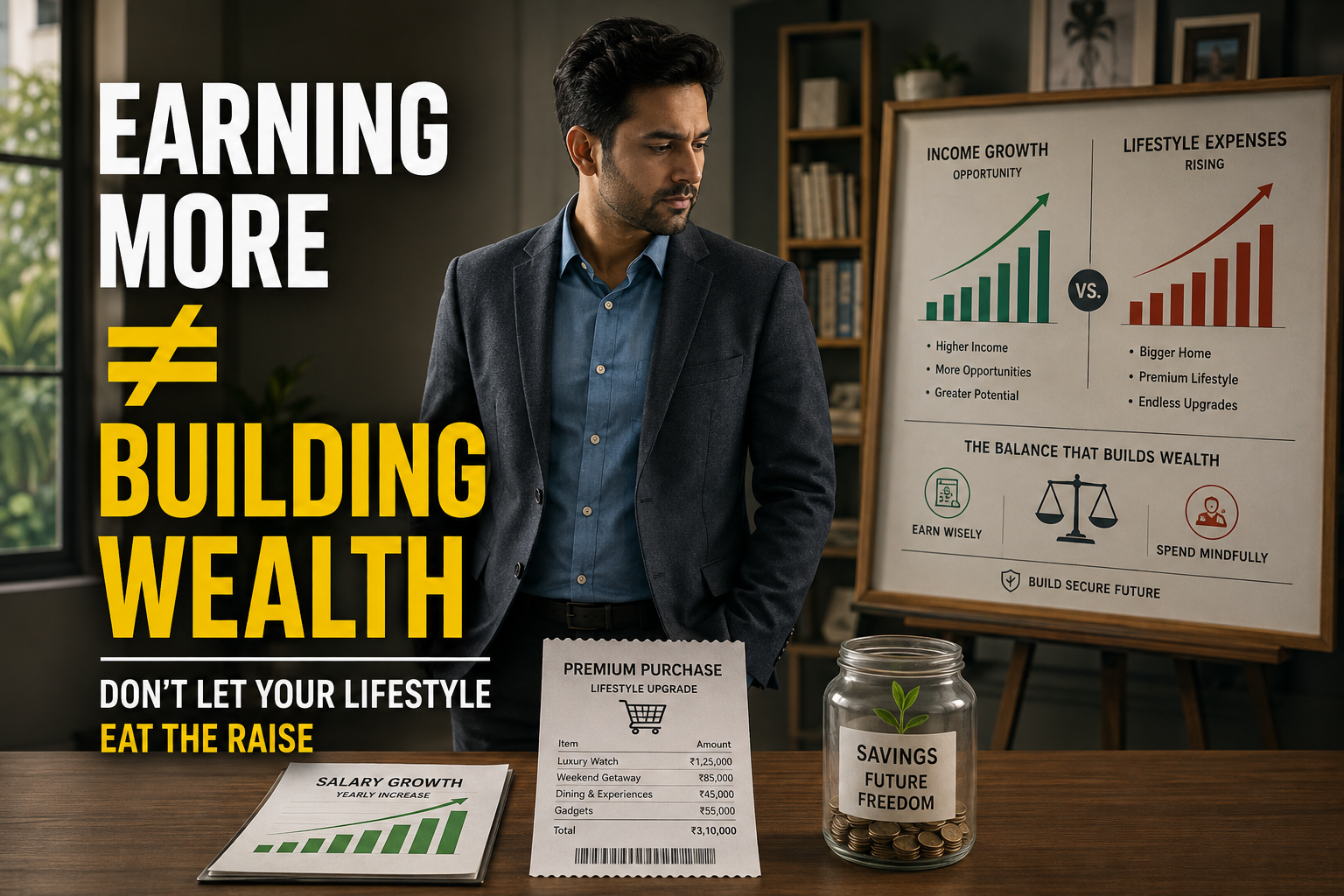
- Earning more money can make life more comfortable, but a higher income does not automatically create wealth. As earnings increase, spending often increases with them. A better home, a newer vehicle, more frequent dining out, upgraded technology, additional subscriptions and greater convenience can gradually become part of everyday life.
- This pattern is commonly known as lifestyle inflation. Improving your lifestyle after an income increase is not inherently a problem. The difficulty begins when higher expenses absorb most of the additional income and leave little improvement in savings, financial flexibility or progress toward important long-term goals.
- This creates what can be described as the Financial Comfort Trap. A person may earn substantially more than before and appear financially successful while still having high recurring commitments, limited accessible savings or little room to handle an unexpected expense without disrupting other plans.
- The important question is therefore not simply, “Am I earning more?” It is also, “Has earning more improved my financial position?” When increasing income creates both a better life today and greater financial flexibility for tomorrow, the additional income is doing more than supporting consumption.
What Is the Financial Comfort Trap?
The Financial Comfort Trap occurs when increasing income leads to increasing lifestyle costs without a comparable improvement in financial strength. The person may genuinely be more comfortable, but the financial margin between what they earn and what they need to maintain their lifestyle may remain surprisingly small.
The trap does not usually begin with one obviously irresponsible decision. Instead, several reasonable choices can accumulate. A salary increase may lead to a better apartment, a newer vehicle, more frequent restaurant visits, additional subscriptions and greater spending on convenience. Each decision may seem manageable, but together they can absorb much of the additional earning capacity.
This is why earning more and building wealth should not be treated as identical outcomes. Higher income creates greater financial potential, but the eventual result depends on how that additional income is divided between current consumption, financial protection and future goals.
A person can therefore earn substantially more without proportionately stronger financially. The central challenge is to make sure that some of the benefit of higher earnings remains available for savings, financial resilience and long-term priorities rather than automatically becoming part of a more expensive lifestyle.
Why Earning More Does Not Automatically Build Wealth
Income is an important financial resource, but income by itself is not wealth. What matters is what happens after the income is received and the regular expenses have been paid.
Consider two people whose incomes increase by a similar amount. One person immediately upgrades housing, transportation, dining, travel and entertainment. The other also improves their lifestyle but directs part of the additional income toward financial reserves, debt management where appropriate and long-term goals.
Both people are earning more. Both may enjoy a better lifestyle. Yet their financial positions can gradually become very different because the additional income is being used differently.
This is the core idea behind the Financial Comfort Trap. The problem is not higher income or higher spending by themselves. The problem is allowing every increase in earning power to automatically become an increase in consumption.
A healthier approach allows lifestyle improvements while deliberately protecting some of the additional income for financial priorities. That balance can help ensure that earning more creates not only greater comfort, but also greater financial choice.
How Lifestyle Inflation Develops
Lifestyle inflation often develops gradually, which makes it difficult to notice. There may be no single moment when a person decides to dramatically increase their spending. Instead, several small improvements become normal over time.
A person may move into a slightly more expensive home after a promotion. Later, a newer vehicle may seem reasonable because the monthly payment fits within the new income. Dining out becomes more frequent, online shopping becomes easier to justify and additional subscriptions no longer feel significant.
The difficulty appears when these improvements stop being occasional and become permanent parts of the monthly budget.
The new lifestyle then becomes the baseline. A restaurant visit that once felt special may become a weekly habit. A premium service that was once optional may become difficult to cancel. A larger housing or vehicle expense may become something the household expects to maintain indefinitely.
This creates a subtle cycle: income rises, lifestyle rises, recurring expenses rise and the financial benefit of the income increase becomes less visible.
Small Upgrades Can Become Permanent Commitments

A one-time purchase and a permanent monthly commitment have very different financial effects. A holiday may affect one period of spending, while a larger rent payment, vehicle EMI or recurring subscription can influence the budget month after month.
This distinction becomes particularly important after an income increase because the new salary can make recurring expenses appear more affordable than they previously were. The decision may feel comfortable today while reducing flexibility for future months.
Before taking on a significant recurring expense, it can therefore be useful to consider not only whether the current income can support it, but whether the commitment remains comfortable if circumstances become less favourable.
The goal is not to reject every lifestyle upgrade. It is to make sure that upgrades are intentional rather than automatic.
Emotional Spending and the Psychology of “I Can Afford It”
Lifestyle inflation is not driven only by practical decisions. Emotional spending can also influence how people use a higher income.
A promotion or salary increase can naturally create a desire to reward yourself. Buying something expensive, upgrading a device, booking a better holiday or spending more on convenience may feel like a way of recognising hard work. There is nothing inherently wrong with enjoying the benefits of higher earnings, but repeated emotional spending can become a financial pattern.
The reasoning may sound simple: “I earn more now,” “I worked hard for this,” or “I deserve something better.” These thoughts are understandable, but they can make it easier to overlook whether a purchase genuinely adds lasting value.
Social comparison can add another layer. Seeing colleagues, friends or people online enjoying a particular lifestyle can create the impression that higher income should naturally lead to similar consumption. Spending can then become influenced more by comparison than by personal priorities.
A useful pause before a significant discretionary purchase is to ask whether the purchase would still feel worthwhile if nobody else knew about it. Another useful question is whether the satisfaction is likely to last longer than the financial commitment created by the purchase.
These questions are not designed to eliminate enjoyment. They simply create enough distance between emotion and action to make the financial decision more deliberate.
Recognising Emotional Spending Patterns
An isolated emotional purchase is unlikely to define someone's financial position. The greater concern is when similar emotional triggers repeatedly lead to spending.
Stress may encourage online shopping. Celebration may lead to expensive dining. Boredom may result in unnecessary purchases. Social comparison may encourage upgrades that were not previously considered important.
Tracking spending for a period of time can make these patterns easier to recognise. Instead of looking only at the amount spent, consider what was happening before the purchase and whether the purchase solved a genuine need or mainly provided temporary emotional satisfaction.
Understanding the trigger can make it easier to decide whether the spending reflects your priorities or simply a recurring response to a particular emotion.
When Higher Income Still Leaves You Financially Vulnerable
Higher income can reduce financial pressure, but it can also create a false sense of security when most of the additional earnings become committed to lifestyle costs.
A person may have enough income to comfortably manage ordinary expenses while having very little room for an unexpected financial event. If most of the monthly income is already committed to housing, vehicle payments, subscriptions, regular lifestyle spending and other obligations, the financial position may depend heavily on income continuing without interruption.
Unexpected expenses do not have to be enormous to create pressure. A necessary repair, temporary income disruption or unexpected family responsibility can become difficult when there is little accessible money available.
This is why financial security should be considered more broadly than income. Savings, financial obligations, spending patterns and the ability to adjust when circumstances change all influence financial resilience.
Fixed Expenses Deserve Special Attention

Recurring expenses can be particularly important because they continue without requiring a new decision every month. Housing costs, EMIs, subscriptions, memberships and other regular commitments can gradually become a large part of the financial structure.
The concern is not that fixed expenses are automatically bad. Essential housing, transportation and other necessary commitments are part of normal financial life. The concern arises when lifestyle upgrades continuously increase fixed costs until there is little flexibility left.
Before taking on a significant recurring commitment, consider how it would affect future financial choices. A cost that feels comfortable during a high-income period may become difficult to adjust if circumstances change.
A financially comfortable life should ideally include enough flexibility to respond when the unexpected happens.
Looking Wealthy vs Building Wealth
A comfortable lifestyle can create a visible impression of financial success, but visible consumption is not the same as wealth.
A premium vehicle, expensive phone, stylish home, frequent travel or regular restaurant spending may show that someone has the income to support those choices. They do not, by themselves, reveal how much that person saves, what financial obligations they carry or how prepared they are for unexpected circumstances.
Financial strength is often much less visible. It can exist in the form of accessible savings, manageable commitments, progress toward long-term goals and the ability to adjust spending when circumstances change.
This is why comparing your lifestyle with someone else's can be misleading. The visible part of another person's financial life rarely tells the whole story.
The more useful comparison is with your own financial position over time. If income has increased, ask whether your financial flexibility has increased as well.
More Income Should Create More Options
The strongest benefit of earning more is not necessarily the ability to purchase more expensive things. It can be the ability to make important decisions with less financial pressure.
Greater financial flexibility may help you handle an unexpected expense, reconsider a career decision, support a meaningful family responsibility or continue working toward an important goal without every decision depending on the next salary payment.
This is where higher income can become genuinely valuable. It can improve today's lifestyle while also creating more choices for tomorrow.
How to Break the Financial Comfort Trap
Escaping the Financial Comfort Trap does not require extreme frugality. The objective is to make sure that rising income creates some improvement in financial strength instead of being completely absorbed by higher consumption.
A practical approach can begin with understanding your current lifestyle cost and then deciding what should happen when income changes.
Step-by-Step Guide to Avoiding the Trap
- Step 1: Understand Your Current Lifestyle Cost
Identify your current monthly essential and discretionary expenses. Pay particular attention to recurring commitments because these expenses continue even when you are not actively thinking about them. Housing, transportation, debt payments, subscriptions and other regular commitments can have a larger long-term effect than occasional purchases. This baseline gives you a clearer picture of how much of your income is already committed before you decide what to do with additional earnings. - Step 2: Identify What Changed After Your Income Increased
Look at the period after your most recent significant income increase. Identify which expenses became larger or appeared for the first time. Perhaps housing became more expensive, dining became more frequent, shopping became easier to justify or several small subscriptions accumulated. None of these changes automatically represents poor financial behaviour, but together they can show how much of the additional income has become lifestyle spending. - Step 3: Separate Lifestyle Improvements From Permanent Commitments
Not every increase in spending has the same financial effect. A one-time experience and a permanent monthly obligation should be considered differently. Before taking on a new recurring expense, consider how it will affect future months rather than looking only at today's affordability. The more permanent the commitment, the more carefully it deserves to be considered. - Step 4: Give Every Income Increase a Purpose
When income increases, decide what part should improve your present lifestyle and what part should strengthen your financial position. There is no universal percentage that applies to everyone. Income stability, essential expenses, debt, family responsibilities and long-term goals all influence what balance may be appropriate. The important habit is to make the decision deliberately rather than allowing the entire increase to disappear into ordinary spending. - Step 5: Review Emotional Spending
Look for purchases that repeatedly happen after stress, celebration, boredom, social comparison or the desire to reward yourself. The goal is not to eliminate every emotionally motivated purchase. Instead, recognise whether a particular trigger repeatedly leads to spending that provides short-term satisfaction but little lasting value. A short pause before a significant discretionary purchase can help turn a reflexive decision into an intentional one. - Step 6: Track Financial Progress Alongside Income
Income is important, but it should not be the only financial number you watch. Also consider whether your savings are growing, whether financial obligations are becoming more manageable, whether your financial reserve is strengthening and whether you are progressing toward important long-term goals. If income has increased significantly while these areas have barely changed, it may be worth reviewing whether lifestyle inflation is absorbing most of the additional earning capacity.

When Spending More Is Actually Reasonable
Avoiding the Financial Comfort Trap does not mean treating every lifestyle upgrade as irresponsible. A higher income can reasonably be used to improve housing, transportation, education, family support, convenience or meaningful experiences.
For some people, a more expensive choice may provide genuine value. A better location may reduce commuting time. A useful service may create more time for family or work. Replacing an unreliable essential item may improve daily life and reduce repeated problems.
The important question is not whether spending has increased. It is whether the additional spending is intentional, sustainable and aligned with your priorities.
Financial planning should leave room for enjoyment. The goal is not to spend as little as possible, but to make sure that today's comfort does not unnecessarily reduce tomorrow's financial choices.
From “Can I Afford It?” to “Is It Worth the Trade-Off?”
One of the most useful changes in financial thinking is to move beyond simple affordability.
A purchase may fit comfortably within the current monthly income while still reducing the amount available for savings, financial protection or another important goal. Looking only at affordability can therefore hide the opportunity cost of a decision.
Before a major lifestyle upgrade, consider what the same money could accomplish elsewhere. It might strengthen a financial reserve, reduce an existing obligation, support a long-term goal or pay for something that provides more lasting value.
This does not mean every purchase needs a complicated financial analysis. The deeper consideration is most useful for decisions that create significant or recurring commitments.
The question is not whether you are allowed to spend the money. It is whether the trade-off is worthwhile for the life you are trying to build.
A Simple Financial Comfort Check
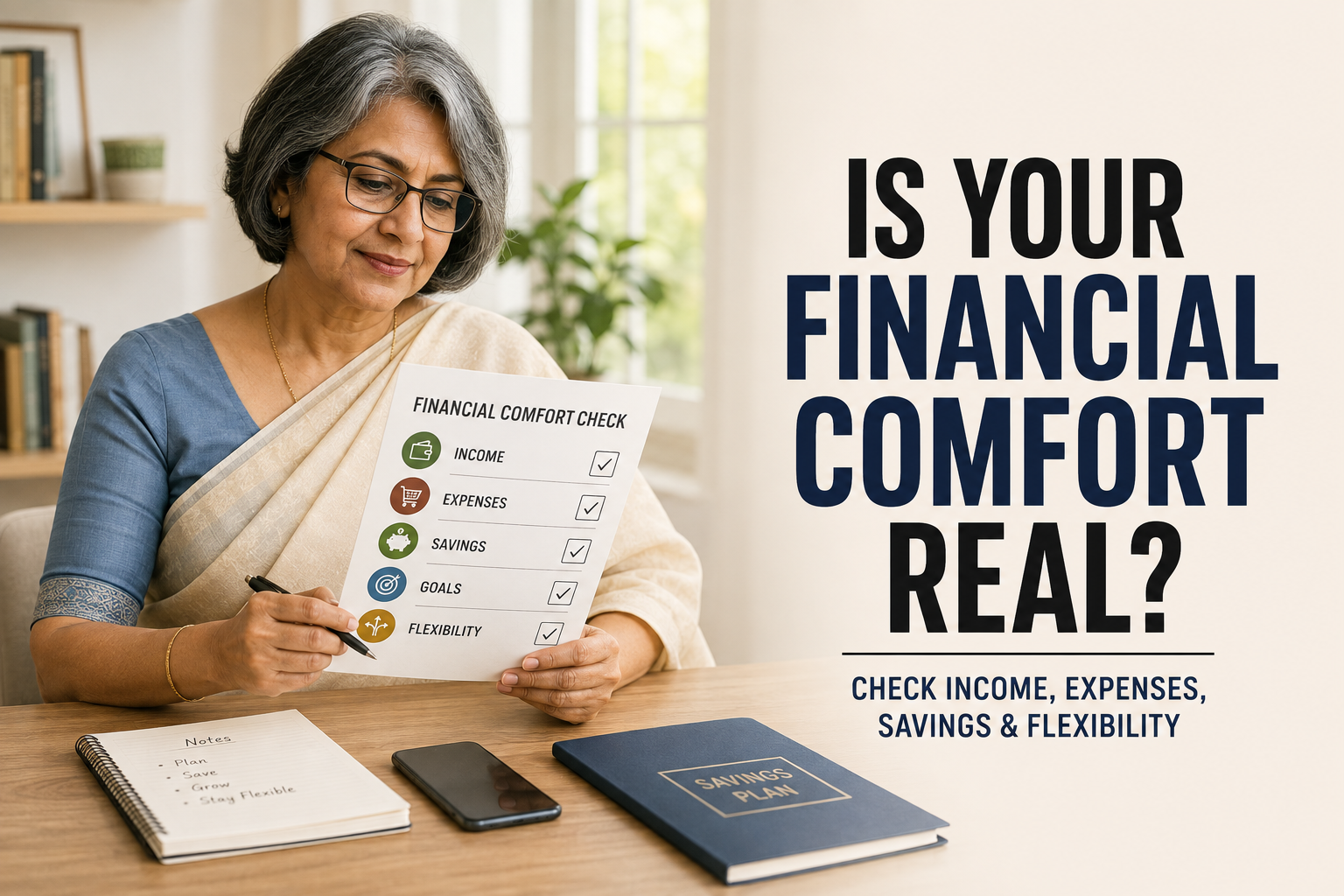
A periodic review can help determine whether increasing income is also creating greater financial strength. The purpose is not to create a universal score or formula, but to make the relationship between income, spending and financial progress easier to see.
Regularly monitoring these indicators ensures that your financial growth translates into actual stability rather than just an expanded set of monthly bills.
- 1. Has My Income Increased?
Look at how your earning capacity has changed over time. Consider whether recent increases came from salary growth, business income, additional work or another source. - 2. Have My Recurring Expenses Increased With It?
Identify whether housing, vehicle costs, subscriptions, memberships and other regular commitments have grown alongside income. - 3. Has My Financial Reserve Improved?
Consider whether you now have greater accessible financial protection than before. The appropriate level depends on your circumstances, so the focus should be on your own progress rather than an arbitrary universal target. - 4. Are My Long-Term Goals Receiving More Attention?
Look at whether increasing income has created greater capacity to work toward important future objectives. The relevant goals will differ from person to person. - 5. Do I Have More Financial Choices Than Before?
Consider whether your current financial position gives you more flexibility when circumstances change. Greater choice can be one of the most useful signs that higher income is improving your overall financial position.
Look at how your earning capacity has changed over time. Consider whether recent increases came from salary growth, business income, additional work or another source.
Identify whether housing, vehicle costs, subscriptions, memberships and other regular commitments have grown alongside income.
Consider whether you now have greater accessible financial protection than before. The appropriate level depends on your circumstances, so the focus should be on your own progress rather than an arbitrary universal target.
Look at whether increasing income has created greater capacity to work toward important future objectives. The relevant goals will differ from person to person.
Consider whether your current financial position gives you more flexibility when circumstances change. Greater choice can be one of the most useful signs that higher income is improving your overall financial position.
Building a Financial Habit That Survives Income Growth
The Financial Comfort Trap becomes easier to avoid when financial decisions are treated as a regular habit rather than something considered only after a major salary increase.
A simple routine can include reviewing expenses periodically, checking recurring commitments, assessing progress toward financial goals and deciding what future income increases should accomplish.
The exact routine can change with circumstances. A promotion, career change, new family responsibility, major purchase or change in income may require a different balance between present spending and future priorities.
The important principle is consistency. Financial planning should evolve as circumstances change rather than allowing old spending decisions to continue simply because they have become familiar.
Reassess Before the Next Lifestyle Upgrade
Before making a significant lifestyle change, consider whether it is genuinely valuable and whether the financial commitment remains sustainable.
This is particularly important for housing, vehicles and other long-term commitments because these decisions can influence financial flexibility for years.
A higher income can provide room for better choices, but that room is easier to preserve when every increase in income does not automatically become a permanent increase in expenses.
Let Income Growth Create Financial Choice
The real benefit of earning more is not simply the ability to buy more expensive things. It can be the ability to make decisions with less financial pressure.
Greater financial flexibility can help with unexpected costs, meaningful goals, career decisions and changing family responsibilities. It can also reduce the need to maintain an increasingly expensive lifestyle simply because it has become the new normal.
Higher income becomes more valuable when it creates more choices rather than only more commitments.

- A higher income does not automatically create greater wealth because lifestyle expenses can increase alongside earnings.
- Lifestyle inflation can gradually absorb additional income when upgrades become permanent parts of everyday spending.
- Emotional spending can make higher income feel like permission to spend more without considering the longer-term trade-off.
- Fixed expenses deserve particular attention because recurring commitments can reduce financial flexibility even when current income is comfortable.
- Looking financially successful and being financially secure are not necessarily the same thing.
- A better lifestyle is not automatically a financial mistake when spending is intentional, sustainable and aligned with personal priorities.
- Giving each income increase a deliberate purpose can help prevent automatic lifestyle inflation.
- A useful financial review should consider income, expenses, savings, long-term goals and financial flexibility together.
- The goal is not to avoid enjoying higher income. The goal is to make sure that increasing income creates more financial choices rather than simply more financial commitments.
No. Higher income creates greater financial potential, but the outcome depends on how the income is used. If lifestyle expenses and recurring commitments rise at a similar pace, the improvement in financial security may be limited.
Lifestyle inflation is the gradual increase in spending that can happen as income increases. A person may move to a more expensive home, buy a better vehicle, dine out more often or add new subscriptions because the higher income makes those expenses feel affordable.
No. A higher income can reasonably support a better quality of life. The important question is whether the additional spending is intentional and sustainable while still leaving room for financial priorities.
Review what happened after your income increased. If recurring expenses and lifestyle spending increased significantly while savings, financial reserves or progress toward important goals changed very little, it may be useful to reconsider how additional income is being used.
There is no universal percentage that applies to everyone. Income, essential expenses, debt, family responsibilities, income stability and financial goals differ. A more useful approach is to decide deliberately how additional income will be divided.
Start by identifying which lifestyle improvements genuinely add value and which expenses have simply become normal because your income increased. You can allow reasonable improvements while deliberately directing part of future income increases toward financial priorities.
Understanding the Financial Comfort Trap becomes more useful when combined with practical money habits and broader financial planning. Explore these related DivyalVision articles:
Image Disclosure: All images used in this article are AI-generated for illustrative and editorial purposes only. They do not depict real financial situations, individuals or events.