Real Cost of Borrowing: When Easy Credit Becomes a Difficult Problem

- Credit can make an important purchase possible when paying the entire amount immediately is not practical: A loan, credit card, or EMI can spread the cost over time and make a payment appear easier to manage.
- The Real Cost of Borrowing is not always captured by the amount shown in a loan advertisement or the EMI displayed during checkout: Interest, applicable fees, repayment duration, and the total amount payable can all influence what the borrowing eventually costs.
- An affordable-looking payment can also affect future financial flexibility: A new EMI may fit comfortably into this month's budget while reducing the money available for savings, emergencies, or other responsibilities over the following months.
- Credit itself is not automatically a financial mistake: Borrowing can serve legitimate purposes when the terms are understood and the repayment obligation fits comfortably within a person's circumstances.
Credit can make an important purchase possible when paying the entire amount immediately is not practical. A loan, credit card, or EMI can spread the cost over time and make a payment appear easier to manage. The difficulty begins when attention stays focused on the monthly amount while the full financial commitment remains in the background.
The Real Cost of Borrowing is not always captured by the amount shown in a loan advertisement or the EMI displayed during checkout. Interest, applicable fees, repayment duration, and the total amount payable can all influence what the borrowing eventually costs. The exact charges depend on the product, lender, agreement, and circumstances, so understanding the applicable terms is more useful than relying on a general assumption.
An affordable-looking payment can also affect future financial flexibility. A new EMI may fit comfortably into this month's budget while reducing the money available for savings, emergencies, or other responsibilities over the following months. When several such commitments accumulate, the problem may not be one large payment but the combined pressure created by many smaller obligations.
Credit itself is not automatically a financial mistake. Borrowing can serve legitimate purposes when the terms are understood and the repayment obligation fits comfortably within a person's circumstances. The more useful habit is to understand what you are agreeing to before focusing on how convenient the payment appears.
This article looks at the Real Cost of Borrowing through loans, credit cards, EMIs, interest, fees, repayment periods, and future cash-flow pressure. The goal is not to discourage every form of credit, but to help readers look beyond the first number they see.
Why Easy Credit Can Feel Cheaper Than It Really Is
Credit changes the way a purchase feels. When the full price is replaced by a smaller monthly payment, the immediate decision can become psychologically easier. A product that looks expensive as a single amount may suddenly appear manageable when the cost is divided into regular payments.
That does not automatically make the borrowing unsuitable. The problem is that a monthly payment answers only one question: How much do I pay during a particular period? It does not necessarily answer how much the borrowing costs overall, how long the obligation continues, or what other charges may apply.
This is where the Real Cost of Borrowing deserves attention. Before accepting credit, you need to understand the complete arrangement rather than judging it from the EMI alone. The relevant agreement may contain information about interest, fees, repayment schedule, late-payment consequences, and other applicable conditions.
There is another psychological effect worth noticing. Once a purchase has been converted into a monthly payment, the connection between the product and its full cost can become less visible. You may remember that the item costs "only" a certain amount each month while forgetting that the payment may continue for a substantial period.
The same effect can become stronger when several purchases are financed separately. Each individual EMI may look manageable, but the combined monthly obligation can reduce the amount of money available for other priorities.
A better approach is therefore to reverse the usual question. Instead of asking only, "Can I afford this EMI?", ask:
"What will this borrowing cost me overall, and what will this commitment change about my finances while I am repaying it?"
That question creates a much clearer starting point.
Borrowing Cost #1: Look Beyond the Amount You Receive
When people consider borrowing, the amount being offered naturally receives most of the attention. If someone needs a particular sum, seeing that amount available can create an immediate sense of relief. But the amount you receive is only the beginning of the borrowing relationship.
The more useful figure is the amount you are required to repay under the applicable terms. Depending on the financial product, this can include interest and other applicable charges. The exact structure differs between loans and credit products, which is why the agreement and official information from the provider should be reviewed carefully.
Consider a simple example. If you borrow 2 lakh, the financial commitment does not necessarily end at 2 lakh. The actual amount payable over the repayment period can be higher depending on the interest rate, duration, fees, and other terms. The difference between the amount received and the amount ultimately repaid is part of understanding the Real Cost of Borrowing.
This is why a low advertised rate or attractive introductory offer should not be viewed in isolation. Look at the conditions attached to the offer and understand what applies throughout the arrangement.
It is also useful to ask why you are borrowing in the first place. If the money is being used for an essential or carefully planned purpose, understanding the cost can help you compare the borrowing with other available options. If the borrowing is mainly making an immediate discretionary purchase possible, the additional cost deserves even more attention.
Before accepting credit, identify at least these basic elements:
- Amount being borrowed
- Applicable interest or finance charges
- Repayment period
- EMI or payment schedule
- Applicable fees and charges
- Consequences of delayed payments
- Total amount payable under the applicable terms
The exact details will vary, but the principle remains the same: do not confuse the amount you receive with the cost of obtaining it.
Borrowing Cost #2: A Small EMI Can Hide a Long Commitment

EMIs can make large purchases easier to fit into a monthly budget. That convenience is one reason they are widely used for products and services that would otherwise require a substantial upfront payment. But the smaller monthly amount can make it easier to overlook how long the financial commitment will remain.
Duration matters because every additional repayment period keeps part of your future income committed to the same purchase. The payment may feel manageable today, but circumstances can change. Income may fluctuate, household responsibilities may increase, or another important expense may appear while the original EMI is still continuing.
This is why the Real Cost of Borrowing should be considered together with the length of the obligation. Two arrangements can have similar-looking monthly payments while producing different overall outcomes because their repayment periods and applicable charges differ.
The duration also affects financial flexibility. Money committed to an EMI cannot simultaneously be used for another purpose. A person may technically be able to make the payment every month but still feel restricted because less income remains available for savings, emergencies, or other priorities.
Before choosing an EMI, look at the full timeline. Ask when the first payment begins, how many payments are expected, what the total repayment obligation is under the applicable terms, and whether there are conditions that could change the cost.
A smaller EMI is not automatically better. Sometimes a manageable payment over an appropriate period can be useful, while in another situation the same payment may create an unnecessarily long commitment.
The important point is to judge the whole repayment arrangement, not just the number displayed next to "monthly EMI."
Borrowing Cost #3: Interest Changes the Final Price
The interest attached to borrowing is one of the clearest parts of the Real Cost of Borrowing, but it is also one of the areas that can be overlooked when attention is focused mainly on the monthly payment. Interest represents the cost associated with using borrowed money under the applicable terms, and the amount ultimately paid can depend on the rate, repayment period, outstanding balance, and structure of the credit product.
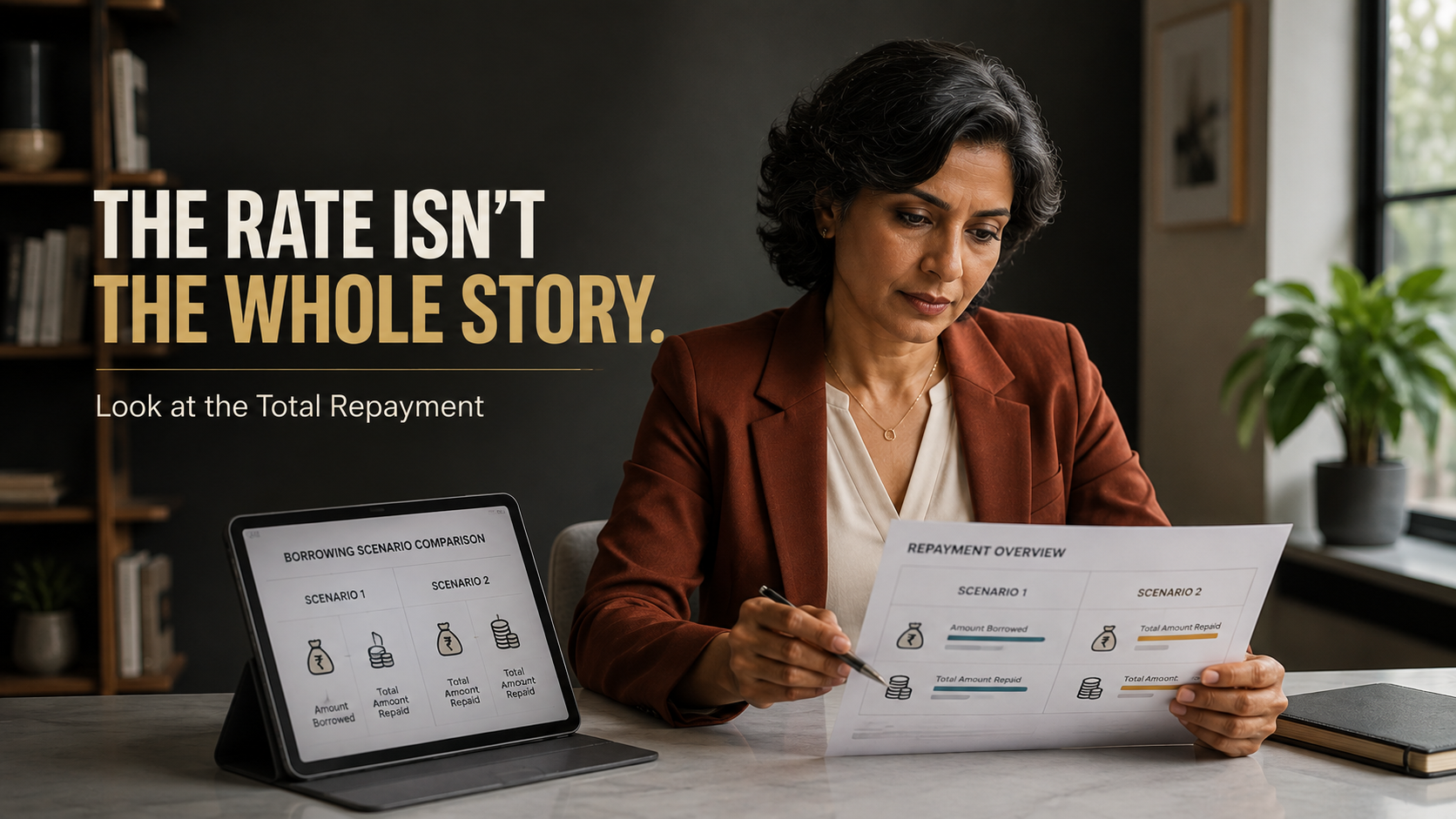
A useful way to understand borrowing is to separate three numbers: what you receive, what you pay over time, and the difference between the two. The first tells you the amount of credit provided. The second shows the total repayment obligation under the applicable terms. The difference helps reveal why a purchase financed through credit can cost more than its original cash price.
The rate alone, however, should not be viewed in isolation. A lower-looking rate attached to a longer repayment period does not necessarily produce a lower overall cost than another arrangement. Similarly, different financial products may calculate and disclose charges differently. This is why the complete agreement, repayment schedule, and applicable disclosures matter.
For a borrower, the practical lesson is simple: do not stop at "What is the interest rate?" Also ask "How much will I repay in total?" That second question can make the financial commitment much easier to understand.
Borrowing Cost #4: Credit Cards Can Make Spending Feel Less Immediate

Credit cards can be useful financial tools when used with a clear understanding of repayment terms. They can provide convenience, support planned transactions, and offer a payment method that does not require cash at the point of purchase. The financial difficulty often begins when the ease of paying today becomes disconnected from the responsibility of repaying later.
The psychology is different from handing over money immediately. When the payment does not leave your bank account at the same moment as the purchase, the transaction can feel less immediate. That separation can make an expensive purchase feel easier than it would if the full amount were visible as an immediate reduction in available cash.
The Real Cost of Borrowing becomes particularly important when a credit-card balance is not paid according to the applicable terms. Interest and other applicable charges can increase the amount ultimately paid, depending on the card's terms and how the balance is handled.
Another risk is that the minimum payment can become the number that receives most of the attention. A minimum payment may help explain the amount required at a particular point, but it should not automatically be interpreted as the most economical way to clear the balance. The applicable card terms, interest charges, repayment schedule, and outstanding balance all matter.
A healthier approach is to think of the credit limit as a payment facility, not as additional income. The fact that a card allows a purchase does not mean the purchase has become affordable. Affordability still depends on your actual financial position and your ability to meet the resulting obligation under the applicable terms.
Borrowing Cost #5: Multiple EMIs Can Reduce Future Flexibility
One EMI may fit comfortably into a monthly budget. The difficulty can emerge when several commitments accumulate over time.
A phone purchase may create one payment. A vehicle loan may create another. A financed appliance, personal loan, or other credit commitment can add another. None of these payments has to be individually overwhelming for the combined amount to become significant.
This is where the Real Cost of Borrowing extends beyond interest and fees. Borrowing also commits part of your future income. Once several payments are fixed, less money remains flexible for unexpected expenses, savings, changing priorities, or opportunities that may appear later.
The problem can be especially difficult to notice when the commitments were created at different times. Each decision may have seemed reasonable when it was made. Months later, however, the combined repayment schedule can tell a different story.
A useful habit is to look at all repayments together rather than evaluating each EMI separately. Add the monthly obligations and compare the combined amount with your essential expenses, regular savings, and other financial responsibilities.
This does not create a universal rule about how much debt is acceptable. Different households have different incomes, obligations, and financial circumstances. The purpose of the exercise is simply to make the total commitment visible before another borrowing decision is added to it.
Financial flexibility has value. Keeping some room in your monthly cash flow can make it easier to respond when circumstances change.
Borrowing Cost #6: Fees and Other Charges Matter Too
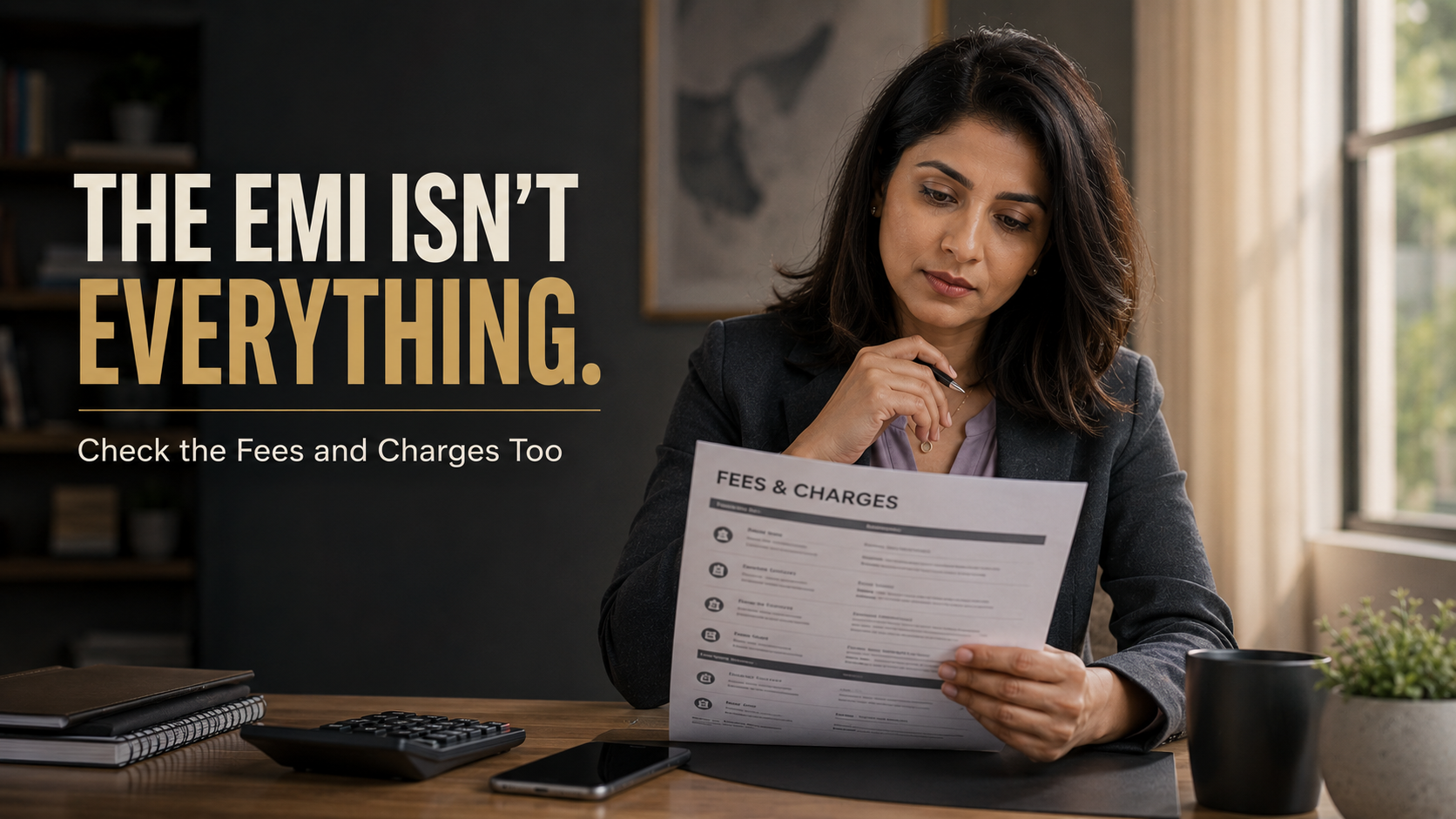
Interest is not always the only cost connected with borrowing. Depending on the financial product and its terms, there may be processing fees, service charges, late-payment charges, prepayment-related charges, or other applicable costs. The exact charges vary, so the important habit is to identify them before agreeing to the credit arrangement.
This is another reason the Real Cost of Borrowing cannot be understood from the interest rate alone. A borrowing arrangement may look attractive when you focus on one headline number while the complete cost becomes clearer only after considering the other applicable charges.
Fees can also be easy to overlook because they may appear smaller than the principal or interest amount. But a series of charges can still affect the total financial commitment. The impact depends on the product, the amount borrowed, the repayment behaviour, and the terms of the agreement.
Before accepting credit, read the relevant fee and charge information rather than assuming that the advertised payment represents everything you will pay. If a charge is unclear, check the official documentation or ask the lender or provider to explain it before proceeding.
The goal is not to memorise every possible fee. It is to develop the habit of asking one simple question:
"What else can I be charged under this agreement?"
That question can reveal costs that a quick comparison of monthly payments might otherwise miss.
Borrowing Cost #7: Longer Repayment Can Change the Overall Cost
A longer repayment period can make a borrowing arrangement appear easier because the amount due in each period may be lower. But reducing the immediate payment does not necessarily reduce the total financial cost.
When borrowing continues for longer, interest and other applicable charges may continue according to the terms of the agreement. The exact outcome depends on the product, rate, repayment structure, and other conditions. That is why comparing only the monthly payment can give an incomplete picture.
The Real Cost of Borrowing becomes clearer when you compare the complete repayment structure. If two arrangements have different repayment periods, look beyond the EMI and examine the total amount payable under each applicable set of terms.
There is also an opportunity-cost element to a longer commitment. Money directed toward the same repayment for additional months cannot simultaneously be used for other priorities. This does not mean that a longer repayment period is always wrong. A lower required payment can sometimes be useful when it provides necessary cash-flow flexibility.
The key is to understand what you are receiving in exchange for that lower monthly payment. You may be gaining short-term breathing room while accepting a longer financial commitment.
Before agreeing to a longer repayment period, ask whether the lower payment genuinely improves your financial position or simply makes a more expensive commitment look easier to accept.

Borrowing Cost #8: Borrowing Can Affect Your Future Choices
The effect of borrowing does not necessarily end when you make the monthly payment. A financial commitment can influence what becomes possible with the rest of your income.
When a portion of future income is already committed to repayments, you may have less flexibility to respond to a new opportunity or unexpected responsibility. You may postpone a planned purchase, reduce savings, delay another goal, or reconsider a decision that would otherwise have been manageable.
This is an important part of the Real Cost of Borrowing because financial cost is not limited to interest and fees. There is also a question of financial flexibility. A borrowing decision can change the choices available to you for months or years, depending on its size and duration.
Imagine two people with similar incomes. One has several fixed monthly commitments while the other has fewer. Their income may be identical, but their available choices can be very different. The second person may have more room to save, handle an unexpected expense, or adapt when circumstances change.
This does not mean that borrowing should never be used. It means the decision should be considered alongside the future commitments it creates. Before taking credit, think about what other financial priorities may arise while you are still making the payments.
A useful borrowing decision therefore asks two questions:
Can I make the payment today?
and
Will I still want this commitment to exist when my circumstances change?
The second question is often harder, but it can reveal the longer-term consequences of an apparently affordable decision.
When Borrowing May Be Reasonable
Credit is not inherently bad. There are situations in which borrowing can be a practical financial tool, provided the terms are understood and the repayment obligation fits the borrower's circumstances.
A planned borrowing decision may make sense when the purpose is clear, the repayment terms are understood, and the borrower has considered how the payments will fit alongside essential expenses and other priorities.
The Real Cost of Borrowing should still be examined even when the borrowing serves a sensible purpose. A useful reason for borrowing does not make interest, fees, or repayment obligations disappear.
It can also help to distinguish between borrowing that addresses a meaningful need and borrowing that simply makes an immediate purchase possible. The right decision depends on the person's circumstances, the credit terms, and the alternatives available.
Before deciding, consider the complete picture rather than asking whether the lender is willing to provide the money. Access to credit tells you what you can borrow; it does not tell you what you should borrow.

Questions to Ask Before Taking Credit
Before accepting a loan, using a credit facility, or choosing an EMI, it helps to slow down long enough to understand the commitment. The purpose is not to make borrowing complicated. It is to make sure that the decision is based on the full arrangement rather than only the convenience of receiving money or seeing a manageable monthly payment.
What exactly am I borrowing? Be clear about the amount of credit being provided and the purpose for which you are using it. If the purpose is vague, reconsider whether borrowing is actually necessary.
What will I repay in total? This is one of the most useful questions when considering the Real Cost of Borrowing. Look beyond the amount received and understand the total repayment obligation under the applicable terms.
How long will I be making payments? A longer repayment period can make individual payments appear easier while keeping the financial commitment active for longer. Understand the complete schedule before agreeing.
What interest and other charges apply? Check the applicable interest or finance charges as well as processing fees, service charges, late-payment charges, prepayment-related charges, and other applicable costs. Do not assume that the advertised EMI represents the entire cost.
What happens if my income changes? Your current income is only one part of the decision. Consider whether you could continue making the payments if your income temporarily fell or another important financial responsibility appeared.
What will this payment prevent me from doing? Every fixed repayment reduces some of your future flexibility. Consider whether the new obligation could affect savings, emergency preparation, planned purchases, or other important goals.
Am I borrowing because I need it or because the payment looks affordable? A small EMI can make a purchase feel easier to justify. Separate the affordability of the payment from the usefulness of the purchase itself.
Have I read the actual terms? A promotional message, salesperson, advertisement, or checkout screen may not contain every applicable condition. Review the official agreement and relevant disclosures before accepting the credit.
A Simple Borrowing-Cost Checklist
Before taking a loan or using credit, write down the following information:
- Purpose of borrowing: What exactly is the money being used for?
- Amount borrowed: How much credit will actually be provided?
- Interest or finance charges: What rate and calculation method apply under the agreement?
- Total repayment: How much will you be required to pay under the applicable terms?
- Repayment period: How long will the obligation continue?
- Monthly commitment: What amount will leave your budget regularly?
- Additional charges: What applicable fees or other charges could increase the cost?
- Late-payment consequences: What happens if a payment is delayed or missed?
- Future flexibility: After making the payment, how much room remains for savings and unexpected expenses?
- Alternative options: Is there another way to meet the need without creating the same borrowing obligation?
Writing these points down can change the way a credit decision feels. Instead of seeing only the immediate benefit, you can see the complete commitment.
That is the practical value of understanding the Real Cost of Borrowing.
Key Takeaways
- The Real Cost of Borrowing is more than the amount received or the EMI shown at the time of purchase.
- Interest, applicable fees, repayment duration, and other terms can influence the total amount ultimately paid.
- A small monthly payment does not automatically mean that borrowing is inexpensive.
- Longer repayment periods can keep part of your future income committed for a greater period.
- Credit cards can make spending feel less immediate because payment and purchase happen at different points.
- Multiple EMIs can become significant when viewed together, even when each individual payment seems manageable.
- A borrowing decision should be considered alongside future savings, emergencies, and other financial priorities.
- Access to credit tells you what you can borrow; it does not necessarily tell you what you should borrow.
- Comparing total repayment obligations is generally more informative than comparing monthly payments alone.
- Reading the applicable agreement and understanding its terms is an important part of responsible borrowing.
- Borrowing is not automatically bad; the suitability of credit depends on the purpose, terms, costs, and the borrower's circumstances.
- Financial flexibility has value, and a new borrowing commitment can reduce that flexibility for the duration of the obligation.
The Real Cost of Borrowing refers to the overall financial commitment created by borrowing money. It can include the amount repaid, applicable interest or finance charges, fees, other applicable costs, and the effect of the repayment obligation on future financial flexibility.
No. A low EMI may result from a longer repayment period or other terms that affect the overall cost. Before deciding, compare the total repayment obligation, repayment duration, applicable charges, and your ability to manage the commitment.
Credit cards can separate the moment of purchase from the moment money leaves your account. This can make spending feel less immediate. If balances are not managed according to the applicable card terms, interest and other charges may also increase the eventual cost.
No. Borrowing can be useful in appropriate circumstances when the purpose is clear, the terms are understood, and the repayment obligation fits the borrower's financial situation. The important issue is understanding the complete commitment before accepting it.
Look at the amount being financed, applicable interest or finance charges, total repayment, repayment period, monthly payment, applicable fees, consequences of delayed payments, and how the new commitment fits alongside your existing financial obligations.
Continue Your Personal Growth Journey
Explore these related DivyalVision articles to continue learning about financial management: