Why Your First Financial Safety Net Matters More Than Your First Investment
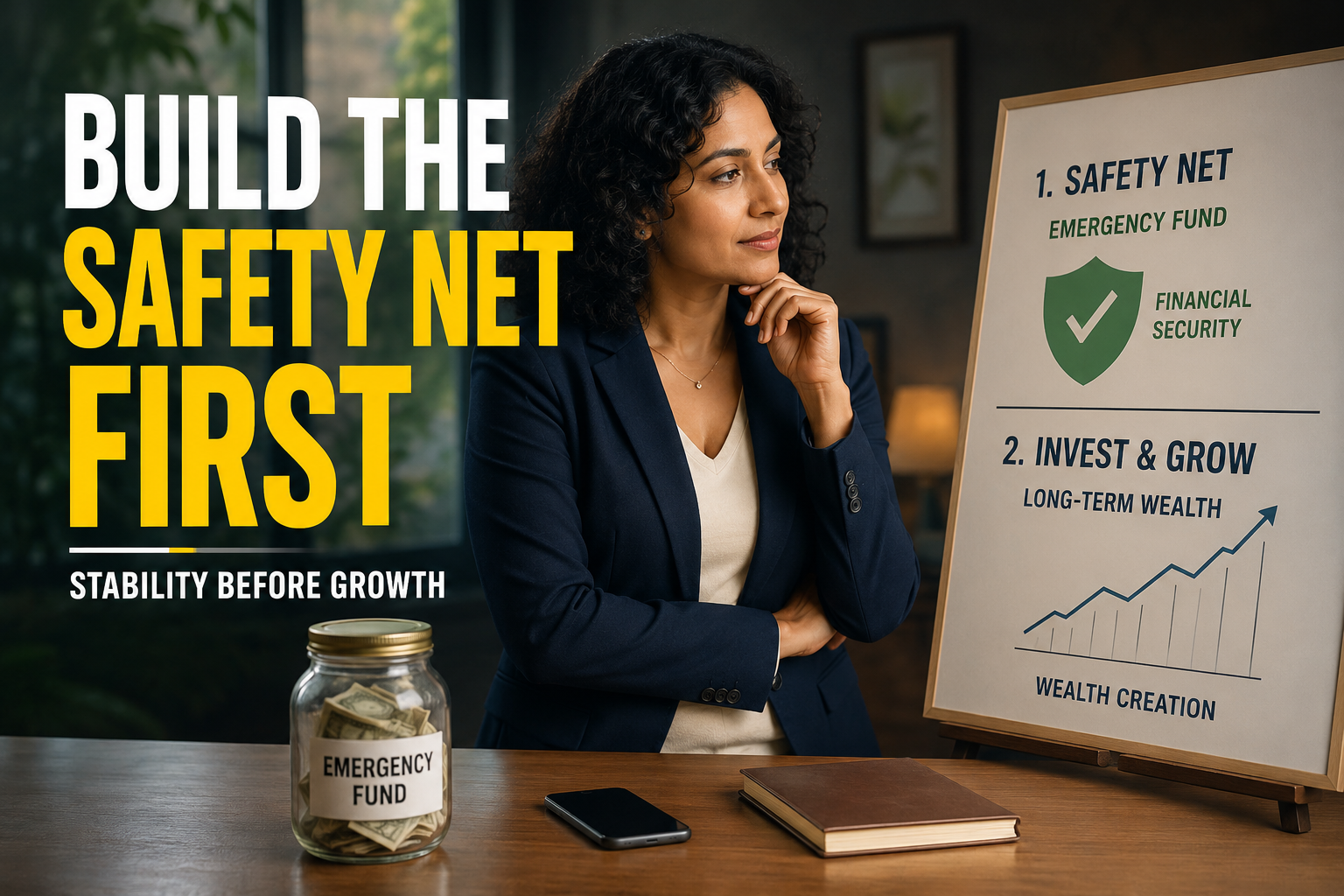
- Building wealth is often associated with investing, market growth, and long-term returns. Those ideas are important, but they can sometimes make the foundation of financial stability seem less exciting than it really is. Before focusing heavily on how quickly money can grow, it is worth considering whether you have enough accessible money to handle an unexpected expense without immediately disrupting your plans. A Financial Safety Net can provide that basic layer of protection.
- An unexpected medical expense, urgent repair, temporary income disruption, family responsibility, or other unplanned cost can arrive at an inconvenient time. Without accessible savings, a person may have to rely on borrowing, withdraw long-term investments at an unsuitable moment, or postpone an important financial obligation. Having some money set aside for such situations can create breathing room when circumstances do not go according to plan.
- This does not mean investing should always wait until a large emergency fund has been accumulated. Personal circumstances differ, and someone may reasonably save and invest at the same time. The important distinction is between money intended to handle near-term uncertainty and money intended for longer-term growth.
- A strong financial foundation is therefore less about choosing savings instead of investing and more about giving each part of your money a clear purpose. Accessible emergency savings can provide stability, while appropriately chosen long-term investments can support future growth. When these roles are understood, financial planning becomes less about chasing one perfect strategy and more about building a structure that can withstand ordinary uncertainty.
What a Financial Safety Net Actually Means
A Financial Safety Net is money and financial capacity kept available to help manage unexpected situations without immediately disturbing essential expenses or long-term plans. It is not simply a collection of money that happens to remain in a bank account. Its purpose is specific: to provide some protection when an expense or change in circumstances was not part of the original plan.
The exact form of a safety net can differ from one person to another. For someone with stable income and limited responsibilities, a certain level of accessible savings may provide meaningful protection. Someone supporting a family, managing variable income, or carrying significant financial obligations may need to think differently about the amount of accessible money that provides reasonable comfort.
Emergency savings are usually associated with situations that are both unexpected and important. A necessary repair, temporary reduction in income, urgent travel, or another unavoidable expense may require money sooner than a long-term financial plan expects. The purpose of the reserve is not to fund ordinary shopping or planned lifestyle expenses, but to provide a buffer when circumstances change.
This distinction also helps separate emergency money from investment money. Investments generally have a longer-term purpose and may fluctuate in value depending on the investment and market conditions. Money intended for an emergency has a different job: it needs to be available when the emergency occurs rather than being primarily focused on long-term growth.
Thinking in terms of purpose can make financial planning easier. Instead of asking whether every rupee should be saved or invested, ask what each portion of your money is supposed to accomplish. Some money may support immediate needs, some may provide short-term protection, and some may be positioned for longer-term goals.
A safety net is therefore not a sign that you are avoiding growth. It is a way of recognising that financial life includes uncertainty and that preparation can protect the choices you make later.
Why Emergency Savings Can Come Before Investing More
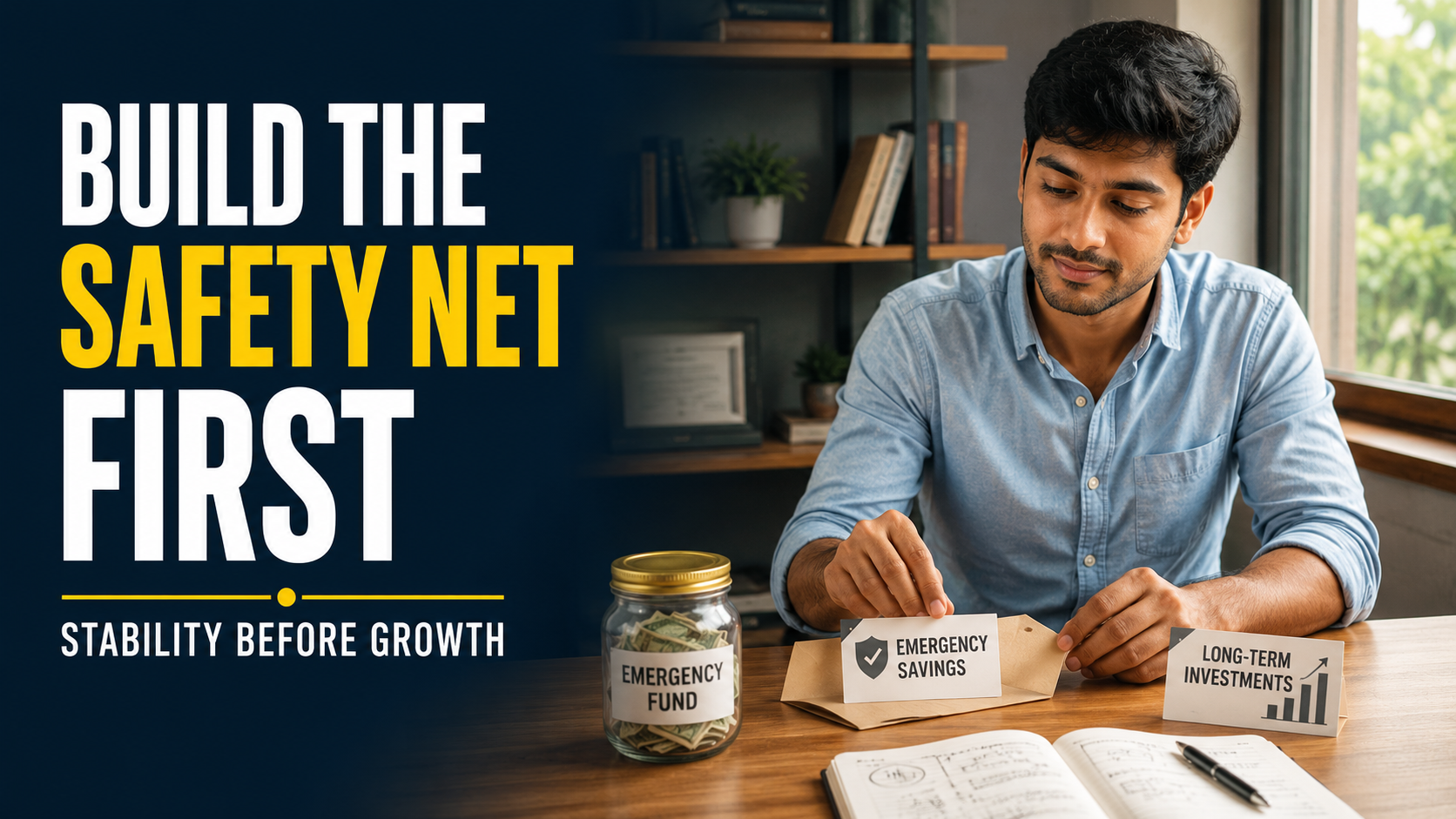
Investing can be an important part of long-term financial planning, but the timing and amount of investing should make sense within the rest of your financial situation. If you have no accessible reserve at all, an unexpected expense can create pressure that affects everything else. You may have investments on paper while still lacking money that can be used immediately for an urgent need.
This is where the idea of a Financial Safety Net becomes particularly useful. Accessible savings can help separate short-term emergencies from long-term financial goals. If an unexpected expense appears, you have a designated source of money to consider before disrupting investments or taking on new debt.
The distinction becomes clearer when you consider the different jobs of the two types of money. Long-term investments are generally intended to remain invested for a meaningful period and may experience fluctuations in value. Emergency savings, by contrast, are meant to provide accessibility and stability when something unexpected happens.
There is also a psychological benefit to having a reserve. When every unexpected expense feels like a financial crisis, it can become difficult to make calm decisions. Knowing that some money has been deliberately kept aside for emergencies can provide greater breathing room, even if the reserve is still being built.
At the same time, building an emergency reserve does not necessarily require waiting indefinitely before learning about or beginning long-term investing. Depending on income, obligations, risk tolerance, and goals, a person may choose to work on both areas gradually. The important point is to avoid treating potential investment growth as a substitute for money that may be needed in the near term.
The stronger question is therefore not, “Should I save or invest?” but “How should I divide my available money according to the jobs it needs to perform?” That shift in thinking can help create a financial structure in which stability and growth support rather than compete with each other.
Your First Unexpected Expense Can Change the Equation
Financial stability is often tested not by the expenses you expect, but by the ones that arrive without warning. A necessary repair, urgent travel, temporary income disruption, or an unexpected family responsibility can require money at a time when your regular budget is already committed. Without accessible savings, even a relatively manageable expense can force you to make a decision under pressure.
This is one reason a Financial Safety Net can be more valuable than it first appears. Its purpose is not to make unexpected expenses disappear. Instead, it gives you a source of money that was deliberately kept available for situations that could not reasonably be planned into your ordinary monthly budget.
The absence of such a reserve can create a chain reaction. A person may delay an important payment, rely on borrowing, sell an investment at an inconvenient time, or use money that had been set aside for another goal. The original unexpected expense may be temporary, but the financial consequences of dealing with it can continue for much longer.
This does not mean every unexpected expense requires a large emergency reserve. What matters is having some level of preparation that reflects your own circumstances. The amount that provides useful protection will depend on factors such as income stability, essential expenses, dependants, existing obligations, and access to other resources.
It is also worth remembering that not every surprise expense is truly an emergency. A planned annual payment that you forgot to budget for is different from an unexpected essential expense. Separating genuine emergencies from predictable but irregular costs can make your reserve easier to manage and prevent it from being used for ordinary financial planning gaps.
The real value of emergency savings becomes visible when something goes wrong. You may never know exactly when you will need the reserve, but knowing that it exists can reduce the pressure to make a rushed financial choice when circumstances suddenly change.
A Safety Net Can Protect Long-Term Investments

One of the strongest reasons to build a Financial Safety Net is that it can help keep short-term emergencies from interfering with long-term financial plans. Investments are generally made with future objectives in mind, and their value can change over time depending on the type of investment and market conditions. When an urgent expense appears, the money needed immediately may not be in the same place as the money intended for a future goal.
Without accessible emergency savings, an investor may feel pressure to use long-term assets to solve a short-term problem. Whether that is appropriate depends on the investment, circumstances, applicable costs, tax considerations, and other factors. The broader point is that an emergency should ideally not force you to make a major long-term financial decision simply because you lack another source of accessible funds.
This is particularly relevant when market values have changed. Selling an investment is not automatically a bad decision, but doing so during an unfavourable period may produce a different outcome from what you originally expected. Having separate emergency savings can give you another option to consider before making that decision.
There is also a practical difference between money that needs to be accessible and money that has time to grow. Emergency savings generally need accessibility and stability as priorities, while long-term investments can be selected according to longer-term objectives and an individual's circumstances. Giving these two pools different purposes can make the overall financial plan easier to understand.
A safety reserve therefore does not compete with investing in the way it may initially seem. It can actually protect the conditions under which long-term investing becomes easier to maintain. When short-term uncertainty has some financial buffer, long-term money may have a better chance of remaining dedicated to its intended purpose.
The idea is simple: short-term protection and long-term growth have different jobs. Treating them as separate responsibilities can create a more resilient financial structure.
Why Stability Matters When Income Is Uncertain
A person's financial situation can look very different when income becomes less predictable. Employees may experience changes in employment, self-employed people may have irregular earnings, and households can face periods when income does not arrive according to the usual pattern. Even when the change is temporary, regular expenses may continue as normal.
This is where the importance of a Financial Safety Net becomes particularly clear. When income is stable, it can be easy to organise expenses around the expectation of another payment arriving soon. When that expectation changes, the same expenses may suddenly feel much more difficult to manage.
A reserve can provide some time to adjust. It may allow a person to continue meeting essential expenses while looking for another source of income, reducing costs, reorganising priorities, or considering other available options. It does not remove uncertainty, but it can prevent every decision from becoming immediately urgent.
Income stability should also influence how aggressively someone approaches other financial goals. A person with highly predictable earnings and another person with irregular income may reasonably approach accessible savings differently. There is no universal level of financial protection that works equally well for every household.
This is why comparing your own circumstances with someone else's financial strategy can be misleading. A strategy that works comfortably for a person with stable income, low fixed obligations, and substantial resources may not be appropriate for someone whose income changes considerably from month to month.
The better approach is to consider your own level of uncertainty. The more difficult it would be to replace lost income quickly, the more important it may become to think carefully about accessible reserves and financial flexibility.
How Debt and Emergency Savings Interact
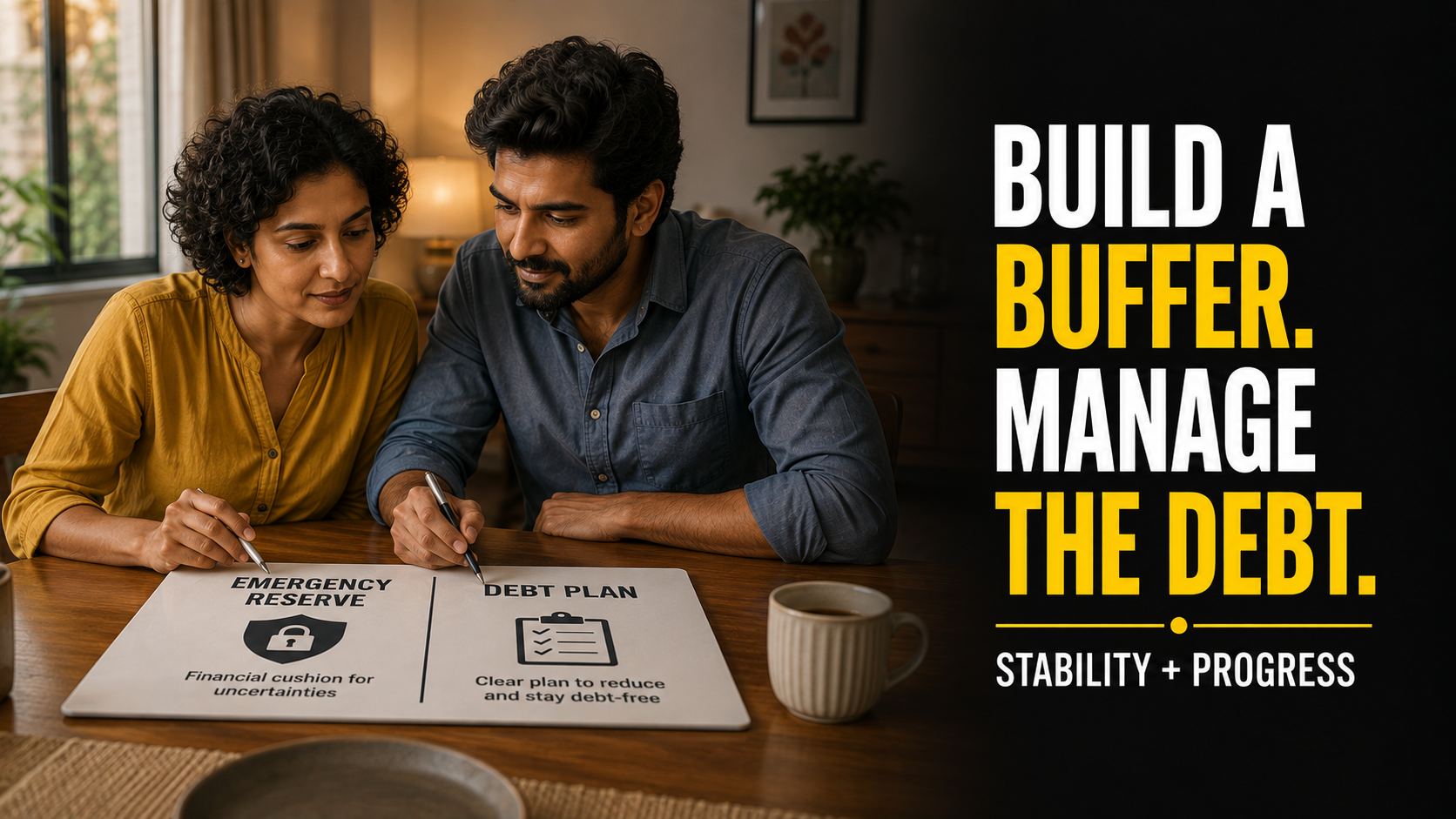
Debt and emergency savings can influence each other in complicated ways. Someone may feel that every available rupee should immediately be directed toward reducing debt, while another person may want to build a reserve before making additional repayments. The appropriate balance depends on the type of debt, its cost, the person's circumstances, and the terms involved.
Using every available amount to reduce debt can leave very little accessible money for an unexpected expense. If an emergency then occurs, the person may have to borrow again or use another expensive source of funds. In that situation, the original effort to reduce debt may not have created as much financial resilience as expected.
On the other hand, keeping a very large amount in low-growth accessible savings while carrying costly debt may also require careful consideration. Different financial obligations have different costs and characteristics, so a general rule cannot replace an examination of the actual situation.
A practical approach is to recognise that both problems matter. You may need some accessible reserve while also making steady progress toward reducing debt. The size and pace of each can change as your financial circumstances improve.
It can also help to distinguish between emergency preparation and debt repayment strategy. The emergency reserve exists to handle unexpected needs, while debt repayment addresses an existing obligation. Keeping those purposes clear can make it easier to decide how available money should be divided.
The important financial lesson is that stability is not created by focusing on only one part of the picture. A strong plan considers accessible savings, existing obligations, regular expenses, and future goals together.
How Much Should You Aim to Keep Accessible?
There is no single emergency-savings amount that is automatically right for everyone. The appropriate size of a Financial Safety Net depends on the expenses you must continue paying, how predictable your income is, the people who depend on you, existing financial commitments, and how easily you could replace lost income or meet an unexpected cost. Someone with stable employment and relatively low fixed expenses may have different needs from someone whose income changes from month to month.
A useful starting point is to understand your essential monthly expenses rather than your entire lifestyle budget. Housing, food, utilities, necessary transportation, important repayments, and other unavoidable costs can provide a clearer basis for estimating what financial protection might be useful. The purpose is to think about what you would need if normal income or circumstances were temporarily disrupted.
It can also help to build the reserve in stages. Waiting until you have a large amount available before considering yourself financially prepared can make the goal feel unnecessarily distant. A smaller accessible reserve can provide some initial protection, after which you can gradually increase it as your income, responsibilities, and financial priorities allow.
Your circumstances should be reviewed periodically. A change in employment, family responsibilities, housing costs, debt, or income pattern can alter the amount of accessible savings that feels appropriate. What was sufficient during one stage of life may not provide the same level of protection later.
The important point is not to copy someone else's target without understanding your own situation. A useful Financial Safety Net should reflect the financial risks you are realistically trying to manage rather than being built around an arbitrary number.
Where Should Emergency Money Be Kept?
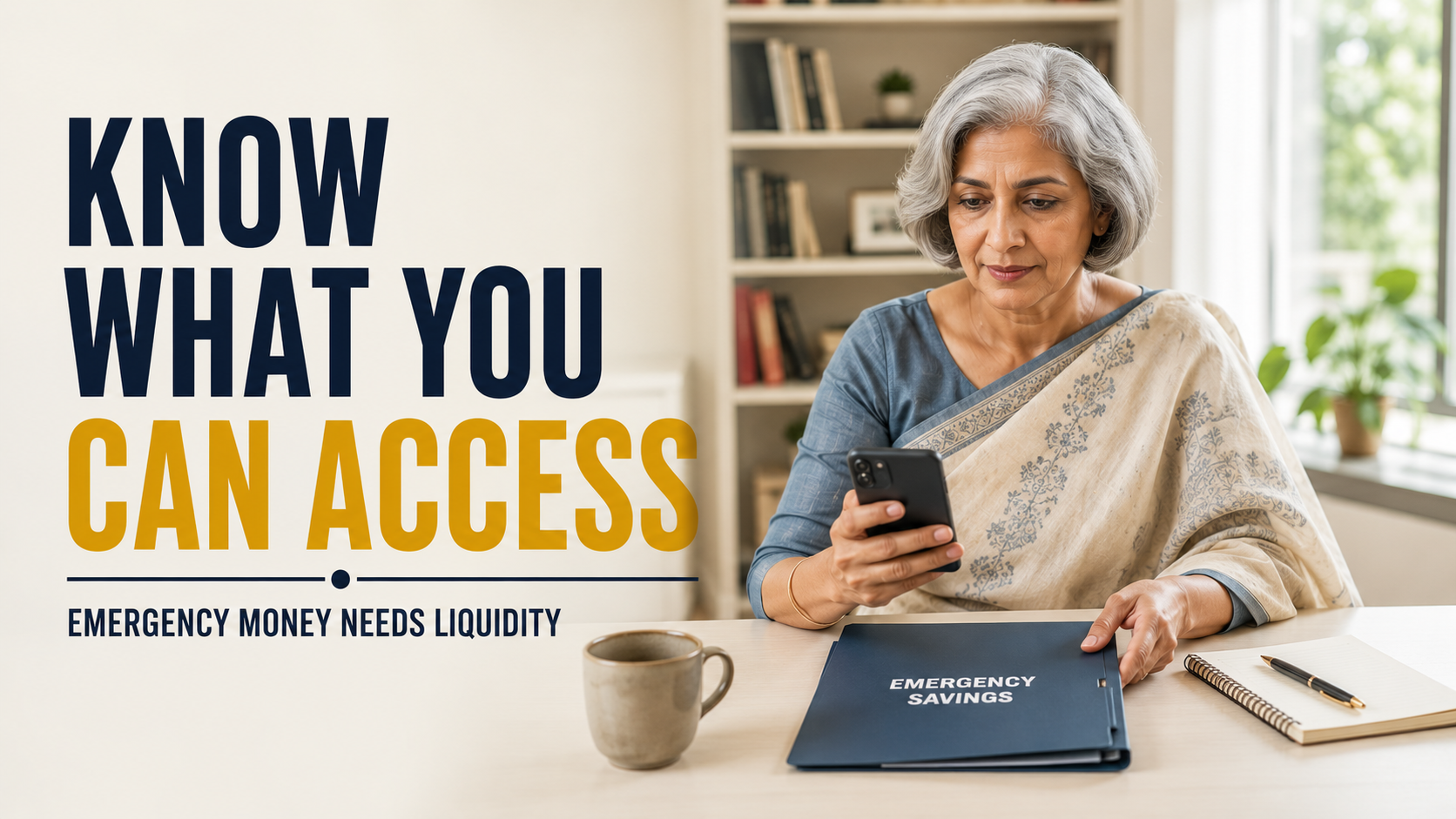
The purpose of emergency money influences where it should be held. Since it may be needed unexpectedly, accessibility and stability generally matter more for this pool of money than pursuing maximum investment growth. The exact account or product suitable for an individual will depend on personal circumstances, applicable terms, liquidity, and other considerations.
Emergency money should also be easy enough to identify and access when it is genuinely needed. If it is mixed with everyday spending money, there can be a greater temptation to use it for ordinary purchases. Keeping its purpose clear can make it easier to distinguish between an actual emergency and a planned expense.
At the same time, accessibility does not mean keeping large amounts of money without considering practical factors such as applicable interest, account conditions, safety, and ease of withdrawal. Different financial products have different characteristics, so it is sensible to understand the terms before choosing where to keep emergency savings.
Another useful distinction is between emergency money and short-term planned savings. An annual insurance payment, upcoming holiday, school expense, or planned purchase may be predictable even though it does not happen every month. Such expenses can be planned separately rather than repeatedly drawing from the emergency reserve.
The purpose of this separation is simple. When emergency money has a clearly defined role, it becomes easier to preserve it for situations where financial flexibility is genuinely needed.
When Can You Start Focusing More on Investments?
Building a Financial Safety Net does not mean waiting for some perfect financial moment before thinking about investments. Financial planning is usually gradual, and different goals can develop alongside one another. Once you have established some level of emergency protection, it may become easier to think about how additional money can be directed toward appropriate long-term goals.
The right point to increase investment activity depends on your personal circumstances. Consider whether essential expenses are reasonably covered, whether important high-cost financial obligations require attention, how stable your income is, and whether the money being invested can genuinely remain committed for the intended time horizon.
It is also important to understand the difference between emergency money and investment money. If you invest money that may be required for an unexpected expense soon, you may later face pressure to access it at a time that is not suitable for the investment. Money intended for longer-term goals can generally be considered differently because it has more time to serve its intended purpose.
Investment decisions should also be based on factors such as goals, time horizon, risk tolerance, and the characteristics of the investment rather than simply the desire for higher returns. A higher potential return generally comes with some level of risk, and past performance does not guarantee future results.
The transition from building stability to focusing more strongly on long-term growth does not need to happen overnight. It can be gradual, with the balance changing as your emergency reserve, income, obligations, and goals evolve.
The important idea is that Financial Safety Net and investing are not competing philosophies. They are different parts of a financial structure. One helps prepare for uncertainty; the other can support appropriate long-term objectives.
A Simple Safety-Net Building Plan

Building emergency savings can feel difficult when there are already many demands on your income. The solution does not have to be a dramatic change in spending. A practical plan can begin with understanding your current position and then making the reserve part of your regular financial routine.
Step 1: Identify Essential Monthly Expenses
Start by calculating the expenses that would be difficult to avoid if your income or circumstances changed. This gives you a more useful starting point than simply choosing an arbitrary savings target.
Step 2: Separate Emergency Savings From Ordinary Spending
Give the reserve a clear purpose. When emergency money is mixed with everyday spending, it becomes easier to treat it as available for ordinary purchases.
Step 3: Choose a Manageable Starting Amount
The first objective is to establish the habit of setting money aside. The amount can be adjusted as your circumstances change, but consistency can make the process easier to maintain.
Step 4: Automate the Contribution Where Appropriate
If your banking arrangement allows it, an automatic transfer after income arrives can make saving less dependent on remembering to do it later. Choose an amount that remains realistic alongside essential expenses and existing obligations.
Step 5: Reassess When Your Circumstances Change
A new job, change in income, additional family responsibility, major purchase, or significant change in regular expenses may justify reviewing your reserve.
Step 6: Define What Counts as an Emergency
Before you need the money, decide what situations would reasonably justify using it. This can help prevent the reserve from being gradually spent on ordinary wants or predictable expenses.
Step 7: Rebuild After a Genuine Emergency
If you need to use part of your reserve, that does not mean the system failed. The reserve performed the job for which it was created. Once the immediate situation is handled, rebuilding the accessible balance can become the next priority.
A Financial Safety Net is therefore better understood as an ongoing financial habit than as a one-time target. It can grow, be used when necessary, and be rebuilt as circumstances change.
- A Financial Safety Net gives your finances a layer of protection against unexpected expenses and changes in circumstances.
- Emergency savings and long-term investments have different purposes and should not automatically be treated as substitutes for one another.
- The amount of accessible savings you need depends on your income stability, essential expenses, responsibilities, and existing financial commitments.
- A reserve can reduce the pressure to use long-term investments or take on additional borrowing when an unexpected expense appears.
- Emergency money should remain accessible and clearly separated from ordinary spending and planned expenses.
- Building a reserve does not necessarily mean postponing all investing; both goals can develop gradually according to your circumstances.
- Your financial priorities can change when income, family responsibilities, employment, debt, or major expenses change.
- A safety net is not a sign that you are avoiding financial growth. It can provide the stability needed to pursue long-term goals with greater confidence.
- The purpose of emergency savings is not to predict every problem, but to create more options when something unexpected happens.
Frequently Asked Questions
They are closely related, but the broader idea of a Financial Safety Net can include more than emergency savings alone. Accessible savings are usually a central part of it, while overall financial resilience can also depend on income stability, existing obligations, insurance, and other available resources.
There is no universal rule that applies to every person. However, having some accessible savings before relying heavily on long-term investments can provide useful protection against unexpected expenses. The appropriate balance depends on your income, obligations, goals, risk tolerance, and individual circumstances.
There is no single amount that is appropriate for everyone. A useful starting point is to consider your essential monthly expenses, income stability, dependants, debt obligations, and how quickly you could replace lost income. You can then build the reserve gradually as your circumstances allow.
Emergency savings generally need to be accessible and relatively stable because the money may be needed unexpectedly. The appropriate account or financial product depends on your circumstances and the applicable terms, so understand accessibility, conditions, and other relevant features before choosing where to keep the money.
Using the reserve for a genuine emergency does not mean the plan failed. The money was created precisely for situations where unexpected financial support was needed. Once the immediate situation is under control, rebuilding the reserve can become a new financial priority.
Building a Financial Safety Net is one part of developing a stronger relationship with money. It connects naturally with everyday money habits, financial planning, spending awareness, and thoughtful financial decisions. Explore these related DivyalVision articles: